

Commercial Security
Facial Recognition Security Cameras: Capabilities, Limitations, and Considerations for Commercial Properties
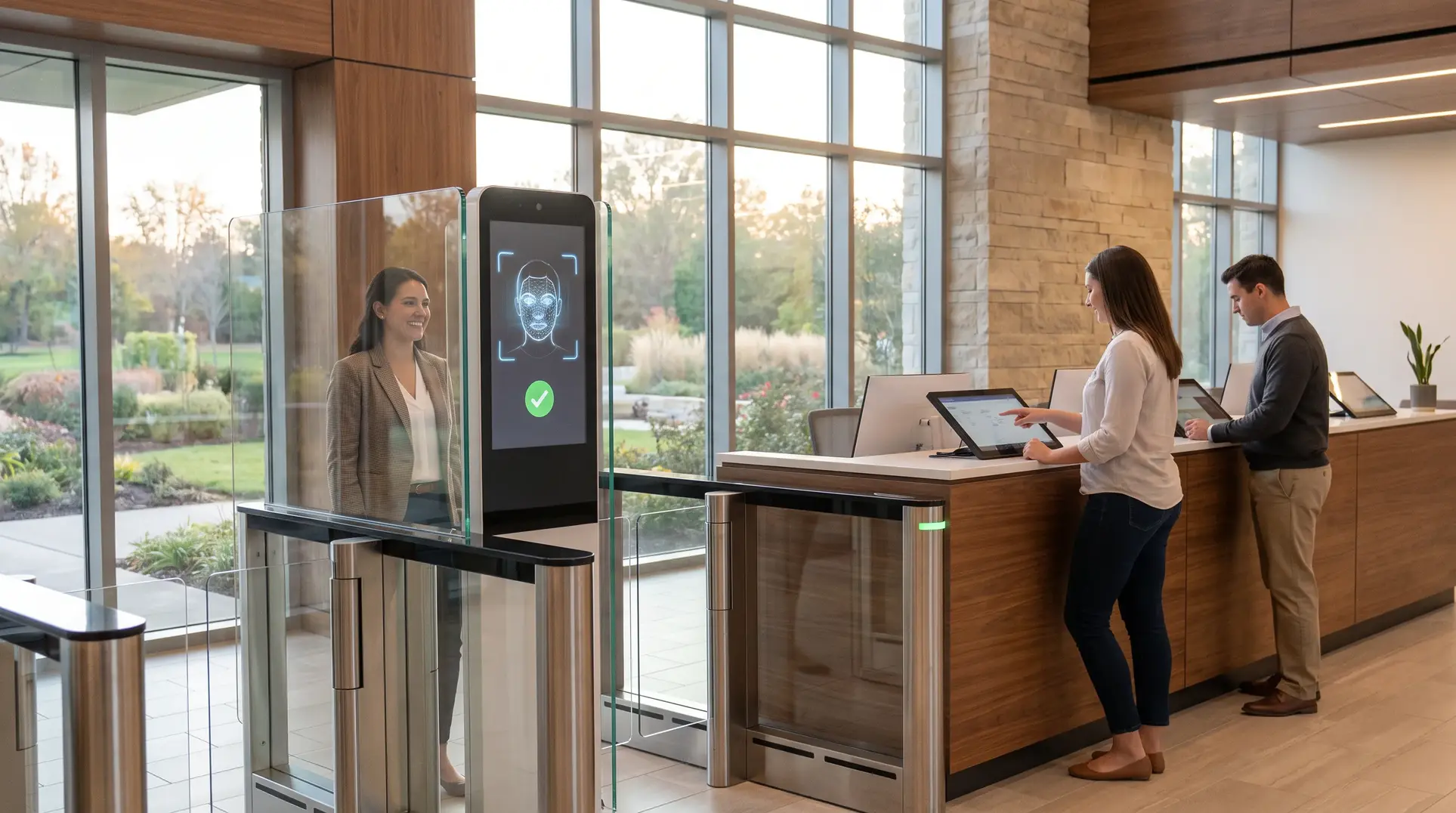
Facial recognition technology has become one of the most discussed capabilities in commercial security, and for good reason. The ability to identify individuals automatically, control access without physical credentials, and flag persons of interest sounds transformative. But between the marketing claims and the operational reality lies a significant gap that facility managers and property directors need to understand before committing budget and infrastructure to this technology. We work with commercial clients across Canada and the United States who ask us regularly whether facial recognition is ready for their buildings, and our answer is always the same: it depends entirely on your specific application, your infrastructure, and your willingness to manage the system properly over time. This article provides an honest assessment of what facial recognition can and cannot do in commercial security environments, the technical requirements for effective implementation, and the considerations that determine whether this technology adds genuine value to your security posture.
Who This Article Is For
This content is written for facility managers, property directors, and security decision-makers evaluating whether facial recognition technology belongs in their commercial security systems. If you manage commercial properties, corporate campuses, multi-tenant buildings, healthcare facilities, or industrial sites and you are weighing advanced surveillance capabilities, this article addresses your questions directly.
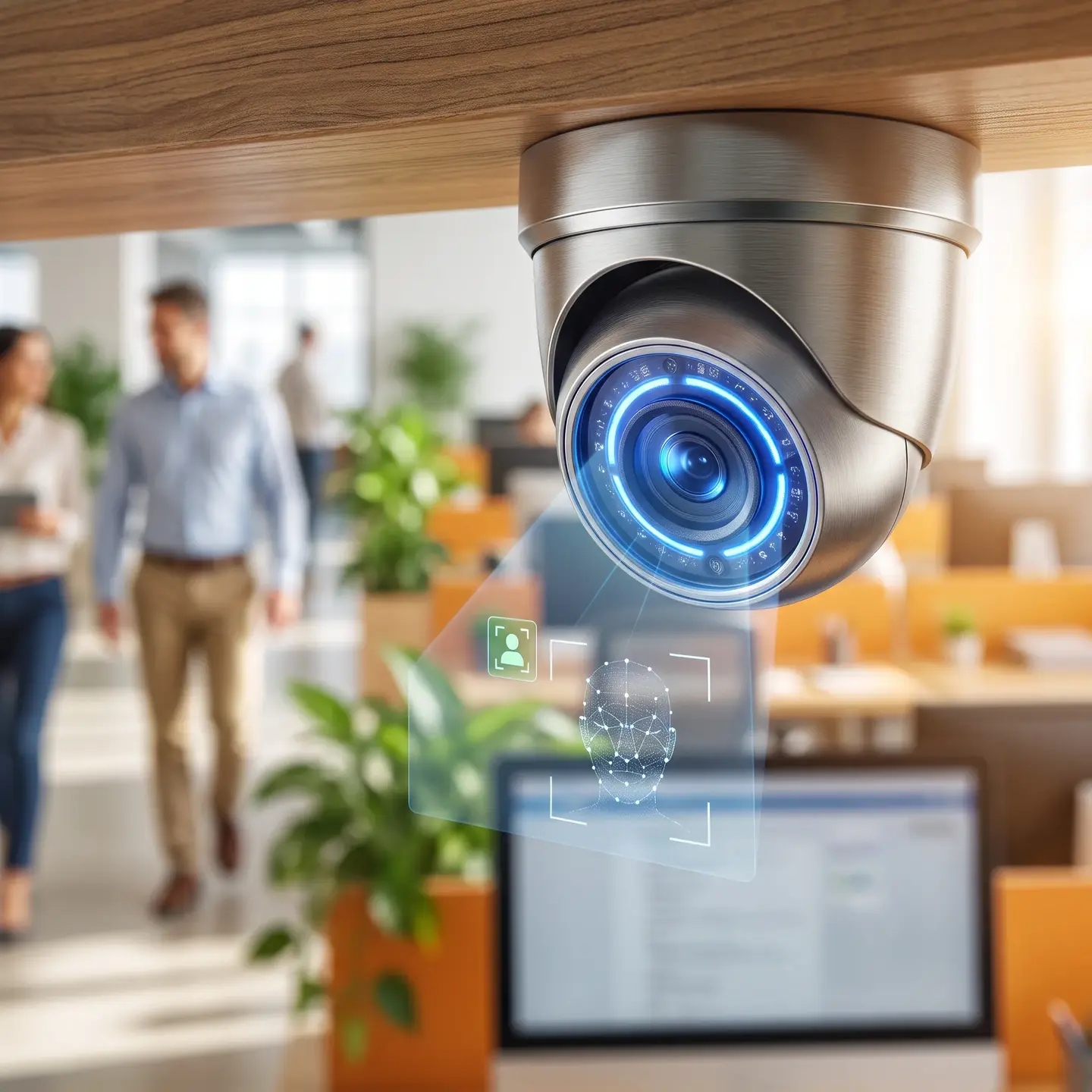
This article is not for homeowners looking for residential doorbell cameras or consumers comparing retail security products. The technical requirements, legal considerations, and implementation realities we discuss here apply specifically to commercial-grade systems designed for professional security operations.
How Facial Recognition Actually Works in Security Cameras
Before evaluating whether facial recognition fits your security needs, understanding what happens technically helps set realistic expectations. The process involves several distinct steps, and each one introduces potential points of failure that affect overall system performance.
Face Detection vs. Face Recognition
These terms are frequently confused, but they describe fundamentally different capabilities:
- Face detection identifies that a face is present in the camera’s field of view. This is a relatively straightforward computational task that most modern IP camera systems handle reliably.
- Face recognition identifies whose face it is by comparing captured features against a database of enrolled individuals. This is substantially more complex and where accuracy challenges emerge.
Many cameras marketed as having “facial recognition” actually offer only face detection with basic analytics. True recognition requires comparing a captured face against stored reference images and returning a match with a confidence score.
The Recognition Process
When a person enters a camera’s capture zone, the system performs several operations:
- Face capture: The camera identifies a face and captures one or more frames.
- Quality assessment: The system evaluates whether the captured image meets minimum quality thresholds for matching.
- Feature extraction: Algorithms map facial features and convert them into a mathematical template.
- Database comparison: The template is compared against enrolled reference images.
- Scoring: The system returns a similarity score indicating how closely the captured face matches enrolled templates.
- Threshold application: If the score exceeds a configured threshold, the system reports a match.
A “match” means the similarity score exceeded your configured threshold. It does not mean the system has definitively identified the person. This distinction matters enormously for how you use and respond to facial recognition alerts.
What Facial Recognition Can Reliably Accomplish
When implemented properly with appropriate infrastructure, facial recognition delivers genuine value in specific commercial applications. The key phrase is “implemented properly.” Performance depends heavily on camera quality, positioning, lighting, and database management.
Controlled, Cooperative Verification
The most reliable application is one-to-one verification, where a person presents a credential and the system confirms their identity by comparing their live face to a single enrolled reference. This works well because:
- The subject knowingly participates and positions themselves appropriately.
- Dedicated cameras capture faces at optimal angles and distances.
- Lighting can be controlled at the capture point.
- The comparison is against a single enrolled image, not an entire database.
Employee access control at secure entrances, visitor verification at reception desks, and time-and-attendance confirmation are strong use cases. When combined with a badge or mobile credential, facial verification adds a layer of authentication that prevents credential sharing.
Access Control Integration
Facial recognition integrates with access control systems to provide touchless entry for authorized personnel. In environments where hygiene matters or where personnel frequently have full hands, eliminating the need to touch readers or present badges offers operational benefits beyond security.
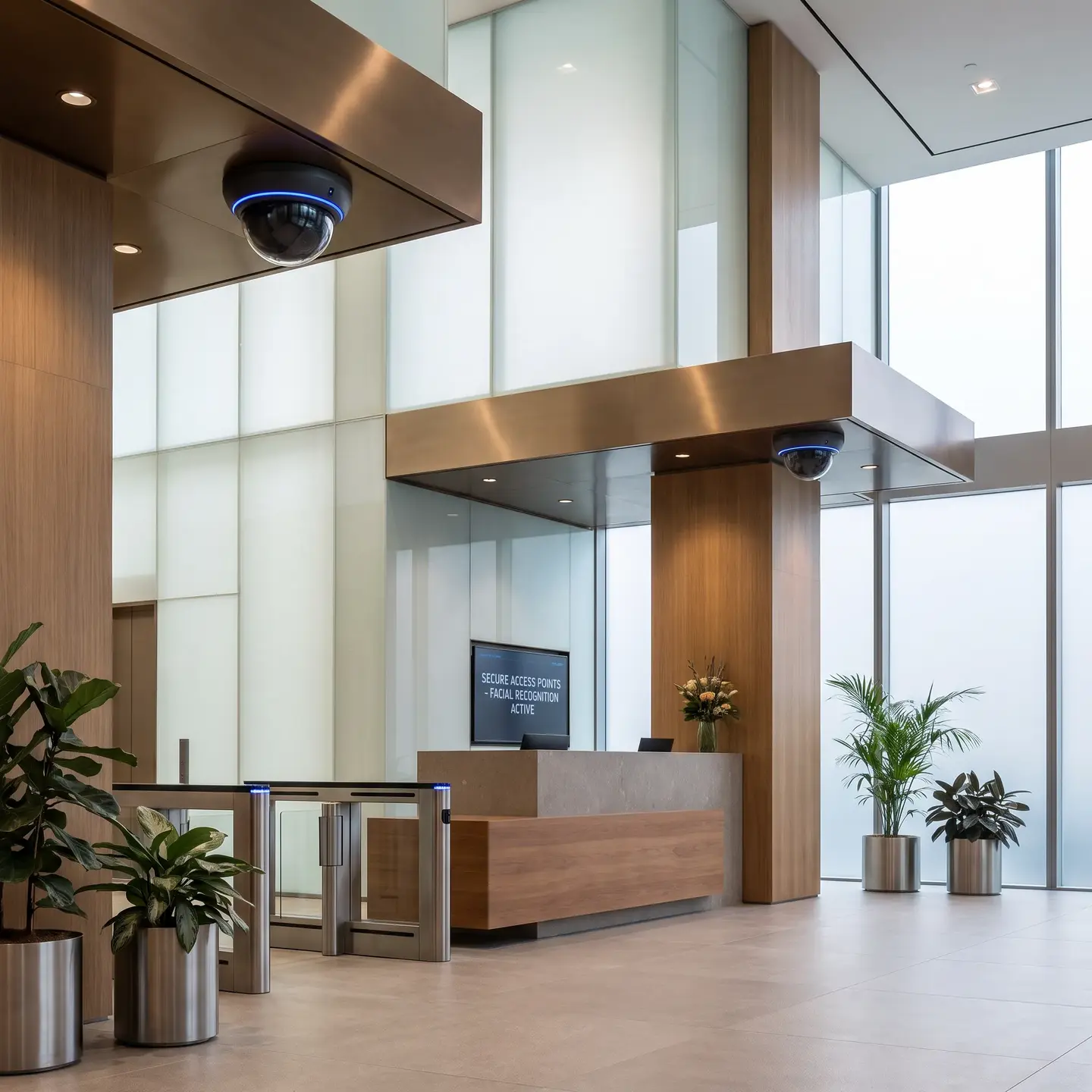
According to the NIST Face Recognition Vendor Test (FRVT) performance data, leading algorithms have improved dramatically, with search failure rates falling from approximately 4% to 0.2% on NIST’s test datasets between 2014 and 2018. However, these results come from controlled test conditions, not real-world CCTV environments.
Visitor Management
For facilities requiring visitor tracking, facial recognition can verify that a visitor matches the identity provided during pre-registration. This works best with explicit enrollment, where visitors provide a reference image in advance and consent to facial verification upon arrival.
Limitations and Accuracy Considerations
Honest assessment of limitations helps you make informed decisions. Facial recognition is not a magic solution, and understanding where it struggles prevents costly disappointments.
Environmental Factors
Real-world commercial environments present challenges that controlled testing does not:
- Lighting variability: Facial recognition performance degrades significantly in poor lighting, backlighting, or rapidly changing illumination. A lobby entrance that works well at noon may fail completely when afternoon sun creates harsh shadows or glare.
- Camera positioning: Optimal recognition requires subjects facing the camera at appropriate distances. High-mounted overview cameras that work well for general surveillance rarely capture faces at angles suitable for recognition.
- Subject movement: People walking quickly past cameras provide fewer usable frames than those pausing at a dedicated capture point.
- Occlusion: Masks, sunglasses, hats, and even significant beard changes affect accuracy. NIST testing found that with typical face masks, false-non-match rates rose to roughly 1-2% for leading algorithms, with some otherwise competitive systems failing on 10-40% of masked images.
Gallery Size Impacts
As your enrolled database grows, so does the likelihood of false matches. NIST found that error rates for 42,000-person galleries were often about three times those for 420-person galleries. For watchlist screening applications where you compare every passerby against a list of denied persons, this matters significantly.
Demographic Performance Differences
Algorithm performance varies across demographic groups. NIST’s demographic study, using over 18 million images of more than 8 million people, found that one-to-one false-positive rates for some Asian and African American faces were 10-100 times higher than for Caucasian faces, depending on the algorithm. These differences are algorithm-specific, which means product selection and site testing matter enormously.
The False Alert Problem
Even seemingly excellent accuracy rates can generate significant operational burden. Consider a watchlist screening application with a 0.1% false-alert rate. If 10,000 people pass through your entrance daily, that rate produces approximately 10 false alerts requiring human review. If the person you are actually looking for rarely appears, most of your alerts will be false, consuming staff time and potentially desensitizing operators to genuine threats.
Privacy and Legal Considerations in Canada
Facial recognition technology raises significant privacy concerns that commercial property operators must address. In Canada, the legal landscape requires careful navigation.
Federal Requirements Under PIPEDA
The Office of the Privacy Commissioner of Canada guidance on biometrics for businesses establishes that facial biometric information is sensitive and generally requires express consent under PIPEDA. This has practical implications:
- Consent requirements: For employee access control, obtaining consent is relatively straightforward through employment agreements. For visitor or tenant applications, consent mechanisms must be clear and documented.
- Purpose limitation: You must specify why you are collecting facial biometric data and limit use to those stated purposes.
- Data minimization: Collect only what is necessary and retain it only as long as required.
- Security safeguards: Biometric data requires strong protection because, unlike passwords, compromised facial templates cannot be reset.
Provincial Variations
Several provinces have privacy legislation that may impose additional requirements. Quebec’s Law 25, for example, establishes specific obligations for biometric databases including mandatory disclosure to Quebec’s access to information commission before creating such databases.
Practical Compliance Steps
Before deploying facial recognition in commercial settings:
- Complete a privacy impact assessment documenting the purpose, necessity, and proportionality of facial recognition use.
- Establish clear consent mechanisms and document consent for all enrolled individuals.
- Post visible notice before people enter capture zones.
- Define data retention periods and implement automatic deletion.
- Provide non-biometric alternatives where possible, particularly for employees who may object to biometric collection.
- Establish correction, appeal, and deletion procedures.
Use Cases Where Facial Recognition Adds Genuine Value
Facial recognition is not appropriate for every application. Understanding where it delivers meaningful benefits helps justify the investment and infrastructure requirements.
High-Security Facilities
Data centers, pharmaceutical research facilities, cash rooms, and other high-security environments benefit from multi-factor authentication combining something you have (badge), something you know (PIN), and something you are (face). Facial verification prevents credential sharing and provides visual confirmation of identity.
Large Corporate Campuses
Organizations with thousands of employees across multiple buildings can streamline access while maintaining security. When integrated with unified access control, facial recognition eliminates the friction of badge presentation while ensuring only authorized personnel enter.
Multi-Tenant Properties
Building managers responsible for multiple tenant populations can use facial recognition to maintain tenant-specific access while centralizing credential management. Each tenant maintains their own gallery, and the system prevents cross-tenant access without explicit authorization.
Environments Requiring Touchless Access
Healthcare facilities, cleanrooms, and food processing environments where hygiene matters benefit from contactless entry. Personnel can enter without touching surfaces that might transfer contamination.
When Simpler Solutions Suffice
Many security objectives do not require facial recognition. Standard access cards with video verification, motion detection, or basic person detection provide adequate security for many commercial applications without the complexity, cost, and ongoing management facial recognition demands. If your primary need is knowing when someone enters a space and having video evidence, your existing video surveillance solutions may already meet that need.
Technical Infrastructure Requirements
Effective facial recognition requires purpose-built infrastructure, not simply enabling a software feature on existing cameras.
Camera Specifications
Dedicated face-capture cameras differ from general surveillance cameras:
- Resolution: NIST guidance suggests systems typically perform better with approximately 64-128 pixels between the centers of the eyes for live recognition applications.
- Positioning: Cameras should mount near face level and as close to frontal as the entrance permits. High corner-mounted overview cameras are rarely suitable for recognition.
- Lighting: Even, diffuse illumination between 300-500 lux at the capture point improves accuracy. Wide dynamic range capability helps when entrances have bright exterior backgrounds and darker interiors.
Processing Architecture
Facial recognition can process at the camera edge, on premises servers, or in the cloud:
- Edge processing: Lower latency and less video transmitted for analytics, but limited gallery size and distributed management complexity.
- Server-based: Central control and larger gallery support, but requires GPU hardware, cooling, and redundancy planning.
- Cloud-based: Scalable compute and centralized administration, but introduces WAN dependency, recurring costs, and data residency considerations.
- Hybrid: Many organizations keep latency-sensitive door decisions local while centralizing management and health monitoring.
Network and Cabling
Facial recognition cameras often require dedicated capture streams separate from recorded video. This affects bandwidth planning, switch capacity, and PoE budgets. Category 6 cabling supports most deployments, though Category 6A provides margin for high-PoE devices with IR illuminators, heaters, or intensive edge processing.
Integration Requirements
Before procurement, verify the complete workflow:
- How does the facial recognition event enter the VMS?
- Can a badge initiate one-to-one verification rather than a full gallery search?
- Are credential revocations synchronized immediately across all devices?
- What happens during network connectivity loss?
- Can retention policies differ for non-matches, alerts, and confirmed incidents?
Ongoing Management and Maintenance
Facial recognition is not a “set and forget” technology. Effective operation requires continuous attention.
Database Management
As personnel change, your enrolled database requires updates. Terminated employees must be removed promptly. New hires need quality enrollment images. NIST found that enrolling multiple images per subject materially reduces errors, so enrollment should include several current, quality-controlled images.
Performance Monitoring
Track false rejection rates (authorized people denied) and false acceptance rates (unauthorized matches) over time. If performance degrades, investigate whether lighting conditions have changed, camera positioning has shifted, or database quality has declined.
System Updates
Facial recognition algorithms improve continuously. Plan for firmware and software updates that may change matching behavior, and test updates before deploying to production environments.
Spoof Testing
Presentation attack detection, commonly called “liveness detection,” protects against printed photos, screen displays, and video replay attacks. NIST testing found that no tested algorithm detected every attack type. Periodic testing with photos and screens helps verify your system resists common spoofing attempts.
Operator Training
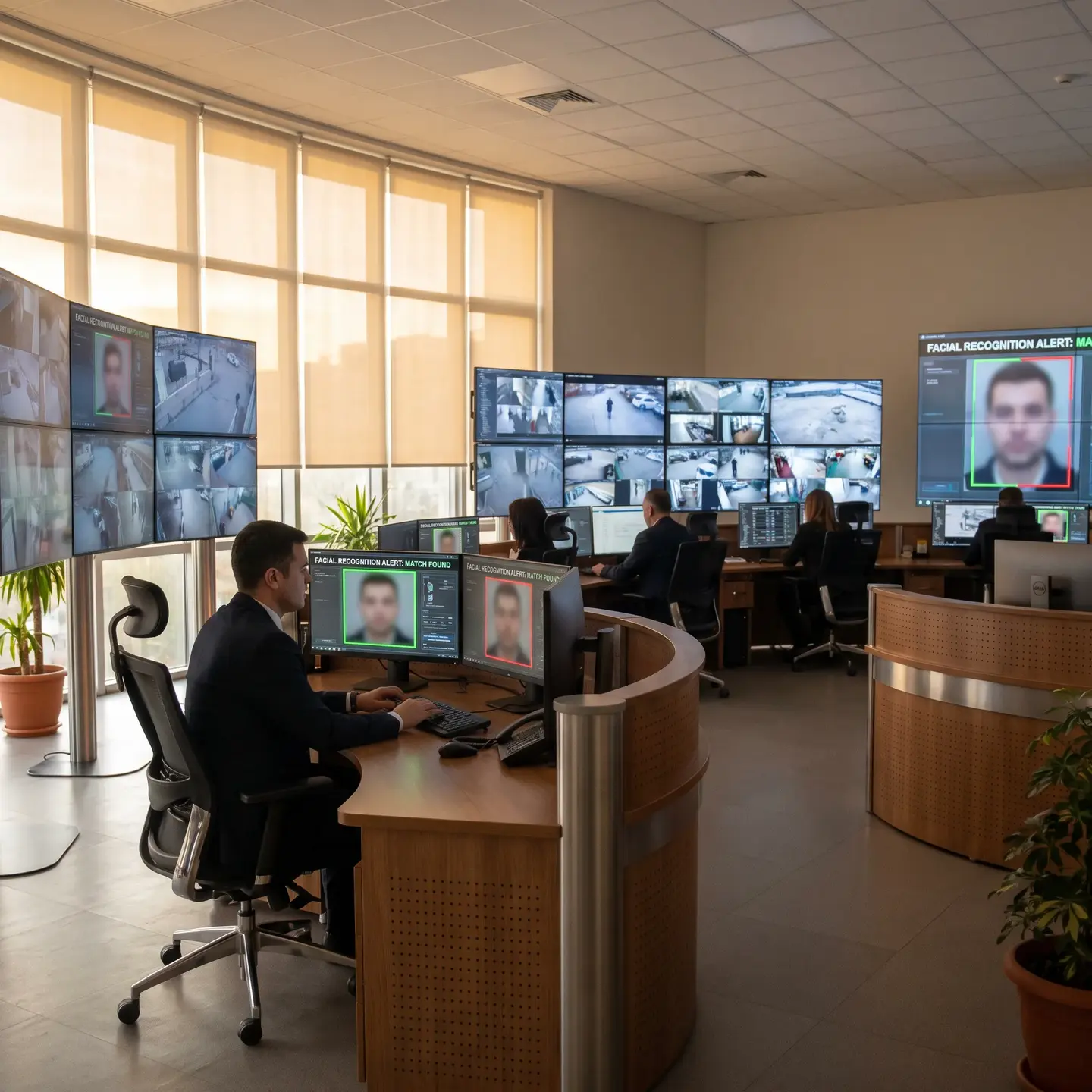
Staff reviewing facial recognition alerts must understand that a match means a similarity score exceeded a threshold, not that identity has been confirmed. Training should cover:
- Treating alerts as possible matches requiring verification.
- Comparing stable facial features rather than contextual assumptions.
- Reviewing image quality and capture conditions.
- Documenting decisions and escalating appropriately.
Making the Decision
Facial recognition technology has matured significantly, and for specific commercial applications, it delivers genuine security and operational benefits. The facial recognition technology in security applications continues advancing, with improvements in accuracy, speed, and integration capabilities.
However, successful implementation requires honest assessment of whether the technology addresses your actual security needs, proper technical infrastructure to support reliable operation, compliance with Canadian privacy requirements, and commitment to ongoing management. The strongest deployments combine facial verification with existing credentials as part of a layered security approach rather than relying on facial recognition as an autonomous decision-maker.
If you are evaluating whether facial recognition belongs in your security infrastructure, the right approach starts with a clear understanding of the problem you are solving, the conditions at your specific facilities, and the operational capacity you have to manage the system properly over time. We help commercial clients across Canada and the United States work through these considerations and design IP Camera Systems that deliver reliable, long-term performance matched to their actual requirements.
Frequently Asked Questions
No. A match indicates that a similarity threshold was exceeded, not confirmed identity. Use it with credentials and require human review for alerts.
Complete a privacy impact assessment, obtain appropriate express consent, provide notice and alternatives, limit data use, protect biometric templates, and define deletion procedures. Quebec may also require advance biometric-database disclosure.
Plan for face-level cameras, even lighting, sufficient resolution, network capacity, processing hardware, access-control integration, and ongoing database maintenance.
It performs best during controlled, one-to-one verification at dedicated entry points with good lighting, suitable camera positioning, and cooperative subjects.
No. Face detection identifies that a face is present, while facial recognition compares it with enrolled images to estimate whose face it may be.