

Telephone Entry Systems for
Commercial Buildings
What Are Telephone Entry Systems?
MANUFACTURER-AUTHORIZED TELEPHONE ENTRY SOLUTIONS
Ainger Cabling + Security installs telephone entry systems that enable secure visitor access for multi-tenant commercial buildings, office complexes, and gated properties across Canada and the United States. As a manufacturer-authorized dealer for leading access control brands, we provide factory-backed warranties and certified installation on every telephone entry system we deploy. Established 30+ years ago, we serve property managers, facility directors, and building owners who need a single accountable partner for both access control systems and security system wiring, so the telephone entry hardware and the infrastructure it depends on are installed and supported by one team.
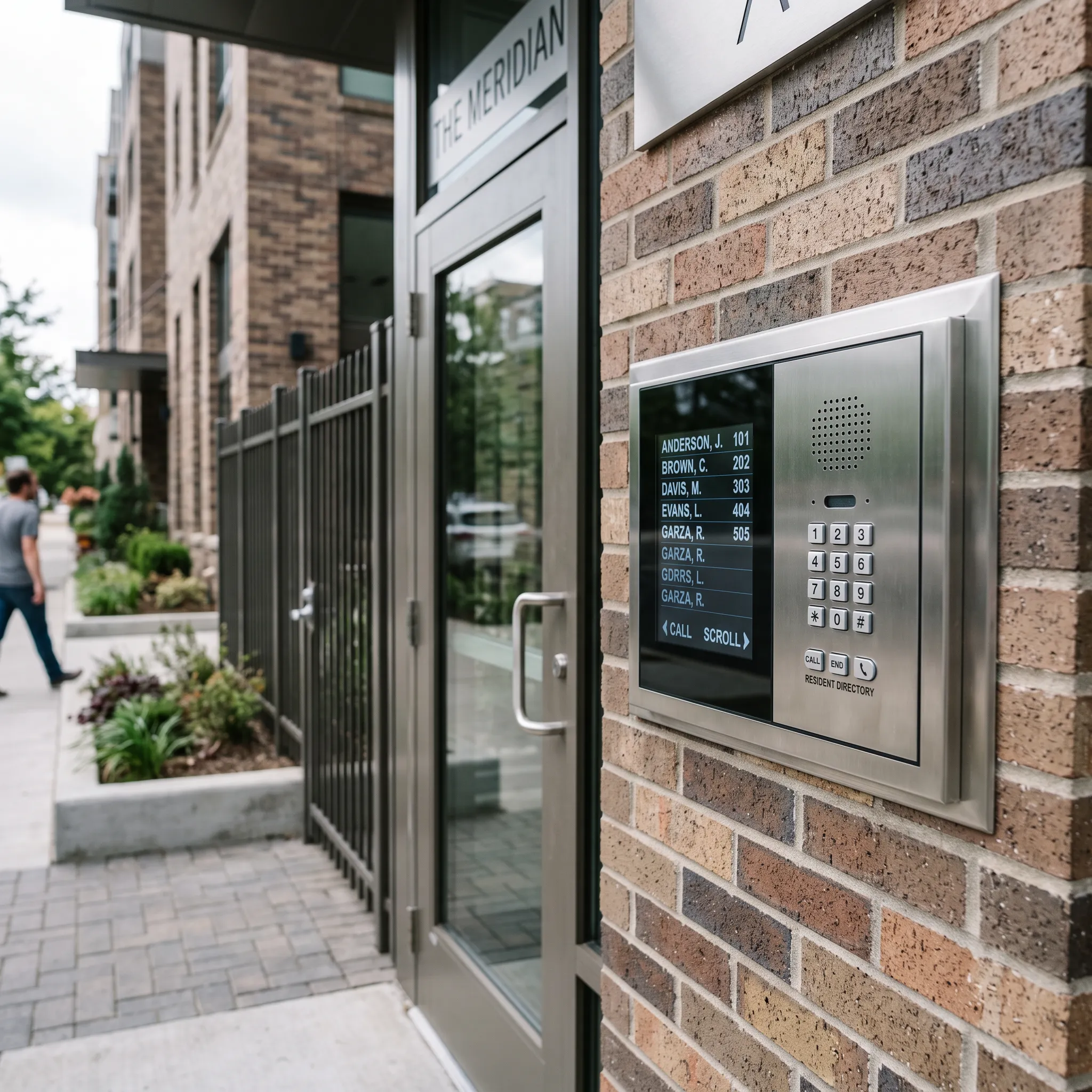
Telephone entry systems are directory-based access control solutions that allow visitors to call tenants or residents from a building entrance and request remote door release. The core components: entrance panel with keypad and directory display, telephone interface that routes calls to tenant phone lines or mobile devices, and electric door strike or magnetic lock controlled by the tenant’s phone keypad. Telephone entry systems differ from intercom systems through their telephone-based communication method—calls go to actual phone lines or cell phones rather than dedicated intercom stations inside the building.
The operational benefits eliminate the need for on-site reception staff, allow tenants to grant access from any location (office, home, mobile), and provide audit trails of entry attempts for security compliance. Every installation comes with factory-backed warranties from authorized brands, all backed by certified technician training on commercial security standards.
How Telephone Entry Systems Work
Understanding the visitor entry process helps property managers and building owners evaluate telephone entry systems before committing to installation:
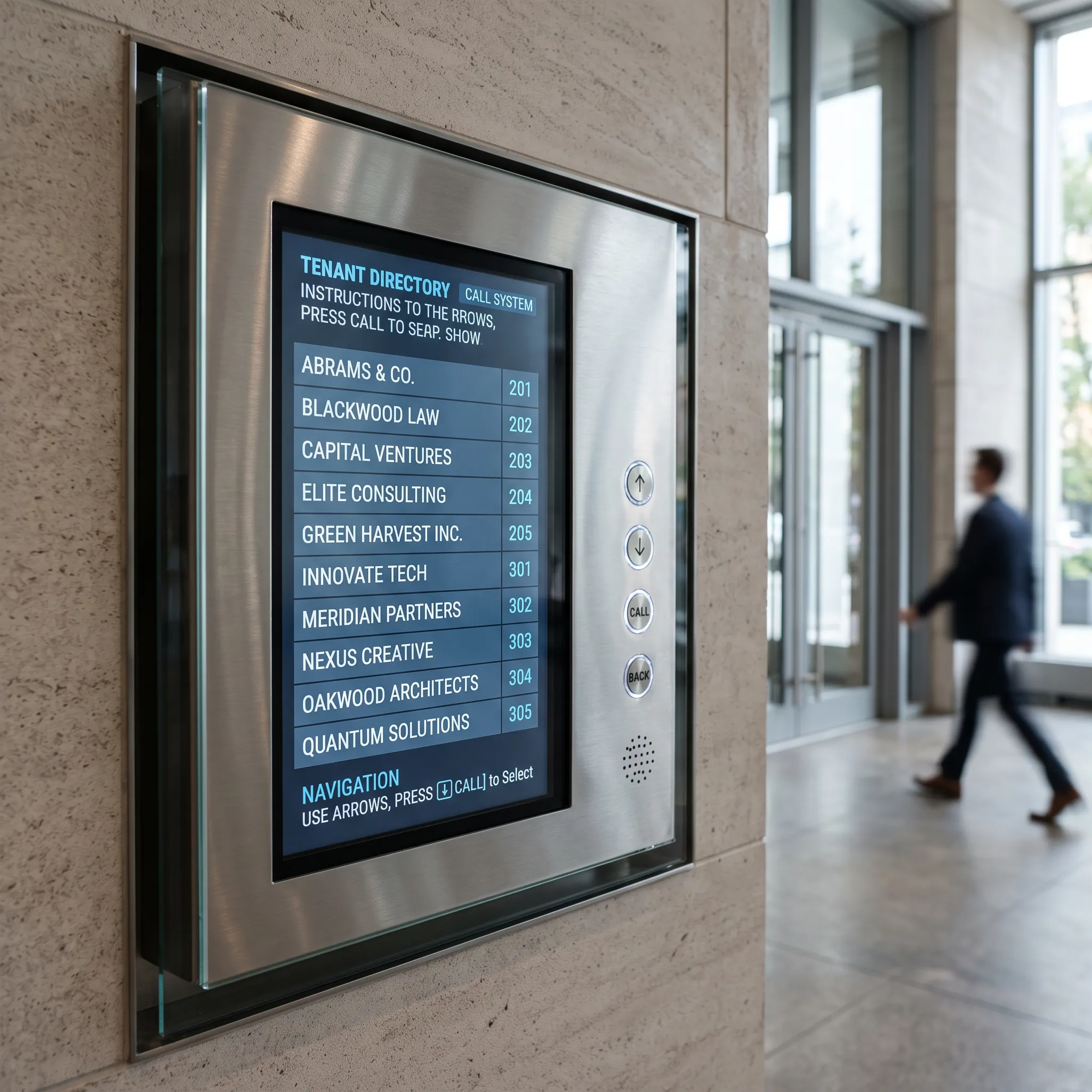
- Directory lookup process: visitor approaches entrance panel, scrolls through tenant directory using keypad or touchscreen, selects desired tenant and presses call button.
- Call routing and tenant response: system routes call to tenant’s designated phone line (landline, VoIP, or mobile device), tenant answers and speaks with visitor through entrance panel speaker.
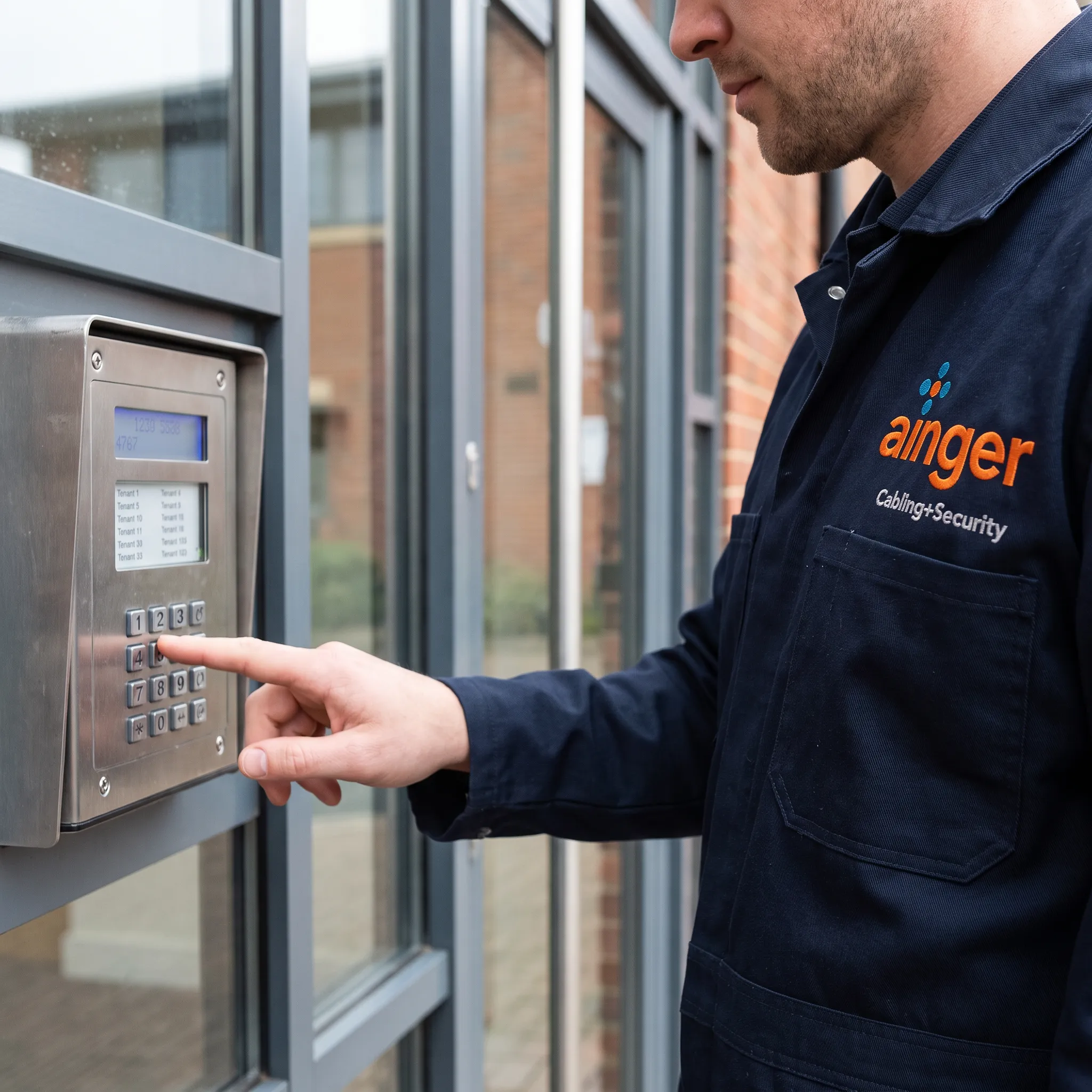
- Remote door release: tenant presses designated key on phone keypad (typically 9 or #) to send unlock signal, system activates electric strike or magnetic lock for timed door release.
- Integration with access control: telephone entry panels integrate with existing access control platforms to allow credential-based entry (card, fob, keypad code) alongside visitor call functionality, eliminating need for tenants to release door for their own entry.
Standalone vs Integrated Telephone Entry Systems
Commercial clients choose between standalone telephone entry or integrated access control platforms based on building requirements and future expansion plans:
- Standalone telephone entry: dedicated entrance panel connects directly to phone lines, suitable for single-entrance buildings or properties without existing access control infrastructure, lower upfront cost but limited reporting and integration capabilities.
- Integrated telephone entry: entrance panel connects to access control platform, allows credential-based entry alongside visitor calls, generates audit trails of all entry events, integrates with video surveillance for visual verification before door release.
- Multi-entrance configurations: deploy multiple entrance panels across parking garage gates, pedestrian doors, and loading dock entries, all managed from centralized access control platform with unified tenant directory.
- Legacy system replacement: upgrade analog telephone entry systems to modern IP-based platforms that support mobile app integration, cloud-based directory management, and remote system administration.
Properties That Benefit from Telephone Entry Systems
COMMERCIAL TELEPHONE ENTRY APPLICATIONS
Ainger serves commercial clients across multiple property types, each with distinct telephone entry requirements and visitor management considerations:
- Multi-tenant office buildings: allow visitors to call specific tenant suites from main entrance, eliminate need for full-time reception staff, integrate with existing access control for tenant credential entry.
- Residential condominiums and apartments: enable residents to grant access to guests, delivery drivers, and service providers from any location, manage temporary access codes for contractors and cleaners.
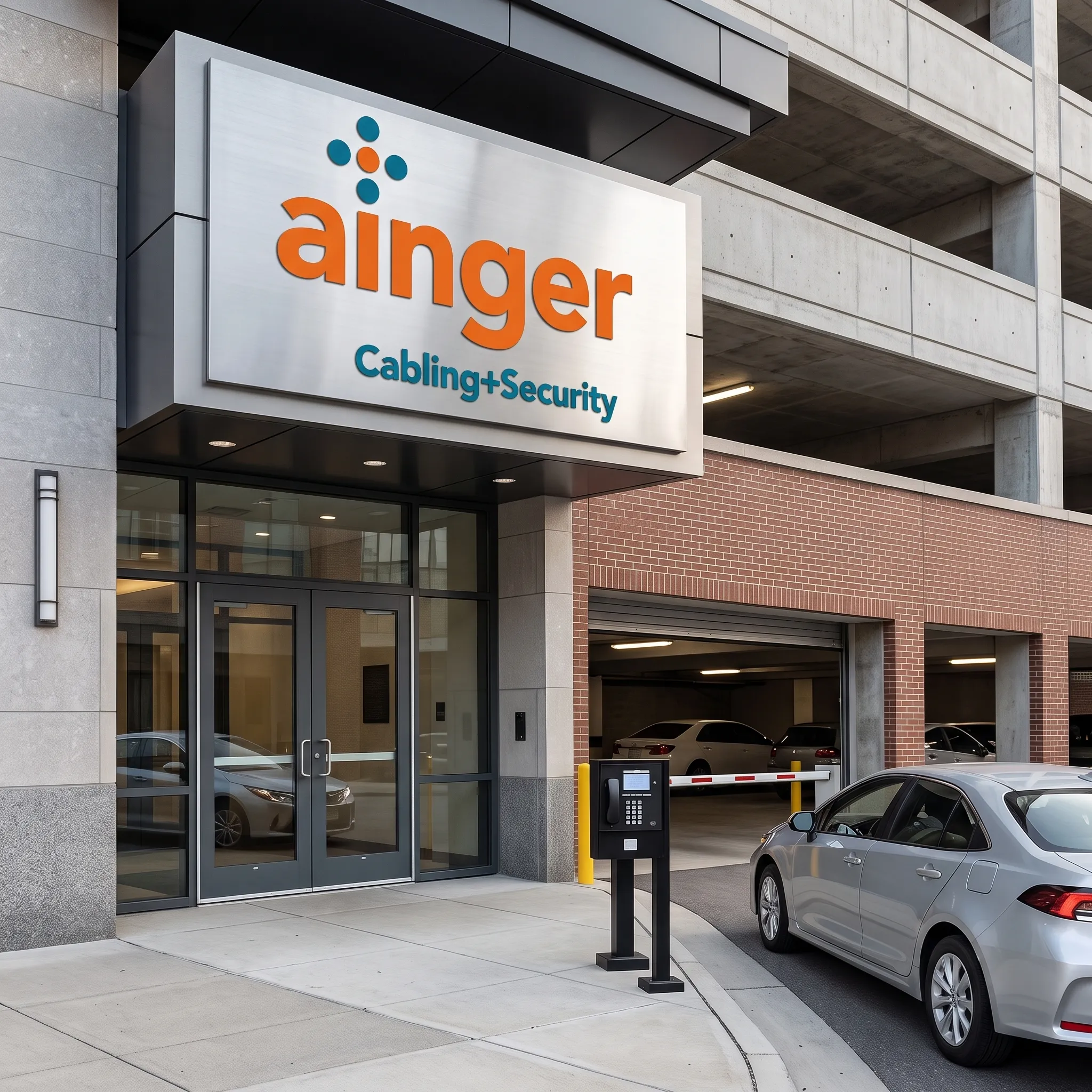
- Gated communities and parking facilities: control vehicle access at entrance gates, route calls to resident mobile phones for remote gate release, log all entry attempts for security audit trails.
- Industrial and warehouse complexes: secure loading dock and pedestrian entrances, allow truck drivers to call receiving departments for dock door release, integrate with existing security infrastructure.
- Mixed-use developments: deploy multiple entrance panels for residential, commercial, and parking areas, maintain separate tenant directories for each building zone, centralize management through unified access control platform.
- Property management portfolios: standardize telephone entry systems across multiple buildings, enable remote directory updates and system administration, generate consolidated reporting for all properties.
Our Telephone Entry System Installation Process
PREDICTABLE PROJECT DELIVERY
Ainger follows a structured installation process that sets clear expectations for property managers and building owners evaluating telephone entry vendors:
Site assessment: Ainger technician visits property to document entrance locations, existing phone line infrastructure, network connectivity, and integration requirements with current access control or intercom systems. System design: specify entrance panel capacity, call routing configuration, tenant directory structure, and integration with existing building systems. Proposal delivery: itemized quote includes equipment (manufacturer and model), labor, security system wiring if required, and factory warranty terms.
Installation: mount entrance panels at designated locations, run phone lines or network cabling to control panel, install electric strikes or magnetic locks, configure call routing and tenant directory. Testing and commissioning: verify call routing to all tenant phone numbers, test door release functionality from multiple phone types, confirm audit trail logging, train property staff on directory management and system administration.
What’s Included in Our Telephone Entry System Installations
COMPLETE SYSTEM SCOPE
Entrance panel and directory
Weather-rated entrance panel with keypad or touchscreen directory, speaker and microphone for two-way communication, sized for current tenant count plus expansion capacity.
Call routing and control
Telephone interface module that routes calls to tenant landlines, VoIP systems, or mobile devices, with DTMF tone detection for remote door release via phone keypad.
Electric locks and hardware
Electric strikes, magnetic locks, or gate operators as required by entrance type and fire code, with request-to-exit sensors and door position switches for proper operation.
Wiring and integration
Phone line or network cabling between entrance panel and control location, integration with existing access control platforms where specified, connection to video surveillance for visual verification.
Factory-backed equipment warranty (terms vary by manufacturer), technician training on directory management and system operation, as-built documentation and admin credentials. Ongoing maintenance or directory updates require separate service agreement.
Client Testimonials
What Our Customers Have to Say





















Get a Quote for Your Telephone Entry System
READY TO START?
Every project starts with a site assessment. We’ll evaluate your property, identify entrance requirements, and provide a detailed scope covering equipment, wiring, integration, and timeline. No obligation, no pressure.
Request a QuoteFrequently Asked Questions
Yes. Many commercial telephone entry systems support temporary access codes that can be issued to delivery drivers, contractors, or temporary visitors. Codes can be set to expire after a single use, after a specific time period, or on a schedule. This allows controlled access without requiring a tenant to answer a call for every expected delivery.
Tenant directories are managed through the system’s administration interface. Adding, removing, or updating tenant names and phone numbers takes minutes. For property management companies with multiple buildings, centralized directory management allows changes across all locations from a single platform. We provide training on directory management as part of every installation.
A visitor approaches the entry panel at the building entrance, looks up the tenant in the directory, and presses the call button. The system dials the tenant’s designated phone number, which can be a mobile phone, landline, or VoIP extension. The tenant answers, verifies the visitor’s identity through the conversation, and presses a key on their phone to release the door or gate remotely.
Yes. Modern telephone entry systems can be configured to call mobile phone numbers directly. When a visitor calls from the entry panel, the tenant’s mobile phone rings like a normal incoming call. The tenant answers, speaks with the visitor, and presses a designated key to release the door. Multiple phone numbers can be programmed per tenant for backup if the primary number is not answered.
Yes. Telephone entry panels are commonly installed at parking garage entrances, gated parking lots, and vehicle access points. The visitor calls from the panel at the gate, the tenant or operator answers and verifies the visitor, and a key press releases the gate. For high-traffic locations, the system can be paired with licence plate recognition or access cards to automate regular vehicle entry.
A telephone entry system routes visitor calls to standard phone lines or mobile devices. The tenant answers on their existing phone and uses a key press to release the door. A video intercom uses dedicated indoor stations or a mobile app with live video, allowing the tenant to see the visitor before granting access. Telephone entry systems are simpler and less expensive but lack the visual verification that video intercoms provide.
Yes. Telephone entry systems integrate with access control platforms to log door release events triggered by tenant phone commands. The integration creates a unified audit trail showing who authorized entry, when, and for which visitor. Tenants who are also credentialed users can bypass the telephone entry system entirely using their access card or mobile credential.
1996–2026

Contact Us
Get in Touch with Ainger Cabling + Security
Find Us Online