

Network Cabling Services for
Commercial Facilities
What Is Commercial Network Cabling?
MANUFACTURER-AUTHORIZED NETWORK INFRASTRUCTURE
Ainger Cabling + Security delivers manufacturer-authorized network cabling infrastructure for commercial clients across Canada and the United States, serving businesses for over 30 years. We deliver standalone structured cabling as its own discipline, not just wiring bundled into a security install. Most security contractors can pull camera cable; far fewer can design and certify commercial network infrastructure to TIA/EIA standards. That depth is the difference, and it means one accountable team for your cabling, your network, and the security systems that run on top of it.
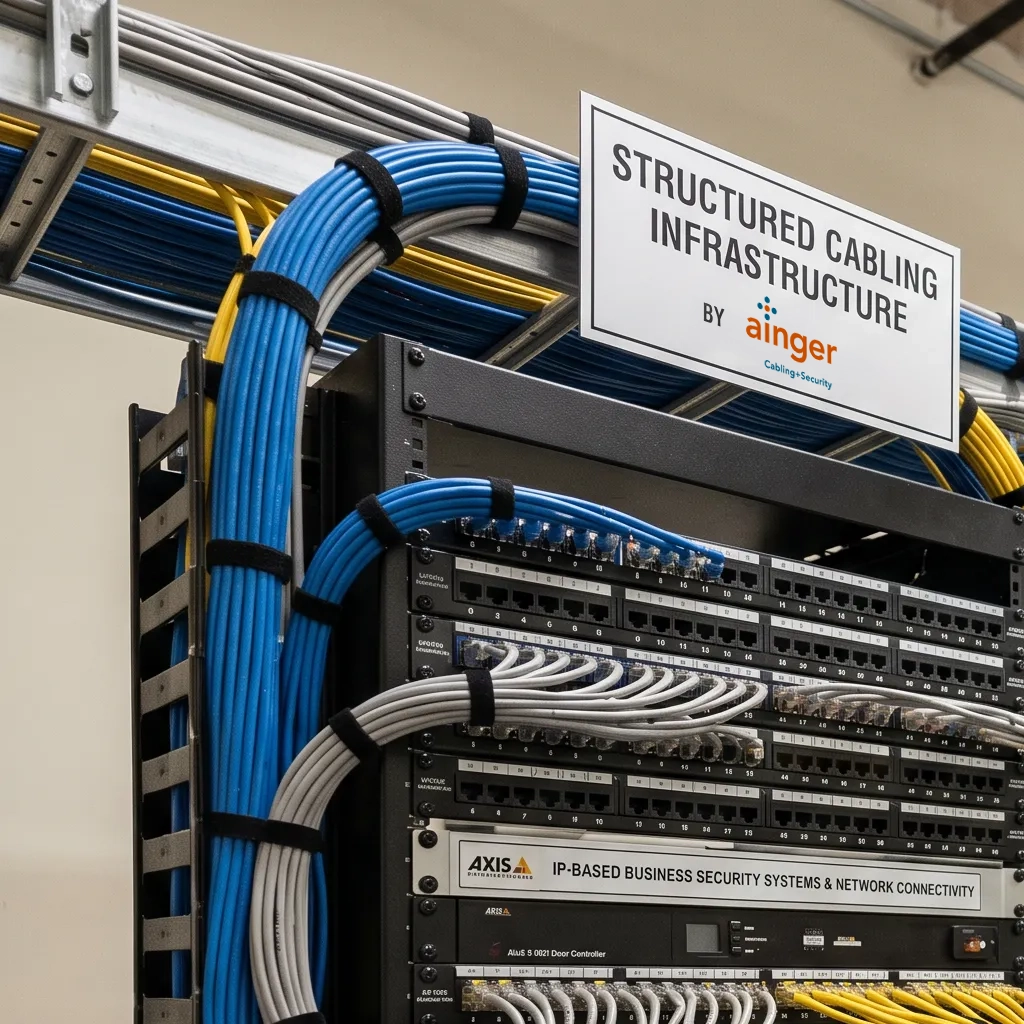
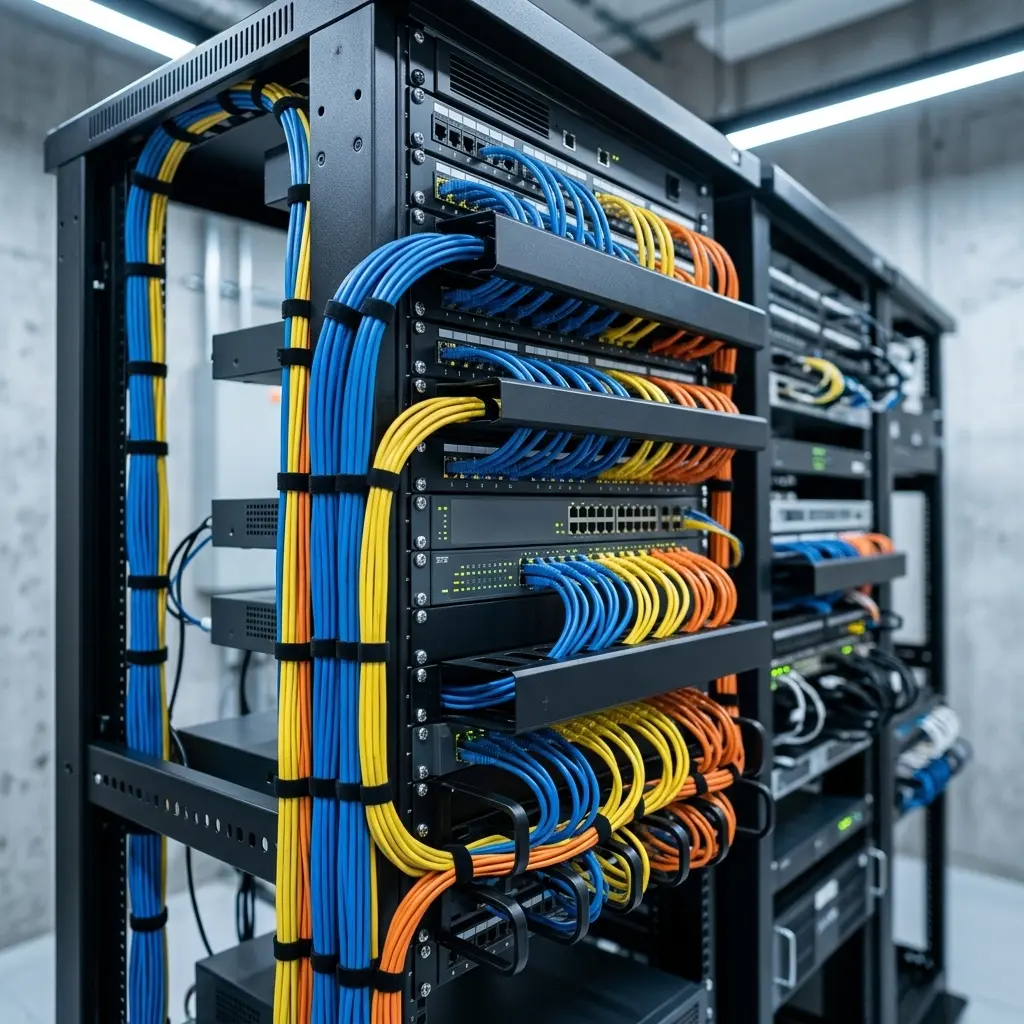
Structured cabling is the physical infrastructure that carries data, voice, and video signals throughout your facility. It includes horizontal cabling from equipment rooms to workstations, backbone cabling connecting floors and buildings, patch panels, termination hardware, and cable management systems. This infrastructure supports everything your business runs on: VoIP phone systems, wireless access points, IP cameras, IoT devices, and cloud-connected applications.
What separates commercial-grade network cabling from residential installations is the performance standard behind it. Commercial environments require plenum-rated cables for in-ceiling and in-wall runs, fire code compliance, certified testing on every cable run, and structured documentation for ongoing serviceability. Properly installed commercial network cabling has a 10-15 year lifespan, making initial installation decisions critical to long-term reliability.


Who Needs Commercial Network Cabling Services?
Commercial network cabling supports a wide range of business environments, each with distinct infrastructure requirements:
- Commercial offices and warehouses requiring structured cabling for workstations, conference rooms, wireless access points, and network equipment rooms.
- Healthcare facilities needing compliant cabling for medical devices, patient records systems, telehealth infrastructure, and clinical workstations with strict data security requirements.
- Hospitality properties including hotels and gyms installing guest Wi-Fi infrastructure, property management systems, and commercial security systems networks.
- Industrial facilities requiring shielded cabling for high-EMI environments, ruggedized installations, and production floor connectivity where standard unshielded cable would degrade.
- Property management portfolios managing cabling infrastructure across multiple commercial buildings with centralized network management requirements.
- Retail and entertainment venues installing point-of-sale networks, digital signage, customer Wi-Fi, and back-office connectivity.
- Schools and daycare centers requiring safe, compliant cabling for classroom technology, administrative networks, and campus-wide connectivity.
How We Install Network Cabling for Commercial Clients
Every commercial network cabling project follows a structured process from assessment through certification:
- Site assessment and infrastructure planning. We walk the facility to document existing infrastructure, identify cable pathways, measure distances, and assess environmental factors that affect cable selection and routing.
- System design and cabling layout. Our team creates the cabling design with cable routes, equipment room locations, patch panel configurations, drop locations, and a labeling scheme before any physical work begins.
- Compliance review. We verify the installation meets local building codes, fire codes, and industry standards including TIA/EIA-568 and BICSI best practices for commercial cabling design.
- Cable installation. Technicians pull cables through conduit or cable trays, maintain proper bend radius specifications, and secure cables with appropriate support hardware following manufacturer guidelines.
- Termination. Cables are punched down to patch panels and wall jacks using manufacturer-specified termination procedures from Panduit and other authorized brands.
- Testing and certification. Every cable run undergoes testing with Fluke or equivalent certification equipment to verify performance meets category specifications. Nothing goes live without verified results.
- Documentation and handover. We provide as-built drawings, cable labeling maps, and certification test reports for your facility records. This documentation is yours and ensures future service work can be completed efficiently.

Network Cable Types We Install
COMMERCIAL NETWORK CABLE TYPES & SPECIFICATIONS
Understanding cable categories helps facility managers evaluate proposals and select the right infrastructure for their facility:
- Cat5e supports 1 Gbps speeds up to 100 meters and is suitable for standard office networks, VoIP phone systems, and basic data applications. While still functional, we recommend Cat6 or Cat6a for new installations to support future network demands.
- Cat6 supports 10 Gbps speeds up to 55 meters and is recommended for higher-density office environments, wireless access point backhaul, and facilities planning for future bandwidth growth.
- Cat6a supports 10 Gbps speeds up to the full 100-meter distance with superior electromagnetic interference resistance. Ideal for industrial facilities, healthcare environments, and any facility that needs maximum performance and longevity.
- Fiber optic cabling including single-mode and multi-mode fiber for backbone connections between floors, between buildings, and for bandwidth-intensive applications where copper cable limitations become a factor.
- Shielded twisted pair (STP) cables provide additional protection against electromagnetic interference in industrial environments, manufacturing floors, and facilities with high electrical noise from heavy equipment, lighting, or HVAC systems.
- Plenum-rated cables are required by commercial building codes for any cable run through air-handling spaces. They feature fire-resistant jackets that produce minimal smoke during combustion. If your cables run through ceilings or walls in a commercial building, plenum-rated is not optional.
Why Commercial Facilities Choose Ainger for Network Cabling
ONE TEAM FOR THE ENTIRE LOW-VOLTAGE LAYER.
Many cabling contractors handle data and voice runs but stop at the edge of security and AV. Ainger designs the whole low-voltage layer together: network cabling, security camera runs, access control wiring, and AV wiring all planned as one system. Because the same team owns the design, those runs share conduit and cable tray, which cuts redundant pathway installation and total project cost. And because we also install and service the security systems that ride on this cabling, the infrastructure is built from day one to support them rather than retrofitted later.
Our manufacturer-authorized dealer status for Panduit and other commercial cabling brands means factory-backed warranties on every installation. Technicians receive factory training on cable handling, termination methods, and testing procedures that meet manufacturer specifications. When complex issues arise, we escalate directly to manufacturer engineering support.
One infrastructure partner. One accountability chain. One warranty behind everything we install.
How Long Does Network Cabling Installation Take?
PROJECT TIMELINES & SCHEDULING
Small office installations
10–20 network drops typically complete within 2–5 business days, including cable installation, termination, testing, and certification.
Mid-size facilities
50–100 drops typically require 1–3 weeks for installation, testing, and documentation depending on building layout and pathway accessibility.
Large facility deployments
100+ drops across multiple floors or buildings require custom timelines with phased installation to minimize operational disruption.
Multi-site rollouts
Standardized cabling designs customized per location, with coordinated deployment schedules and centralized documentation across all sites.
Site assessment and system design typically require 3–7 days before physical installation begins. Most installations are scheduled during off-hours or weekends to avoid disrupting business operations. Factors including building size, pathway accessibility, permitting requirements, and coordination with other trades affect the final timeline.
Client Testimonials
What Our Customers Have to Say




















Get a Quote for Your Network Cabling Project
READY TO START?
Every project starts with a site assessment. We’ll evaluate your facility, document existing infrastructure, identify the most efficient cabling routes, and provide a detailed scope and timeline. No obligation, no pressure.
Request a QuoteFrequently Asked Questions
Yes. Ainger operates as an infrastructure partner, not a one-time project vendor. We provide ongoing troubleshooting, maintenance, and expansion support beyond initial installation. If you experience network connectivity issues, need to add drops, or require cable testing, our technicians are available to support your infrastructure.
Properly installed structured cabling typically lasts 10-15 years in commercial environments. Cable lifespan depends on installation quality, cable type, environmental conditions, and physical stress. Cat6 and Cat6a installations often remain viable longer than Cat5e because they support higher speeds that accommodate future technology adoption. Regular inspection and proper cable management extend infrastructure lifespan.
Network cabling costs vary based on cable type, number of drops, building layout, and accessibility. Small office installations typically range from a few thousand dollars for 10-20 drops, while larger facilities with 50-100 drops may range into the mid to high five figures. The majority of cost is labor rather than materials, which is why installing higher-grade cable initially is more cost-effective than retrofitting later. Contact us for a site assessment and project-specific quote.
Yes. Most commercial network cabling installations are scheduled during off-hours, evenings, or weekends to minimize disruption to business operations. For larger projects, we phase the installation by floor, wing, or department to keep most of the facility operational throughout the project. During the site assessment, we work with facility managers to develop a schedule that meets operational requirements.
Ainger Cabling + Security primarily serves commercial clients. We specialize in business-grade network infrastructure for commercial offices, healthcare facilities, hospitality properties, industrial facilities, property management portfolios, retail venues, schools, and telecommunications projects. Our technicians are trained on commercial reliability standards and compliance requirements.
Every network cabling installation includes cable testing with Fluke or equivalent certification equipment to verify performance meets category specifications (Cat5e, Cat6, or Cat6a). We provide detailed test reports documenting cable length, signal attenuation, crosstalk, and other performance metrics for each cable run. These reports serve as permanent facility records and verify that the installation meets TIA/EIA-568 standards.
Cat5e supports 1 Gbps speeds up to 100 meters and is suitable for standard office networks. Cat6 supports 10 Gbps speeds up to 55 meters and is recommended for higher-density environments. Cat6a supports 10 Gbps speeds up to 100 meters with superior interference resistance, making it ideal for industrial facilities and future-proofing. For most new commercial installations, we recommend Cat6 or Cat6a to support current and future network demands.
1996–2026

Contact Us
Get in Touch with Ainger Cabling + Security
Find Us Online