

Retail & Entertainment Security Systems
for Stores, Chains and Venues
Why Retail and Entertainment Security Is Different
THREE DECADES SERVING RETAIL OPERATORS
Ainger Cabling + Security has delivered security and cabling infrastructure for retail stores, shopping plazas, restaurants, and entertainment venues across Canada and the United States for 30 years. These environments face a challenge almost no other commercial facility does: the doors are open to the public all day, and the people who pose a risk look exactly like the people who pay the bills.
That changes the design problem entirely. Cash sits at the counter, inventory sits on open display, and staff turnover means security procedures have to be simple enough that a new hire follows them correctly in week one. Loss comes from both directions, external theft at the door and internal shrinkage in the stockroom, and the two require different coverage to catch.
Liability adds a second layer. Slip-and-fall claims, altercations between customers, and confrontations with shoplifters all end the same way, with someone asking what the footage shows. Camera coverage that is adequate for security is often inadequate as evidence, and the difference only becomes apparent when you need it.

Security Systems Retail Operators Deploy
Retail and entertainment security infrastructure typically combines several systems, each covering a different part of the operation:
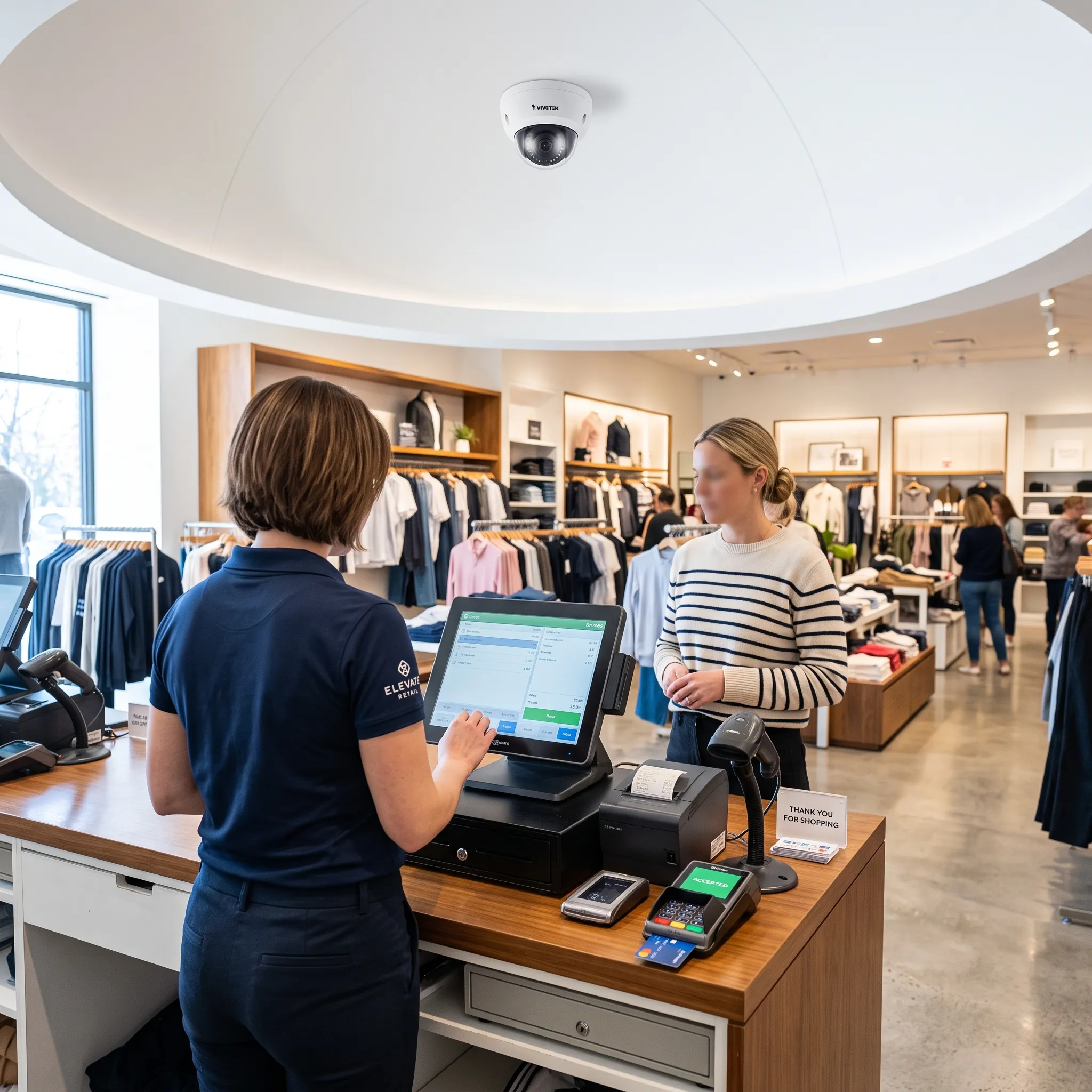
- CCTV over sales floors and stockrooms covers the trading area, point of sale, exits, and back-of-house, using cameras specified for the lighting and distances each position actually faces.
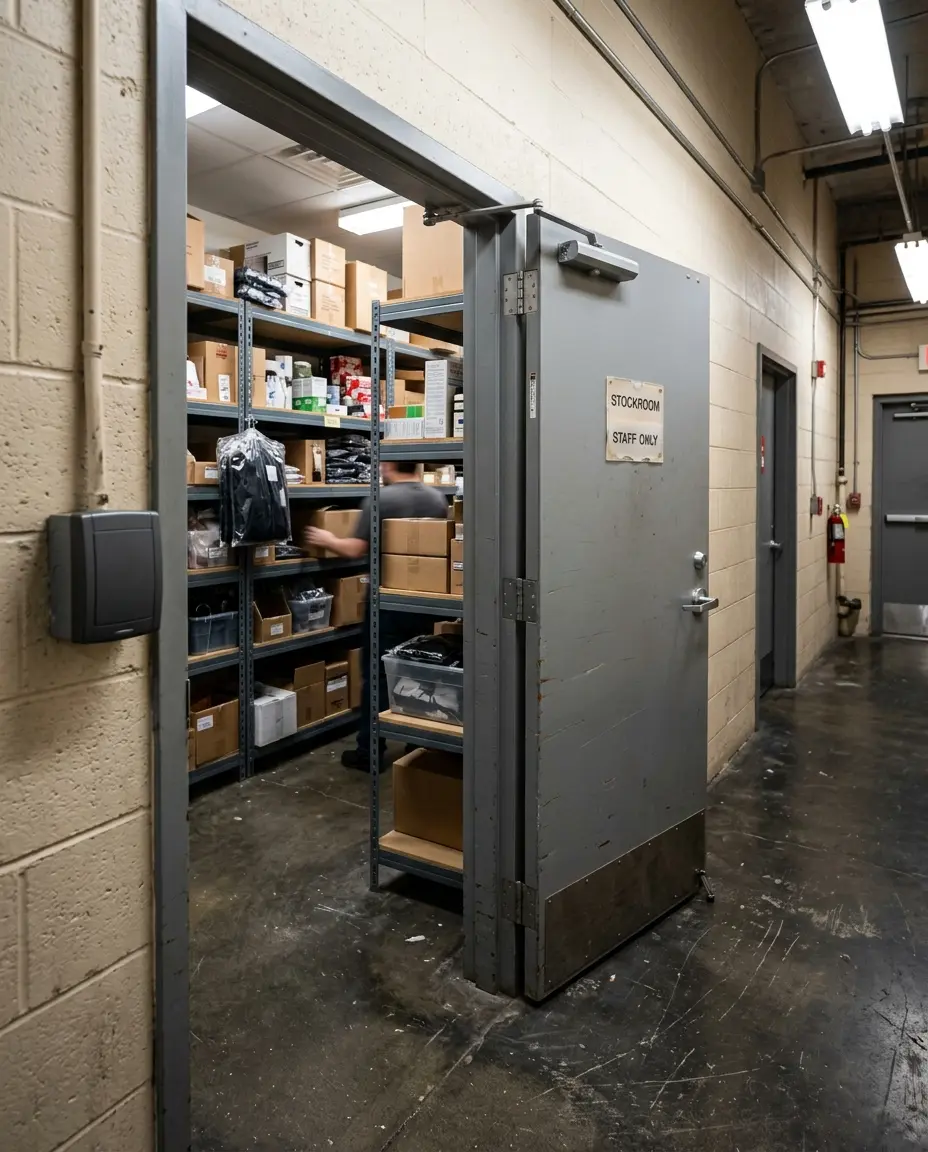
- Access control for back-of-house restricts stockrooms, cash offices, and staff-only areas to authorized employees, with credentials that can be revoked the moment someone leaves.
- Intrusion detection for after hours protects the premises once the doors close, with optional 24/7 monitoring available as a paid add-on service.
- POS and network cabling carries point of sale terminals, payment devices, wireless access points, and digital signage on the same structured cabling backbone as the security systems.
- Traffic counters measure footfall through the entrance, turning the camera infrastructure into a source of trading data rather than a security cost alone.
Loss Prevention Is a Discipline, Not Just Cameras
Plenty of stores have cameras and still cannot resolve an incident when it happens. The difference is in how the system is designed rather than how many cameras are on the ceiling:
- Point of sale coverage catches the transaction, not just the room. A camera positioned over the till captures the exchange, the items scanned, and the hands involved. A camera covering the general area captures that something happened without showing what.
- Exit coverage needs identification-grade detail. Wide shots of a doorway confirm a person left. Correctly specified cameras at the right height and focal length capture a face clearly enough to be useful to police and to an insurer.
- Internal shrinkage happens out of sight. Stockrooms, receiving doors, and waste disposal areas are where inventory leaves without passing a till. These positions are routinely under-covered because they are not customer-facing.
- Door events and video work better together. When access control is integrated with the camera system, a stockroom door opening automatically bookmarks the footage. An inventory discrepancy weeks later becomes a search of a handful of clips rather than days of recording.
- Retention has to outlast discovery. Shrinkage is often identified at the next stock count, not on the day it happens. Retention sized to 30 to 90 days means the footage still exists when someone finally goes looking for it.
Running Security Across Multiple Stores or Venues
CHAINS, FRANCHISES AND MULTI-SITE OPERATORS
Operators who let each location choose its own system end up managing a different platform in every store. Standardising across the chain changes what is possible:
- One design, adapted per site. The same platform, camera models, and credential format at every location, adjusted for each floor plan. Staff moving between stores work with an interface they already know.
- Head office sees everything, managers see their own. Centralised video and credential management lets regional or corporate staff view any location from one platform, while store managers retain access to their site.
- Consistent protocols regardless of who is on shift. Alarm events and access violations trigger the same response in every store, which matters most in franchise operations where day-to-day management varies by owner.
- Credentials follow the employee. Staff transferring between locations have access extended rather than being issued a second card, and every entry stays logged against the same individual.
- Rollout is phased, not simultaneous. Deployment moves across the chain in stages, spreading cost and avoiding disruption to multiple trading locations at once.
Security Infrastructure That Earns Its Keep
TRADING DATA AND A SINGLE ACCOUNTABLE PARTNER
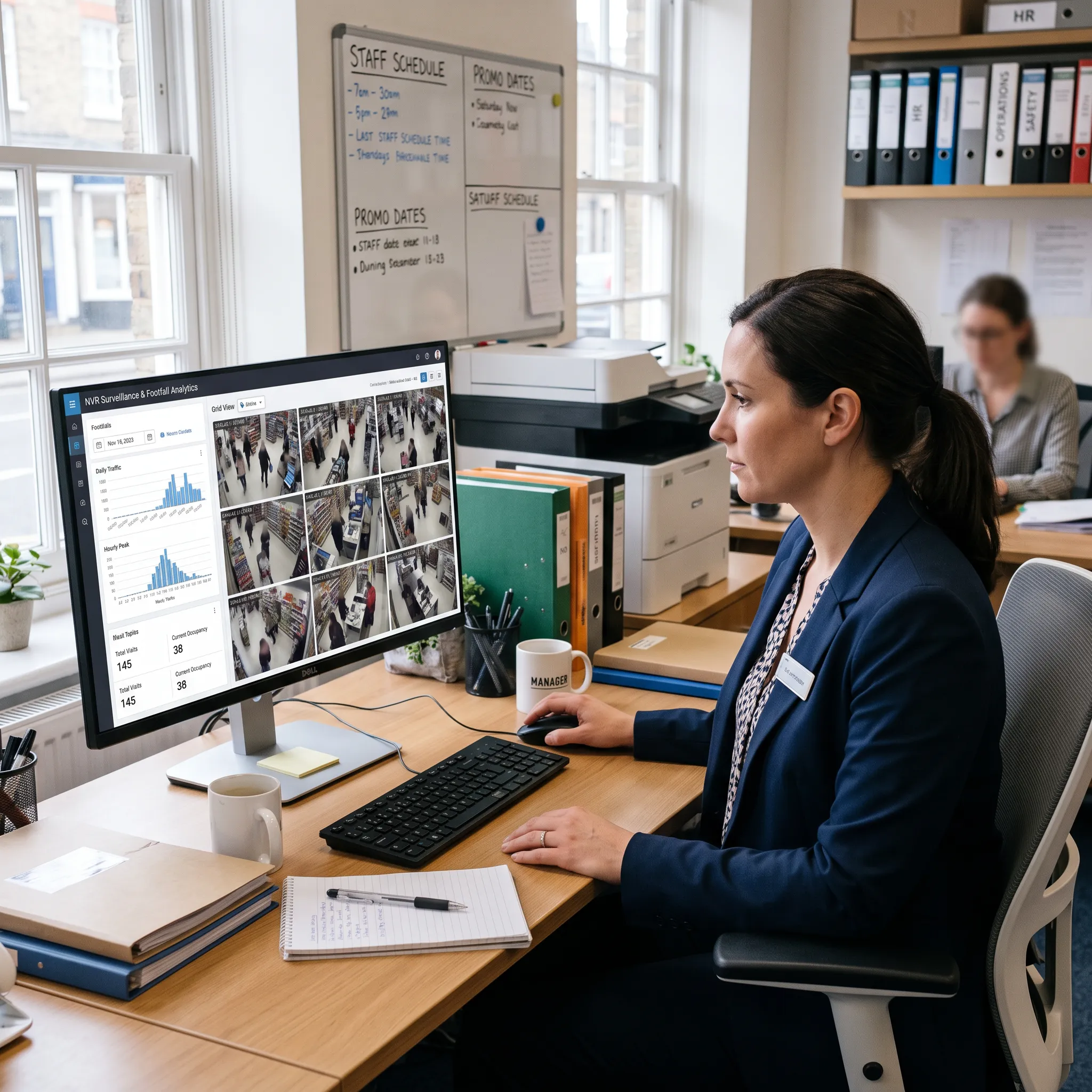
The same camera infrastructure that protects a store can tell you how it trades. Traffic counters give you footfall alongside revenue, which turns sales figures into a conversion rate. Peak periods inform staff scheduling. Promotions and window displays become measurable rather than assumed. Comparing footfall across a chain shows which locations convert and which simply get more traffic.
On the security side, most retailers end up with one contractor for the cameras and alarm and another for the cabling. The POS network, wireless access points, and security systems all run on the same backbone, so when something drops out the two vendors each point at the other. Ainger installs both the security systems and the wiring underneath them, so the cabling is specified for the full load the store carries and there is one number to call.
Our manufacturer-authorized dealer status for Kantech, Uniview, Avigilon, DSC, Akuvox, Mircom, Active Watch, and Panduit means factory-backed warranties across the installation, whether that is a new fit-out or an ongoing maintenance agreement across a chain.
For venues that need eyes on the property outside trading hours, live remote video monitoring is available as a paid add-on, with trained operators watching feeds and responding in real time rather than reviewing footage after the fact.
How Long Does Retail Security Installation Take?
PROJECT TIMELINES & SCHEDULING
Single storefront
CCTV over the sales floor and till, access control on the stockroom, and an after-hours alarm typically complete within 2–4 days including commissioning and staff training.
Large-format store or venue
Full floor coverage, multiple access points, POS cabling, and traffic counters generally require 1–3 weeks depending on floor area and trading hour restrictions.
Multi-store chain rollout
Standardized design deployed across locations in phases, with centralized management configured once and each store typically completing within its own short window.
Fit-out during a build
Running cabling while walls and ceilings are open is the most efficient option, coordinated with the other trades so infrastructure goes in at the right stage of the build.
Site assessment and system design typically require 3–5 days before installation begins. Retrofit work in a trading store is scheduled around opening hours, with after-hours and overnight installation available so the shop floor is unaffected during business hours.
Client Testimonials
What Our Customers Have to Say




















Get a Quote for Your Retail Security System
READY TO START?
Every project starts with a site assessment. We’ll walk the store or venue, identify where loss actually occurs, review your trading hours and existing infrastructure, and provide a detailed scope covering systems, cabling, timelines, and costs. No obligation, no pressure.
Request a QuoteFrequently Asked Questions
Traffic counters measure how many people enter your store, giving you footfall data alongside your sales figures. That lets you calculate conversion rate rather than just revenue, identify peak trading periods for staff scheduling, measure the impact of promotions or window displays, and compare performance across locations in a chain. The data comes from the same camera infrastructure that handles security.
Multi-store rollouts use a standardized system design adapted to each location’s floor plan, so equipment, software and camera placement logic stay consistent across the chain. Video and credentials are managed centrally, meaning head office can view any store from one platform while local managers retain access to their own site. Deployment is phased across locations to spread cost and avoid closing multiple stores at once.
Access credentials are deactivated or reassigned instantly from the management platform, so a departing employee’s card stops working the moment it is revoked with no rekeying required. For chains, staff moving between locations can have their credentials extended to the new store rather than being issued a second card. Every entry event stays logged against the individual.
Yes, and in retail internal shrinkage often accounts for as much loss as external theft. Camera coverage at point of sale, stockroom entrances and receiving doors, combined with access control logs showing who entered restricted areas and when, gives you the audit trail needed to investigate discrepancies. When access events are integrated with video, a stockroom door opening automatically bookmarks the corresponding footage.
Yes. Restaurants, bars, gyms, cinemas and event venues share many of the same requirements as retail, public access during operating hours, cash handling, staff-only areas and after-hours security, but with additional considerations around crowd density, licensed premises and incident documentation. The system design accounts for those differences.
In most cases yes. Cable routing uses existing ceiling and wall pathways wherever possible, and installation is scheduled around trading hours with after-hours and overnight work available. For larger fit-outs or full renovations we coordinate with the other trades on site so security infrastructure goes in at the right stage rather than being retrofitted afterwards.
Yes. We install the structured cabling that supports POS terminals, payment devices, wireless access points, digital signage and back-office systems, alongside the security infrastructure. Having one contractor handle both means the cabling is specified for the full load the store will carry, and there is a single point of accountability if something stops working.
Retention depends on your operational and insurance requirements, but 30 to 90 days is typical for retail. Longer retention helps with shrinkage investigations, where a discrepancy may not surface until an inventory count weeks later. Storage is sized during the design phase based on camera count, resolution and the retention period you need, with room to extend later.

Contact Us
Get in Touch with Ainger Cabling + Security
Find Us Online