

Property Management Security Systems
for Multi-Tenant Buildings and Portfolios
What Makes Security Different in a Managed Building
30+ YEARS WORKING WITH PROPERTY MANAGERS
Ainger Cabling + Security has spent more than 30 years designing, installing and servicing security and cabling for property managers, condominium corporations, commercial landlords and building owners in Canada and the United States. Managed properties raise a question most other buildings never face: the people responsible for security rarely live or work behind the doors they are protecting.
A property manager answers to a board, an owner or an asset manager, and to dozens or hundreds of residents or tenants who expect the front door, the garage and the elevator to work every time they arrive. Occupants change from month to month. Couriers, movers, trades and guests come and go at all hours. Common areas belong to everyone, which in practice means no one is watching them unless a system is.
Responsibility is usually split as well. The landlord or condo corporation looks after entrances, lobbies, corridors, parking and amenity spaces, while each tenant secures its own unit or leased premises. A good design settles that boundary at the start, so the building system and any tenant systems either work together or stay deliberately separate, with nothing falling between them.
Security Systems for Condos, Apartments and Commercial Properties
Most managed properties combine several systems, sized to the building and tied together so staff can run them from one place:
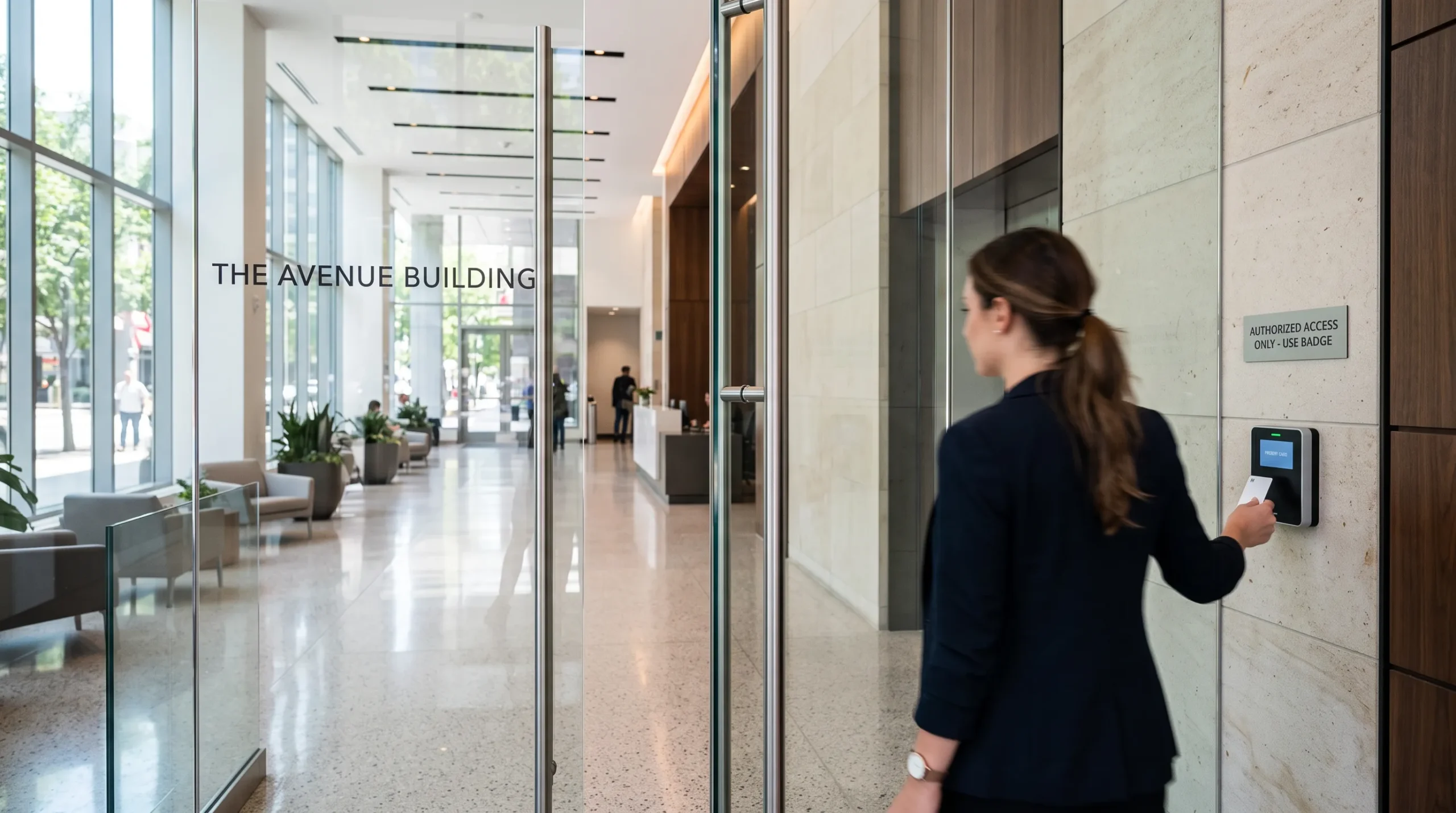
- Access control and fob management replaces keys at entrances, garages, amenity rooms and service areas with cards, fobs or mobile credentials that can be issued, limited by schedule or cancelled from a central platform.
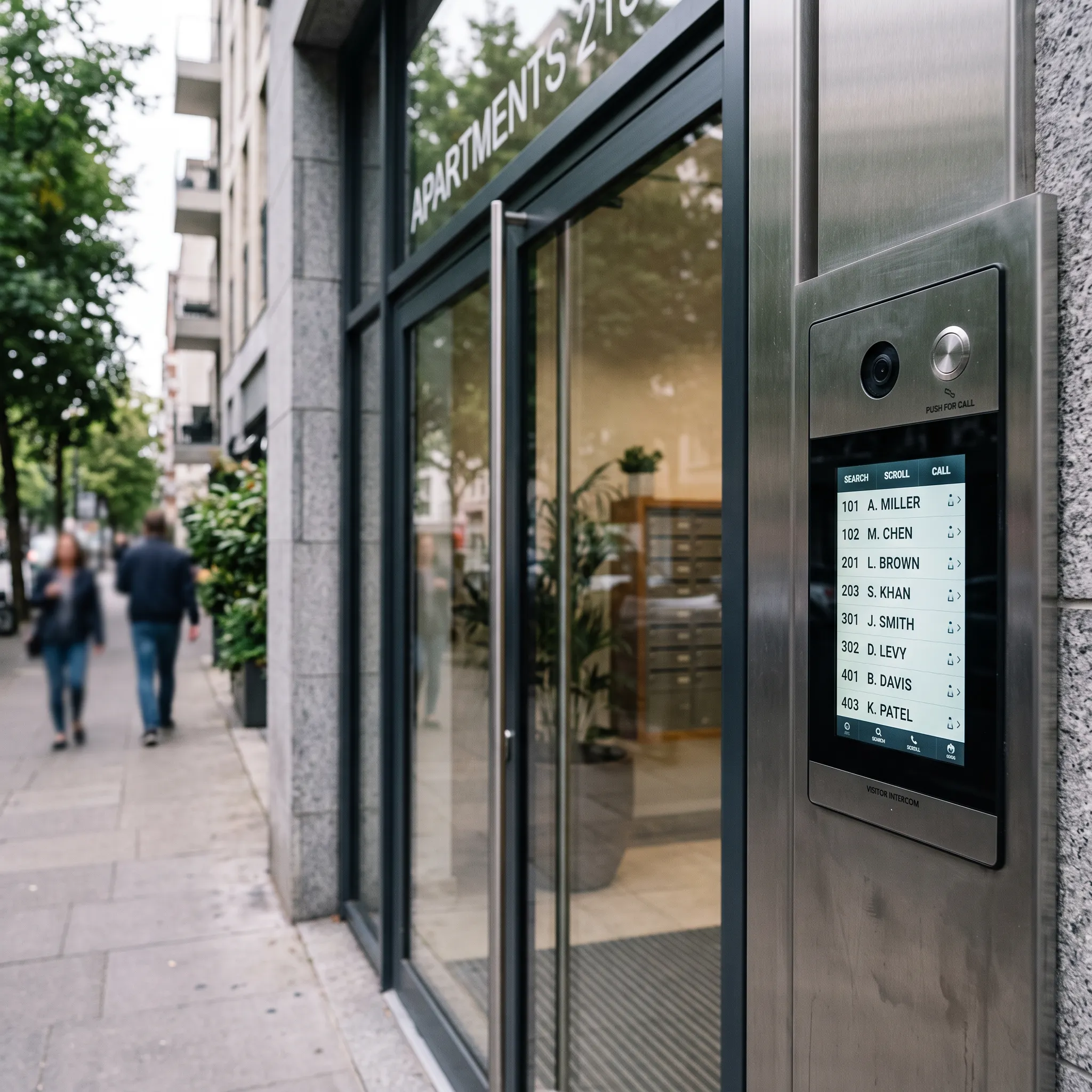
- Telephone entry and video intercom let a visitor call a resident or tenant from the entrance and be let in remotely, from a phone or an in-suite station. Smartphone-based platforms such as Butterfly MX add app-based entry and video calling for residential buildings.
- Virtual concierge handles lobby reception remotely, with video verification and remote door release, for buildings without a staffed front desk or for evenings and weekends when the desk is closed.
- Video surveillance covers entrances, lobbies, mail and parcel rooms, garages and surface lots, with footage tied to door and intercom events so staff can find the right clip quickly.
- Intrusion detection protects management offices, storage rooms and mechanical spaces after hours, and monitoring can be added to the account as a paid service where the building needs it.
Fobs, Credentials and Tenant Turnover
In a managed building the credential list is never finished. Move-ins, move-outs, contractors and board changes mean someone is always being added or removed:
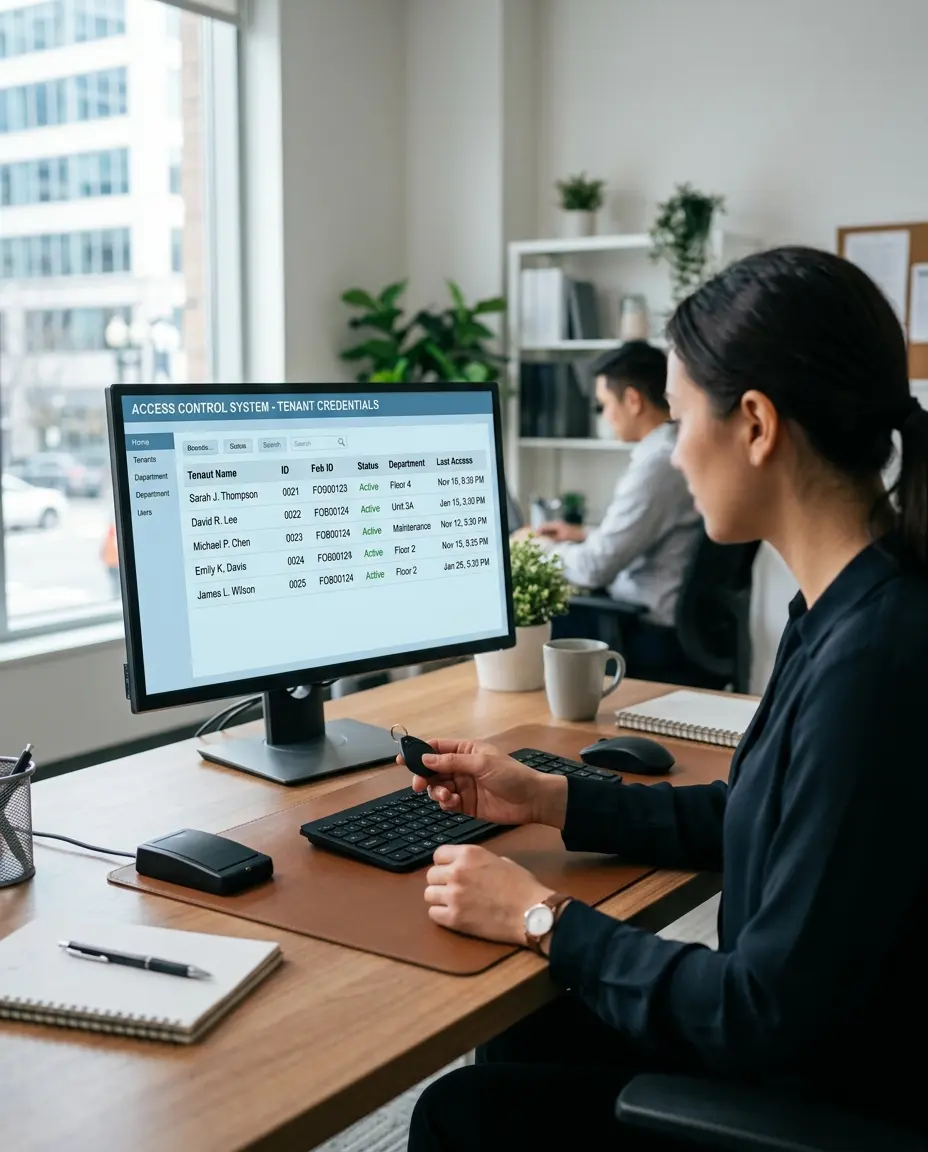
- Unreturned fobs stop being a problem. When a resident or tenant leaves without handing back a fob, the credential is cancelled from the management platform in seconds and no longer opens anything. There is no rekeying and no lock change.
- Mobile credentials skip the handover. Smartphone credentials remove the need to print, mail or collect physical fobs, which suits buildings with frequent move-ins and portfolios run from a central office.
- Trades and movers get time-limited access. Elevator technicians, cleaners, moving companies and contractors can be given the doors they need for the hours they need, without anyone lending out a master key.
- Amenity rooms follow building rules. Gyms, party rooms, rooftop terraces and bike storage can each carry their own hours and permissions, so board policy is applied at the door rather than posted on it.
- Every door keeps a record. Each entry is logged against an individual credential, which gives a board, an insurer or the police a clear account of who used which door and when.
Covering Lobbies, Garages and Other Shared Spaces
THE SPACES EVERYONE SHARES
The areas a landlord or condo corporation is responsible for are used by everyone who passes through the building, and each one calls for a slightly different mix of equipment:
- Entrances and vestibules are where tailgating happens, when someone follows a resident through a door that is already open. A two-door vestibule with access control on the inner door, and cameras that see faces at both, makes it much harder to slip in unnoticed.
- Parking garages and surface lots need cameras placed for vehicles and faces at gates and ramps, and controlled doors between the garage and the building, because vehicle break-ins, vandalism and personal safety concerns affect residents and visitors alike. Emergency call boxes in garages and stairwells give residents and visitors a direct line to security or emergency responders.
- Mail, parcel and delivery areas see constant courier traffic. Video intercom with temporary delivery codes or operator-managed entry, plus a camera on the parcel room door, shows staff exactly who came in and when.
- Storage, service and roof access rooms such as locker areas, electrical rooms and roof hatches are easier to protect with restricted credentials and door alarms than with keys that can be copied.
- Elevators can be tied to the access control system so a credential only calls the floors its holder is allowed to reach, which keeps visitors and trades on the floors they came for.
Security Insights for Property Managers
PODCAST
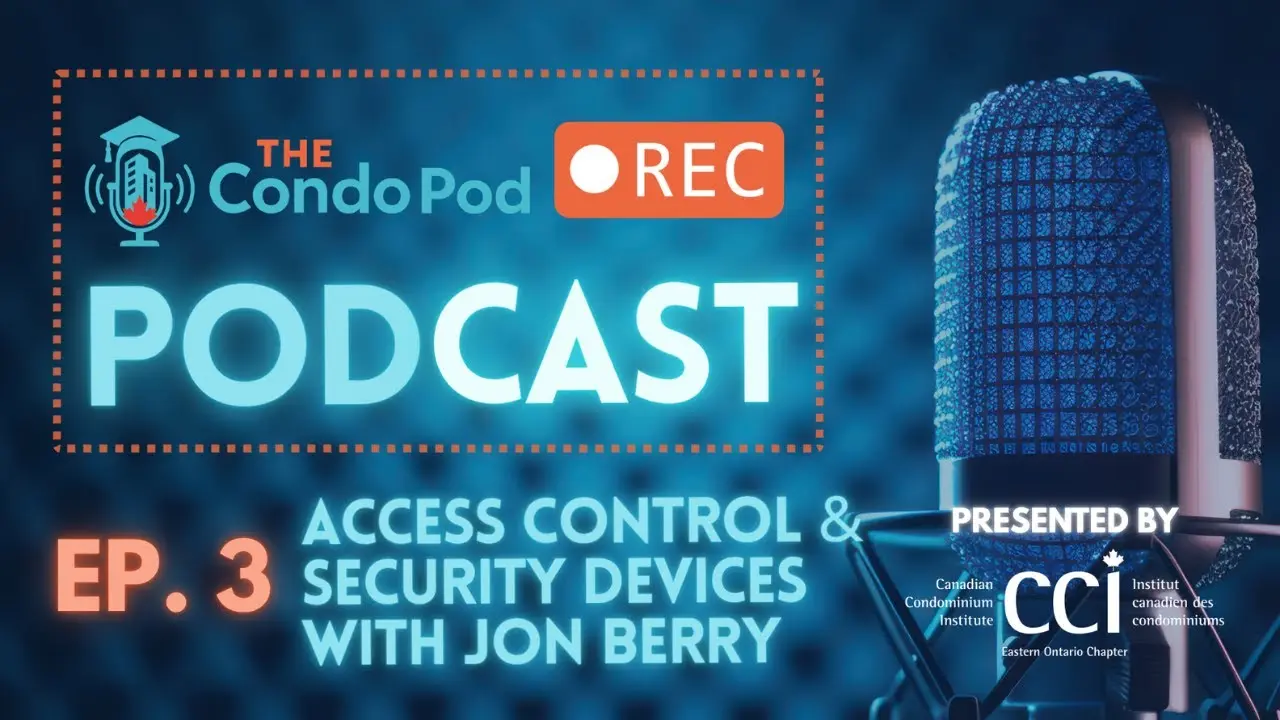
Jon Berry, Business Development Manager at Ainger Cabling + Security, joins The Condo Pod by the Canadian Condominium Institute (Eastern Ontario Chapter) to discuss the security challenges property managers face every day. From tailgating and fob cloning to vestibule access control, parking garage coverage, and delivery management, Jon walks through practical solutions and what to consider when evaluating your building’s security posture.
One Accountable Partner for Your Buildings
INSTALLATION, SERVICE AND MONITORING
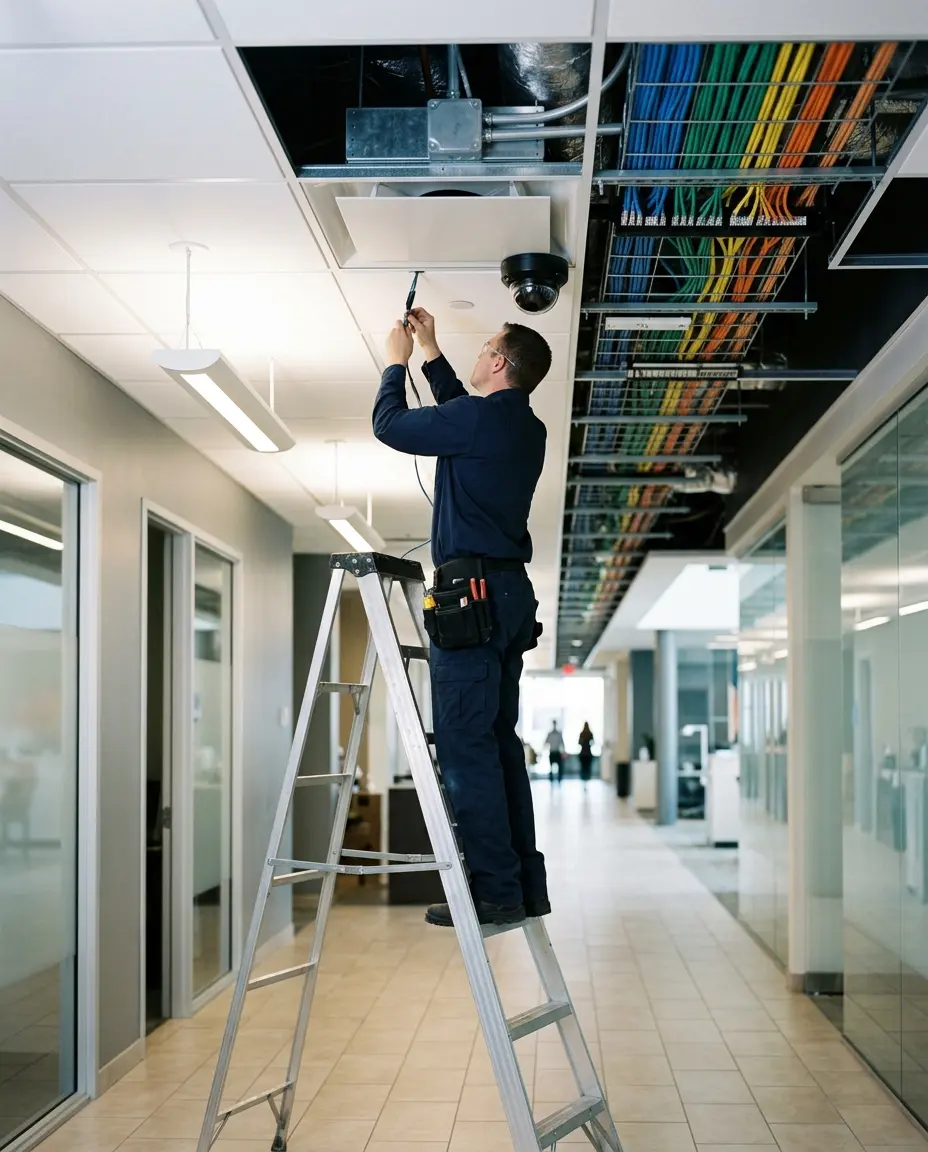
Every reader, intercom, camera and panel in a building relies on cable pulled through risers and ceilings. Ainger handles both layers, the security equipment and the security wiring that connects it, so a property manager has one team responsible for the whole installation, from the riser to the reader, and one number to call when something needs attention.
Most of our property management projects take place while people are living and working in the building. We route new cable through existing risers, drop ceilings and pathways wherever we can, plan the work around residents and tenants (evenings and weekends included when needed), and split larger sites into stages so entrances, garages and elevators stay in service throughout.
Inherited a system from a previous vendor? We start by identifying what is installed, what still has useful life and what can be brought into a new system, and we say plainly when equipment is obsolete. A maintenance contract then keeps readers, cameras, intercoms and backup batteries tested on a schedule, with firmware updates and priority response on service calls, coordinated across every building in a portfolio.
Monitoring is a paid add-on, not a default. Where a property needs it, 24/7 monitoring can be added to camera, intrusion, fire alarm and elevator accounts, and live remote video monitoring through Active Watch puts trained operators on your cameras after hours. For fire alarm systems, Ainger provides the monitoring connection, with both ULC-certified and non-ULC commercial monitoring available; we do not install or service the fire alarm system itself.
As a manufacturer-authorized dealer for Kantech, Uniview, Avigilon, DSC, Akuvox, Mircom, Active Watch and Panduit, we install equipment covered by factory warranties and supported by certified technicians.
How Are Property Management Security Projects Planned?
SITE ASSESSMENT AND PHASING
Main entrance upgrade
Replacing an outdated enterphone or adding access control at the front door is a contained project, scheduled so residents and tenants can keep using the entrance throughout.
Condo or apartment tower
Entrances, garage, elevators, amenity rooms and cameras are usually staged one floor or zone at a time, so residents keep full use of the building while work is underway.
Commercial multi-tenant building
Base building systems are designed around the line between landlord and tenant responsibility, with after-hours work available so tenants can keep running their businesses.
Portfolio rollout
One standard design is adapted to each property and rolled out building by building on a schedule that spreads the cost, with every property managed from the same platform.
Every project begins with a site assessment. We walk the property, map entrances, garages, shared spaces and existing equipment, and confirm what can be reused before recommending anything new. If a lobby refresh or common-area renovation is coming up, tell us early so wiring can go in before the finishes are closed up.
Client Testimonials
What Our Customers Have to Say





















Request a Security Assessment for Your Property or Portfolio
READY TO START?
Tell us about the building, or the buildings, you manage. We will walk the site, review what is already installed and give you a written scope covering systems, cabling, phasing and cost, with any monitoring or maintenance options listed separately.
Request a QuoteProperty Management Security Questions
In many cases yes. During the site assessment we identify the existing panels, cameras, readers and cabling, confirm what is still serviceable, and determine what can be integrated versus what needs replacing. Where equipment is from a manufacturer we are authorized for, takeover is usually straightforward. Where it is obsolete or unsupported, we tell you that directly rather than working around it.
Typically the landlord or property manager is responsible for common areas, building entrances, lobbies, corridors, parking, and shared amenity spaces, while tenants secure their own leased premises. Where the two meet is worth defining clearly during the design phase, particularly around whether tenant systems integrate with the building system or run independently. We map that split during the site assessment so there are no gaps between the two.
Video intercom lets tenants see and speak with visitors at the entrance before granting access, and release the door remotely from an indoor station or their phone. For deliveries, temporary access codes or operator-managed entry avoid the problem of couriers being buzzed in by whoever answers first. Every entry event is logged, and when integrated with CCTV the corresponding footage is bookmarked automatically.
Yes. Portfolio rollouts use a standardized system design adapted to each building’s layout, so equipment, software, and response protocols stay consistent across every property. That consistency reduces training, simplifies maintenance, and means staff moving between buildings work with the same interface. Deployment is scheduled in phases across the portfolio to spread cost and minimize disruption.
Portfolio access control is managed through a centralized platform that covers every property under one interface. Credentials, schedules, and access zones are administered from a single login rather than building by building, and reporting can be pulled per property or across the portfolio. Each building keeps its own door configuration and access rules, but property managers no longer need separate systems and separate logins for each site.
Yes. Most of our property management work is in fully occupied buildings. Cable routing uses existing pathways, drop ceilings and risers wherever possible, and installation is scheduled around building operations with after-hours and weekend work available. For larger properties we phase the work floor by floor or zone by zone so the building stays operational throughout.
24/7 monitoring with emergency response is available as an additional service for intrusion detection, fire alarm, and CCTV systems. Not every property requires it, and it can be applied selectively across a portfolio based on each building’s risk profile, occupancy, and insurance requirements. We design the systems independently and add monitoring where it makes sense.
With card or fob-based access control, a credential is deactivated in seconds from the management platform and becomes useless the moment it is revoked. There is no rekeying, no lock replacement, and no risk from an unreturned key. Mobile credentials go a step further by removing physical distribution entirely. For portfolios with regular tenant turnover, this is usually where access control pays for itself.

Contact Us
Get in Touch with Ainger Cabling + Security
Find Us Online