Commercial Security Solutions
for Business Facilities
What Security Solutions Does Ainger Provide?
INTEGRATED SECURITY SYSTEMS FOR COMMERCIAL FACILITIES
Commercial security is rarely one product. It is a set of systems that need to work together, and the value of this page is to map what Ainger offers and where each piece fits. For 30 years, Ainger Cabling + Security has delivered manufacturer-authorized security solutions for commercial clients across Canada and the USA, serving as a single accountable partner for both the security hardware and the security wiring it runs on.
This page orients you across the whole security offering and routes you to the right child page for detailed information. Every system mentioned here gets one or two sentences maximum and a link to its own page, because the value this page adds is the layer above: how the systems relate to each other, how to work out which ones a facility actually needs, and what a coherent security programme looks like versus a pile of disconnected equipment.
Whether your facility needs basic perimeter protection, enterprise-grade access management, or a fully integrated security platform with monitoring and response protocols, every installation is built on commercial-grade infrastructure designed for reliability and long-term serviceability.
Check Out Ainger’s Offering of Security Solutions
See Our Full Lineup of Services
Access
Control
Placing checks on who enters your facilities helps ensure problems don’t arise
Learn MoreIntrusion Alarm Systems
Remotely evaluate alarm events and verify by a human that an intrusion or breach is underway
Learn MoreSecurity
Audits
Full assessment regarding the state of your overall security systems & protocols
Learn MoreMaintenance Contracts
Support on a weekly, monthly, quarterly, or annual basis for system maintenance
Learn MoreSecurity For Business
For 30+ years we’ve developed security solutions for a variety of industries & businesses
Learn MoreSecurity System Installation
Ainger installs alarm systems and security systems that clients can consistently rely on
Learn MoreCommercial Security System
Fire, theft & vandalism cost businesses hundreds of millions in lost revenue
Learn More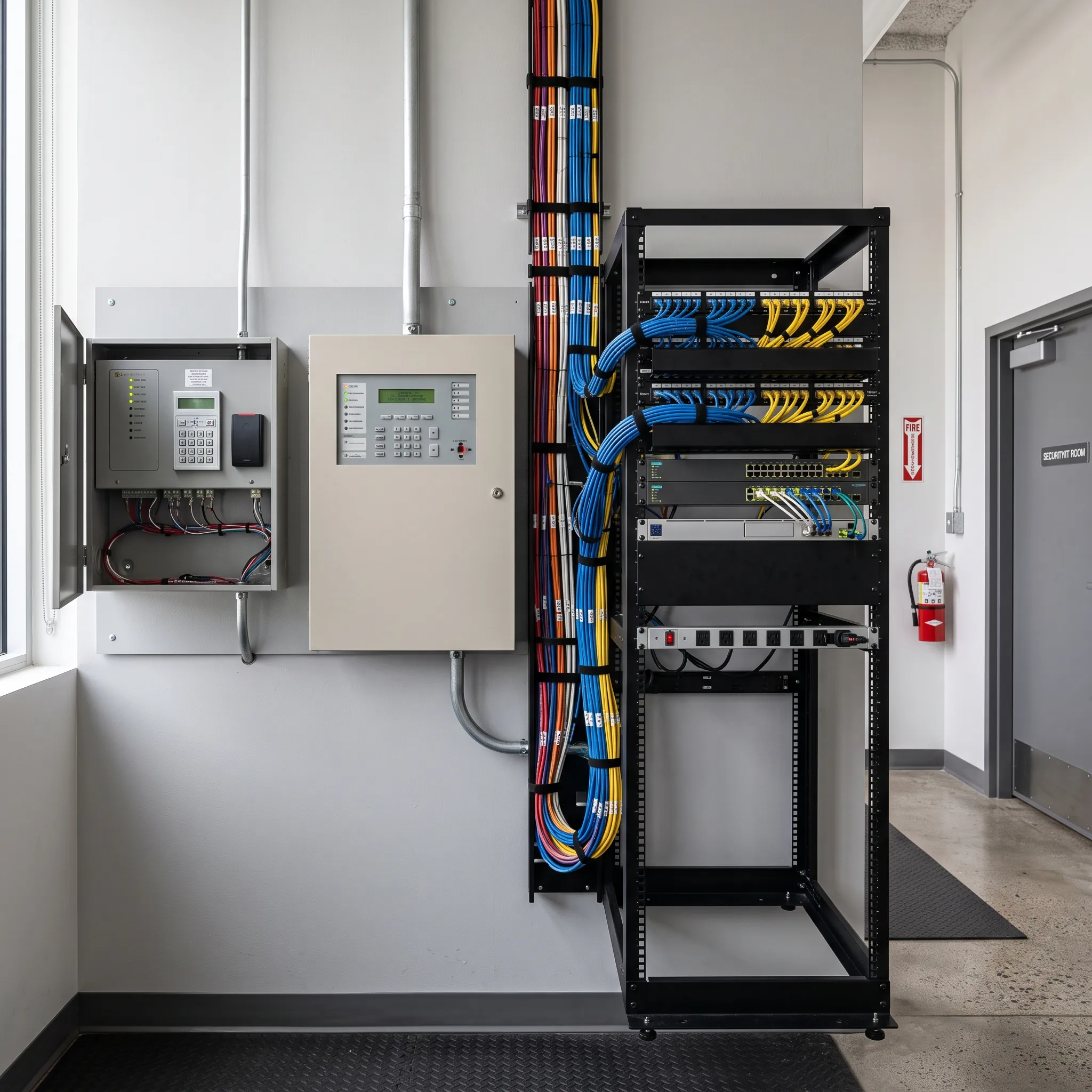
The Full Security Offering
Ainger delivers manufacturer-authorized security systems across nine core solution areas:
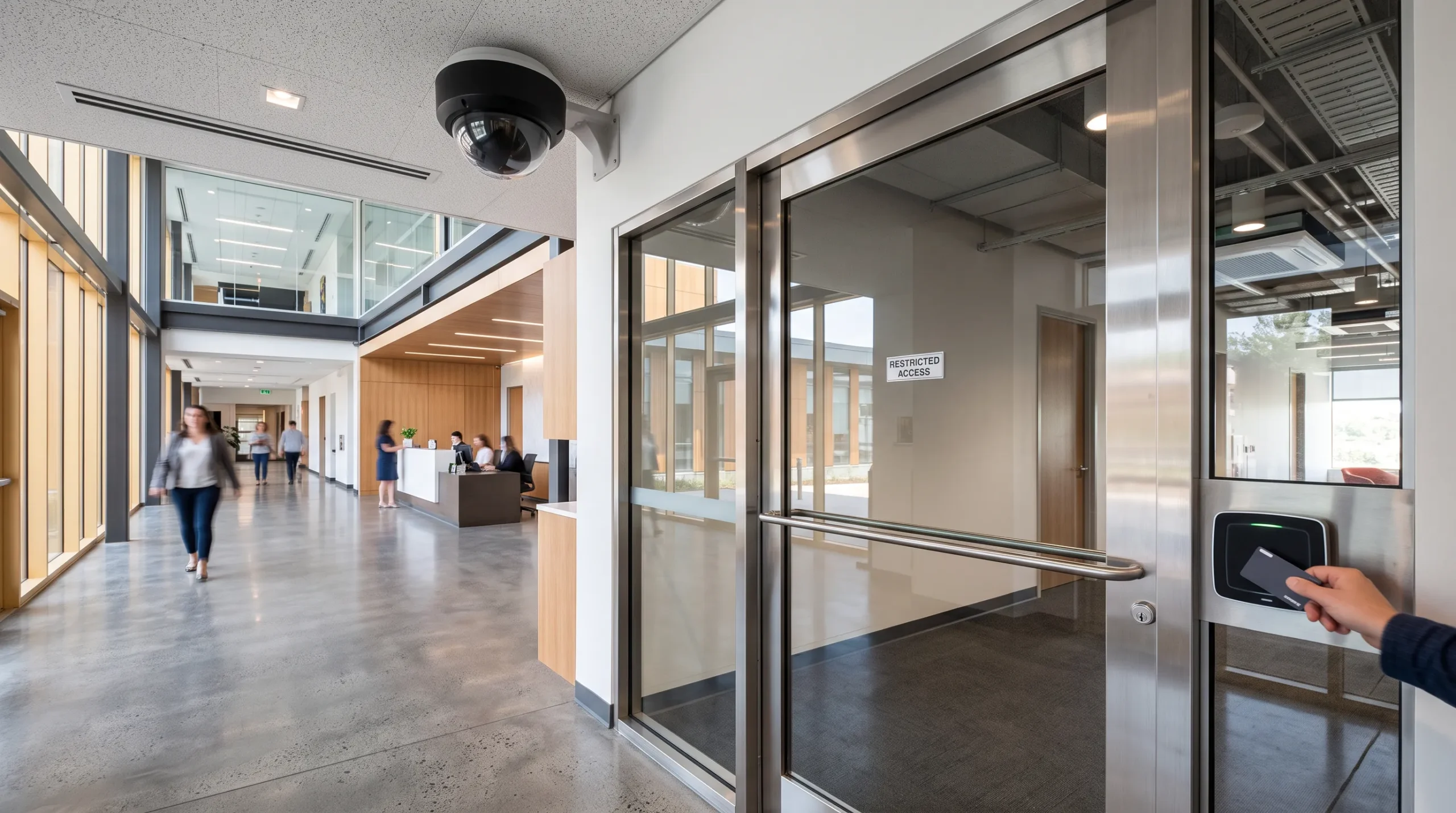
- Access control manages who enters your facility and when, using card readers, keypads, biometric devices and mobile credentials integrated with door hardware and video verification.
- Commercial security systems provide integrated platforms combining access control, intrusion detection, video surveillance and monitoring under unified management.
- Security for business delivers industry-specific solutions for offices, warehouses, retail, healthcare, manufacturing and property management portfolios.
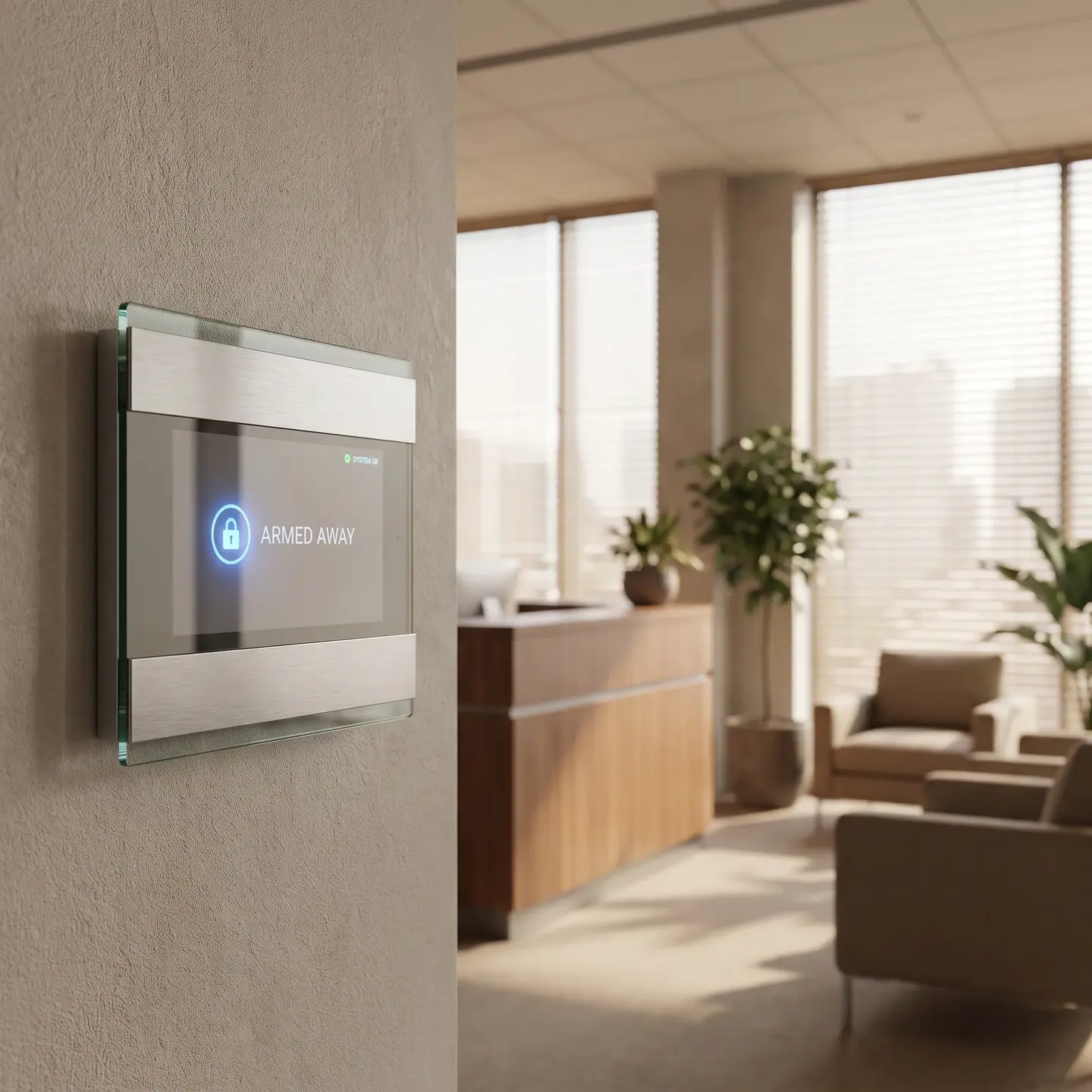
- Intrusion alarm systems detect unauthorized entry with motion sensors, door contacts, glass break detectors and perimeter protection integrated with video and access control.
- Intrusion alarm monitoring adds 24/7 professional monitoring with emergency response protocols as a paid add-on service for intrusion, fire alarm and CCTV systems.
- ULC fire alarm monitoring connects your existing fire alarm panel to a ULC-listed monitoring station, adding a further layer of protection alongside intrusion detection. Both ULC-certified and standard commercial monitoring are available. Ainger provides the monitoring connection only and does not install or service fire alarm panels.
- Emergency call box systems provide direct communication to security personnel or emergency services from parking lots, stairwells, loading docks and remote facility areas.
- Security audits assess your current security posture, identify vulnerabilities and recommend system upgrades or new installations based on facility risk profile.
- System installation delivers manufacturer-authorized deployment of all security hardware with the structured cabling infrastructure it requires, from one accountable partner.
- Maintenance contracts provide ongoing support on weekly, monthly, quarterly or annual schedules for system health checks, firmware updates and hardware replacement.
How to Work Out What Your Facility Needs
Start from what you are protecting rather than from a product list. The right security programme depends on six factors:
- What you are protecting. High-value inventory, sensitive data, expensive equipment, or simply the building itself each require different detection and access management strategies.
- Whether the requirement is deterrence, detection, access management or evidence. Visible cameras deter opportunistic theft, motion sensors detect intrusion, access control manages authorized entry, and recorded footage provides evidence after an incident.
- Whether the site is occupied around the clock or empties overnight. Facilities with 24/7 operations need access control and video verification, while sites that empty overnight need intrusion detection with monitoring and response protocols.
- Insurance and compliance obligations. Many commercial insurance policies require specific security measures, and regulated industries have mandatory access control and audit trail requirements.
- The value of a security audit when you are not sure where to begin. A professional assessment identifies vulnerabilities, recommends system priorities and provides a phased implementation roadmap that fits your budget and timeline.
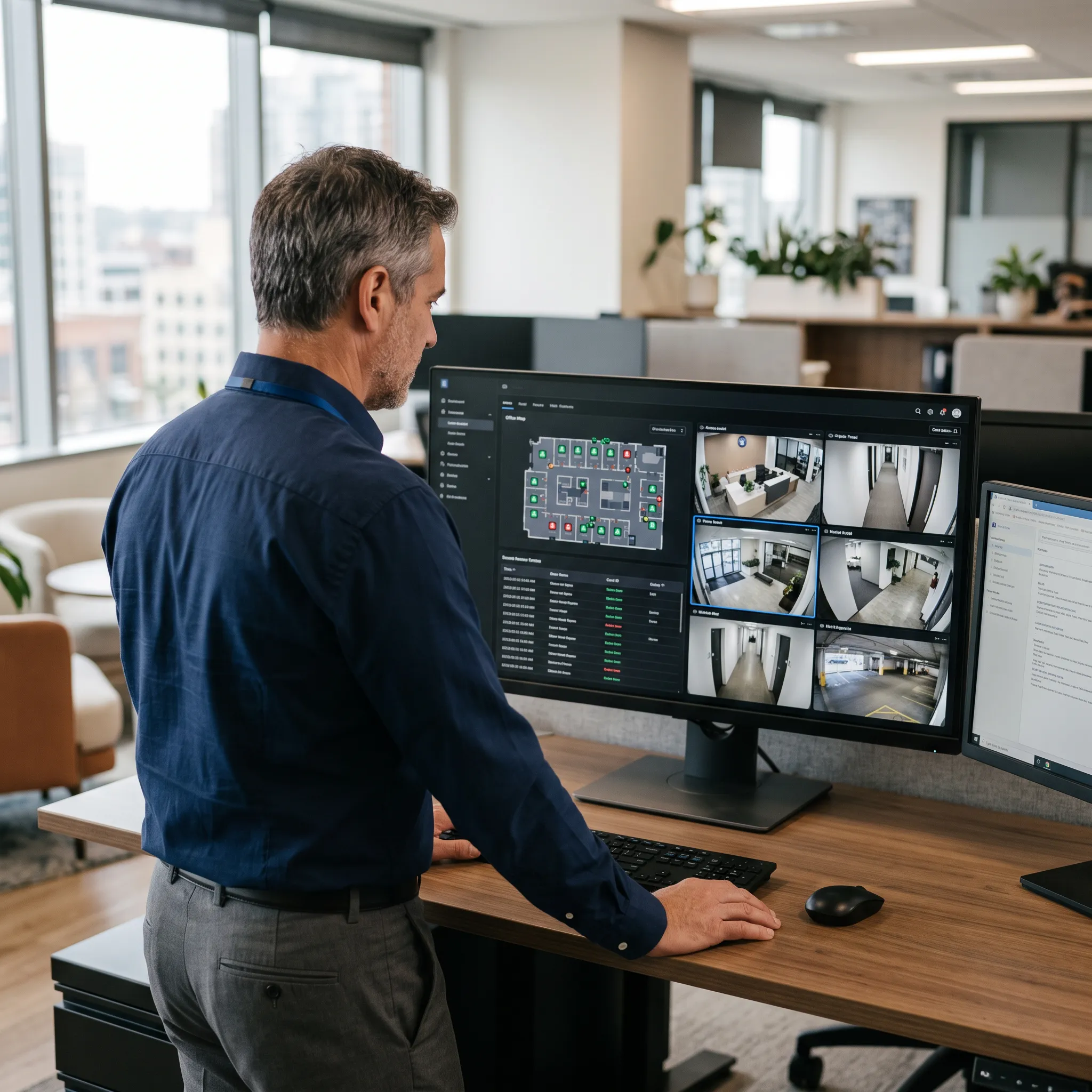
- How the systems work together. Access events bookmark video, alarm triggers start recording, monitoring adds response to detection, and all of it runs on one structured cabling backbone.
How the Systems Work Together
INTEGRATED SECURITY PLATFORMS
A standalone alarm that only sounds a siren leaves you with noise and no actionable information. The value of integrated security is that events trigger coordinated responses across your entire platform:
- Access events bookmark video. When someone presents a credential at a door, the nearest cameras begin recording and the corresponding footage is bookmarked for immediate review, eliminating the need to search through hours of video after an incident.
- Alarm triggers start recording. When a motion sensor or contact trips, the nearest cameras begin recording and the corresponding footage is bookmarked, providing video verification of the alarm event.
- Monitoring adds response to detection. 24/7 professional monitoring with emergency response protocols is available as a paid add-on service for intrusion, fire alarm and CCTV surveillance systems.
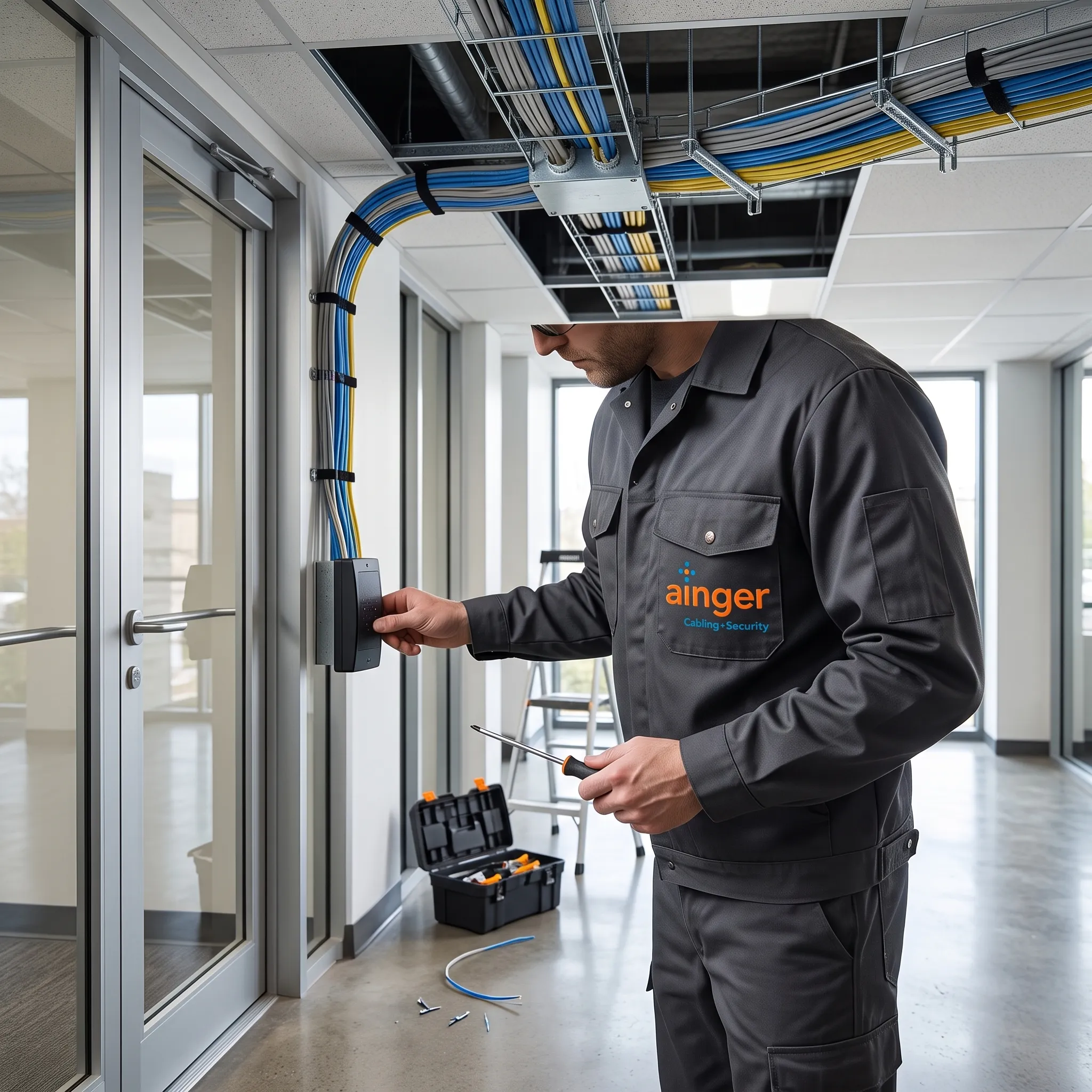
- All of it runs on one structured cabling backbone. Because Ainger installs both the security hardware and the security wiring it runs on, sensor locations, cable routes and network capacity are designed as one coordinated system rather than layered on separately.
Why Choose Ainger for Security Solutions?
YOUR SINGLE ACCOUNTABLE PARTNER
Most security companies install the hardware but subcontract the wiring to a separate cabling contractor. That creates two points of accountability when something goes wrong. Our model eliminates that entirely.
As both your security system installer and cabling contractor, we design the sensor locations and cable routes together from the outset. The wiring is specified for the exact hardware it will carry, with proper cable gauge, shielding and routing to minimize false alarms caused by electrical interference.
Our manufacturer-authorized dealer status for Kantech, Uniview, Avigilon, DSC, Akuvox, Mircom, Active Watch and Panduit means factory-backed warranties on every installation. Technicians receive manufacturer training on system programming, integration and troubleshooting.
One infrastructure partner. One accountability chain. One warranty behind everything we install.
How Does the Engagement Process Work?
FROM ASSESSMENT TO ONGOING SUPPORT
Security audit
Professional assessment of your facility identifies vulnerabilities, evaluates existing systems and recommends security priorities based on risk profile and budget.
System design
Detailed scope covering hardware selection, sensor placement, cable routing, network integration and monitoring protocols with equipment specifications and project timeline.
Installation and commissioning
Manufacturer-authorized technicians install all hardware and wiring, program system configurations, integrate with existing infrastructure and provide staff training on operation.
Ongoing maintenance and support
Scheduled maintenance contracts provide system health checks, firmware updates, hardware replacement and priority response for service calls on weekly, monthly, quarterly or annual schedules.
Every project starts with a site assessment. We evaluate your facility, identify vulnerable entry points and high-risk zones, and provide a detailed scope covering hardware, wiring, monitoring and timeline. No obligation, no pressure.
Client Testimonials
What Our Customers Have to Say



















Get a Quote for Your Security Solution
READY TO START?
Every project starts with a site assessment. We’ll evaluate your facility, identify vulnerable entry points and high-risk zones, and provide a detailed scope covering hardware, wiring, monitoring and timeline. No obligation, no pressure.
Request a QuoteFrequently Asked Questions
The alarm system is the hardware that detects an event, the panels, sensors and contacts. Monitoring is the service that responds when one triggers. Without monitoring an alarm sounds locally and someone has to notice it. With monitoring, a ULC-listed station receives the signal, verifies it and dispatches according to your protocol. Monitoring is a paid service added to the system, available for intrusion, fire alarm and CCTV.
Maintenance agreements cover preventive inspections, firmware and software updates, battery replacement, system testing and priority response. The same team that designed and installed the system handles the support, so service calls go to technicians who already know your facility rather than starting from scratch each time.
Often, yes. During the site assessment we identify the existing panels, readers, cameras and cabling and determine what is still serviceable, what can be integrated and what genuinely needs replacing. Where equipment is from a manufacturer we are authorized for, takeover is usually straightforward. Where it is obsolete or unsupported we will tell you plainly rather than working around it.
Start with a security audit rather than a product list. An audit walks the facility, identifies where the actual vulnerabilities are, and produces a prioritised set of recommendations you can work through in stages. It is far cheaper than installing equipment that turns out to cover the wrong things, and it gives you something concrete to budget against rather than a guess.
When the two are integrated, door events automatically bookmark the corresponding video. A denied credential or a forced door surfaces the footage from the nearest camera immediately, rather than requiring someone to search hours of recording. The same applies to alarm events, which can trigger recording in the affected zone and flag the clip for review.
Yes. Ainger serves commercial clients across Canada and the USA, including multi-site organisations that need consistent systems and standards across every location. For portfolios, that means one platform, one credential format and one point of contact rather than a different local contractor at every site.
Because most faults trace back to the cabling rather than the equipment. When security and cabling are separate contracts, a fault becomes a dispute between two vendors and you sit in the middle of it. With one contractor, the wiring is specified for the exact equipment it carries and there is one number to call when something stops working.
No, and most facilities do not. A common approach is to start with access control at the main entry points and cameras covering the highest-risk areas, then extend coverage in later phases as budget allows. Designing the cabling and network capacity for the full scope from the outset means later phases plug into what is already there rather than requiring rework.
1996–2026

Contact Us
Get in Touch with Ainger Cabling + Security
Find Us Online