

Healthcare Security Systems
for Hospitals, Clinics & Long-Term Care
What Makes Healthcare Security Different?
SECURITY FOR HEALTHCARE ENVIRONMENTS
Healthcare facilities face security challenges unlike any other commercial environment. Hospitals, clinics, and long-term care facilities operate 24/7 with public access, patients and visitors moving through the building at all hours, and staff working alone in clinical areas during overnight shifts. The security infrastructure must protect vulnerable patients who may wander or be at risk while maintaining an open, welcoming environment that doesn’t feel institutional or restrictive.
Ainger Cabling + Security has served healthcare providers across Canada and the United States for three decades, delivering access control, video surveillance, intrusion detection, and the structured cabling infrastructure that supports clinical systems and medical device networks. As a single accountable partner for both security hardware and the wiring it runs on, we eliminate the coordination overhead of managing separate vendors for your healthcare security and communications infrastructure.
Healthcare security systems must balance controlled access to restricted zones with rapid emergency response, support staff safety and de-escalation protocols, and meet applicable privacy, accessibility, and health information regulations. Whether your facility needs perimeter control for a medical clinic, multi-zone access management for a hospital department, or integrated security across a long-term care campus, every installation is built on commercial-grade infrastructure designed for reliability where downtime affects patient care.
What Security Systems Do Healthcare Facilities Deploy?
Healthcare security infrastructure combines access control, video surveillance, intrusion detection, and communications systems to protect patients, staff, and sensitive areas:
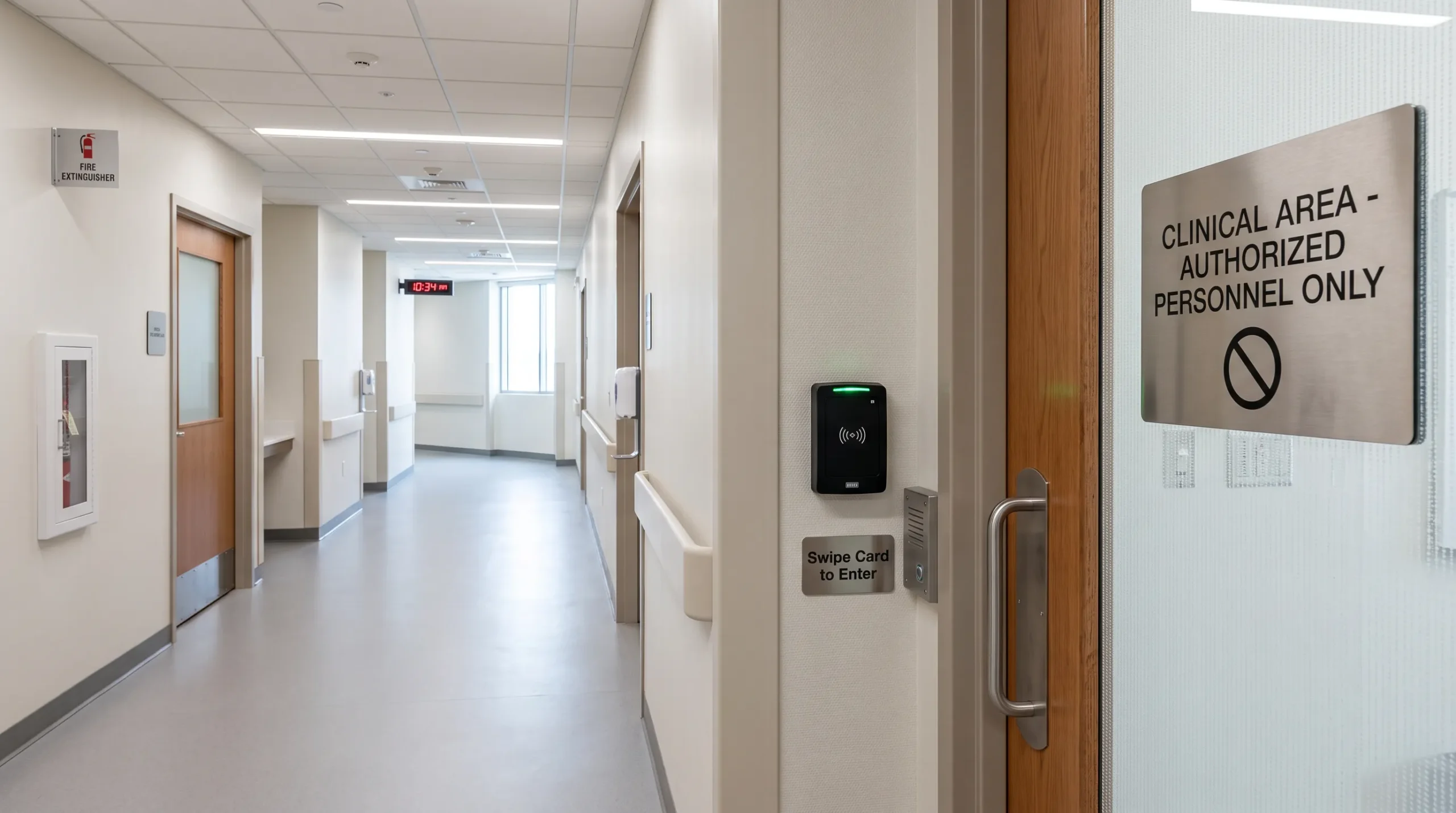
- Access control systems regulate movement between public zones, clinical areas, and restricted spaces with credential-based entry, scheduled lockdown, and real-time monitoring of who enters sensitive areas.
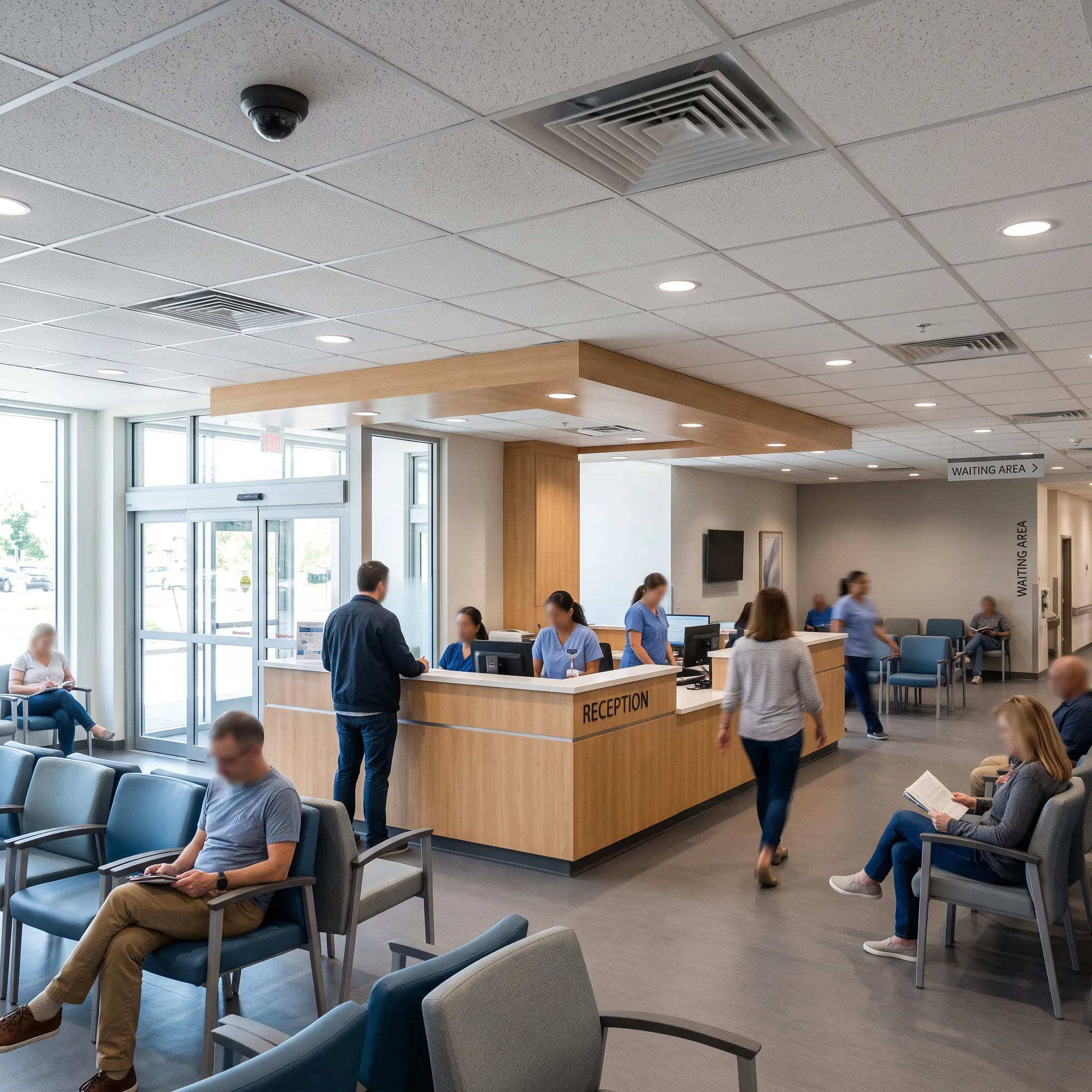
- Video surveillance systems provide coverage of entrances, corridors, parking areas, and high-risk zones with cameras designed for healthcare environments where patient privacy and regulatory compliance are critical.
- Intrusion alarm systems protect after-hours access to pharmaceutical storage, records areas, and equipment rooms with motion detection, door contacts, and glass break sensors.
- 24/7 alarm monitoring is available as an additional service for intrusion detection, providing emergency response coordination when unauthorized access is detected outside operating hours.
- Intercom and communication systems enable staff to verify visitors before granting entry, coordinate emergency response, and maintain contact between clinical areas and security personnel.
- Emergency call box systems provide direct communication to security or emergency services from parking areas, exterior walkways, and isolated building zones. Our emergency call box guide explains placement and accessibility planning.
- ULC fire alarm monitoring connects your existing fire alarm panel to a ULC-listed monitoring station for code-compliant emergency response coordination.
Regulating Movement Within a Healthcare Facility
Healthcare facilities require layered access control to balance public accessibility with protection of sensitive areas and vulnerable populations:
- Public zones versus clinical zones versus restricted zones. Waiting areas and main corridors remain open while clinical treatment areas require staff credentials and restricted zones like pharmaceutical storage, records rooms, and equipment areas enforce role-based access with audit trails.
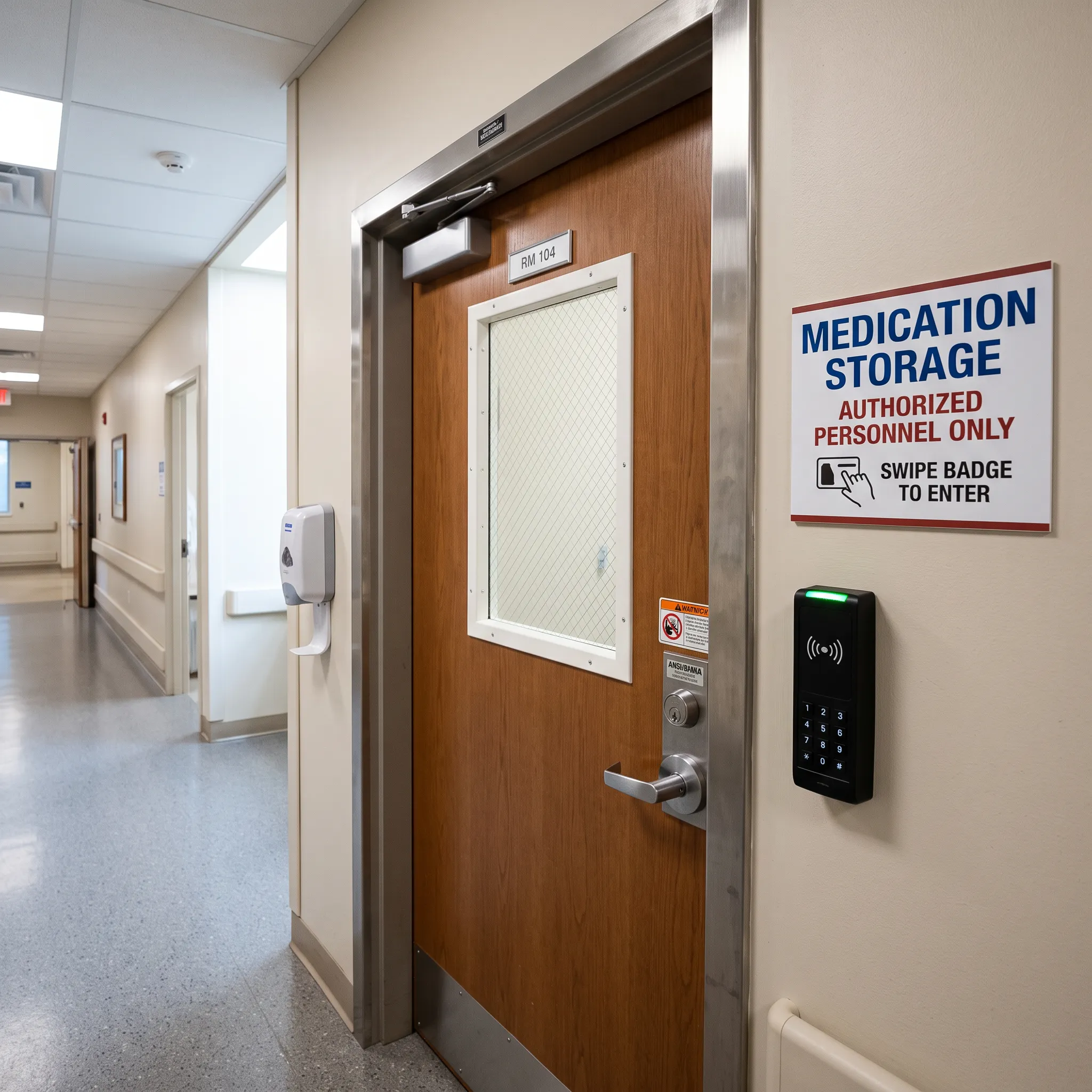
- Pharmaceutical and medication storage protection. Controlled substance storage areas require dual-credential access, time-stamped entry logs, and integration with video surveillance to meet regulatory requirements and prevent diversion.
- Patient records and administrative areas. Medical records storage, billing offices, and administrative workspaces require credential-based access to protect patient information and meet applicable privacy regulations.
- Emergency department controlled entry. Emergency departments balance open access for arriving patients with controlled entry to treatment areas, staff-only zones, and secure exits that prevent unauthorized departure.
- Maternity and paediatric ward protection. Infant security systems, controlled elevator access, and perimeter monitoring prevent unauthorized removal of newborns and protect vulnerable paediatric patients.
- After-hours lockdown of wings and departments. Scheduled access control automatically restricts entry to non-essential areas outside operating hours while maintaining emergency egress and allowing authorized staff access to active clinical zones.
Medical Device Networks and Clinical Infrastructure
HEALTHCARE NETWORK INFRASTRUCTURE
Healthcare facilities depend on network infrastructure that supports clinical systems, medical devices, and communications platforms where downtime directly affects patient care:
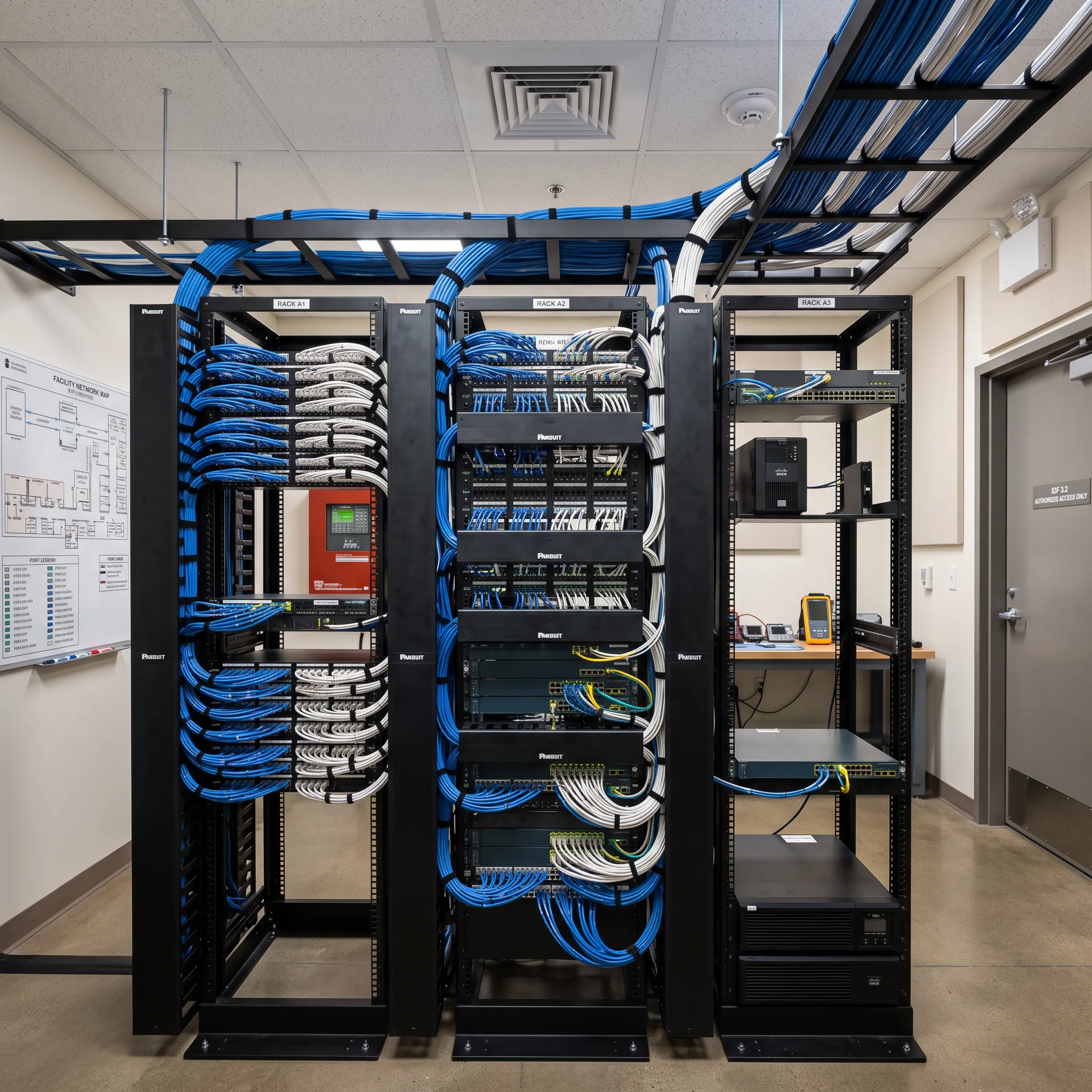
- Structured cabling supporting clinical systems. Structured cabling infrastructure connects electronic medical records systems, diagnostic imaging equipment, laboratory information systems, and patient monitoring devices with the reliability and bandwidth healthcare applications demand.
- Network segmentation separating clinical devices from guest and administrative traffic. Network systems isolate medical device traffic from guest Wi-Fi, administrative workstations, and security systems to maintain performance and reduce cybersecurity risk.
- Reliability requirements where downtime affects care. Healthcare network infrastructure is designed with redundancy, backup power integration, and rapid failover to maintain connectivity for life-critical systems and clinical workflows.
- Nurse call and communication infrastructure. Security wiring supports nurse call systems, staff duress alarms, and emergency communication platforms that connect clinical staff to patients and security personnel.
Why Healthcare Facilities Choose Ainger
YOUR SINGLE ACCOUNTABLE PARTNER
Most security contractors install cameras and access control but subcontract the cabling to a separate vendor. That creates two points of accountability when something goes wrong. Our model eliminates that entirely.
As both your security system installer and cabling contractor, we design the camera locations, access control readers, and network infrastructure together from the outset. The wiring is specified for the exact systems it will carry, with proper cable gauge, shielding, and routing to support medical device networks, clinical communications, and security systems on a single integrated platform.
Our manufacturer-authorized dealer status for Kantech, Uniview, Avigilon, DSC, Akuvox, Mircom, Active Watch, and Panduit means factory-backed warranties on every installation. Technicians receive manufacturer training on system installation, integration, and ongoing support for healthcare security infrastructure.
One infrastructure partner. One accountability chain. One warranty behind everything we install. Maintenance contracts are available for ongoing support, system updates, and priority response when your facility needs service.
How Long Does Healthcare Security Installation Take?
PROJECT TIMELINES & SCHEDULING
Clinic or medical office
Basic access control with door readers, video surveillance covering entrances and waiting areas, and structured cabling typically completes within 1–2 weeks including system commissioning and staff training.
Hospital wing or department
Multi-zone access control with role-based credentials, video surveillance with privacy masking, intrusion detection for pharmaceutical storage, and network infrastructure typically requires 3–6 weeks with phased deployment to minimize disruption.
Long-term care facility
Comprehensive security infrastructure with perimeter access control, interior and exterior video surveillance, wandering patient monitoring, staff duress systems, and integrated communications typically requires 6–10 weeks with coordinated installation across multiple buildings.
Multi-site healthcare network
Standardized security configurations deployed across multiple clinics, medical offices, or healthcare facilities with centralized management platforms and coordinated deployment schedules to maintain consistency and operational continuity.
Site assessment and system design typically require 5–7 days before installation begins. Camera placement, access control zones, and network infrastructure are coordinated with your operational schedule to minimize disruption to patient care. After-hours and weekend installation is available for occupied facilities.
Client Testimonials
What Our Customers Have to Say




















Get a Quote for Your Healthcare Security System
READY TO START?
Every project starts with a site assessment. We’ll evaluate your facility, identify vulnerable access points and high-risk zones, and provide a detailed scope covering access control, video surveillance, network infrastructure, and timeline. No obligation, no pressure.
Request a QuoteFrequently Asked Questions
Emergency departments carry higher risk of aggression toward staff and typically need controlled entry between the waiting area and treatment space, camera coverage of triage and waiting areas, and duress or panic capability for staff. Access control can also support a rapid lockdown of the department if an incident escalates. The specific configuration depends on the department’s layout and clinical protocols.
24/7 monitoring with emergency response is available as an additional service for intrusion detection, fire alarm and CCTV systems. Many healthcare facilities apply it selectively, covering perimeter doors, pharmaceutical storage and after-hours access to closed wings rather than the whole building. We design the systems independently and add monitoring where the risk profile justifies it.
Yes. Almost all of our healthcare work is in occupied, operating facilities. Cable routing uses existing pathways and ceiling spaces, work is scheduled around clinical activity, and installation is phased by wing or department so care is never interrupted. Infection control requirements and any restricted-area protocols are agreed with facility management before work begins.
Yes. Access control can restrict egress through specific doors during defined hours, alert staff when a monitored door opens, and integrate with nurse call and communication systems so the right people are notified immediately. This is common in long-term care and in wards where patients may be at risk of leaving unaccompanied. The configuration is designed around each facility’s clinical protocols.
Medication storage is typically treated as a restricted zone with its own credential requirement, so access is limited to specific roles rather than anyone with general clinical access. Many facilities add a dedicated camera at the door and a second authentication factor. Access logs provide a timestamped record of every entry, which supports both internal audits and any investigation into missing stock.
Healthcare facilities in Canada and the United States operate under privacy, accessibility and health information regulations that vary by jurisdiction and facility type. These affect where cameras may be positioned, how footage and access logs are retained, and who can review them. We design systems that support your compliance obligations and document the installation accordingly, working from the requirements your facility identifies.
Yes. Clinical devices, administrative systems, guest wireless and security cameras should each sit on their own network segment. Segmentation prevents bandwidth-heavy traffic from affecting clinical systems, limits what any one compromised device can reach, and makes troubleshooting far simpler. We design the structured cabling and network architecture with that separation built in rather than added afterwards.
Healthcare buildings are layered rather than locked. Public zones such as reception, waiting areas and main corridors stay open, clinical zones require staff credentials, and restricted zones like medication storage, records and equipment rooms require elevated access. The design work is deciding where each boundary sits so patients and visitors move freely through the areas they should while everything else stays controlled.

Contact Us
Get in Touch with Ainger Cabling + Security
Find Us Online