

Commercial Security
Emergency Call Box Systems: Life Safety Communication Infrastructure for Commercial Facilities
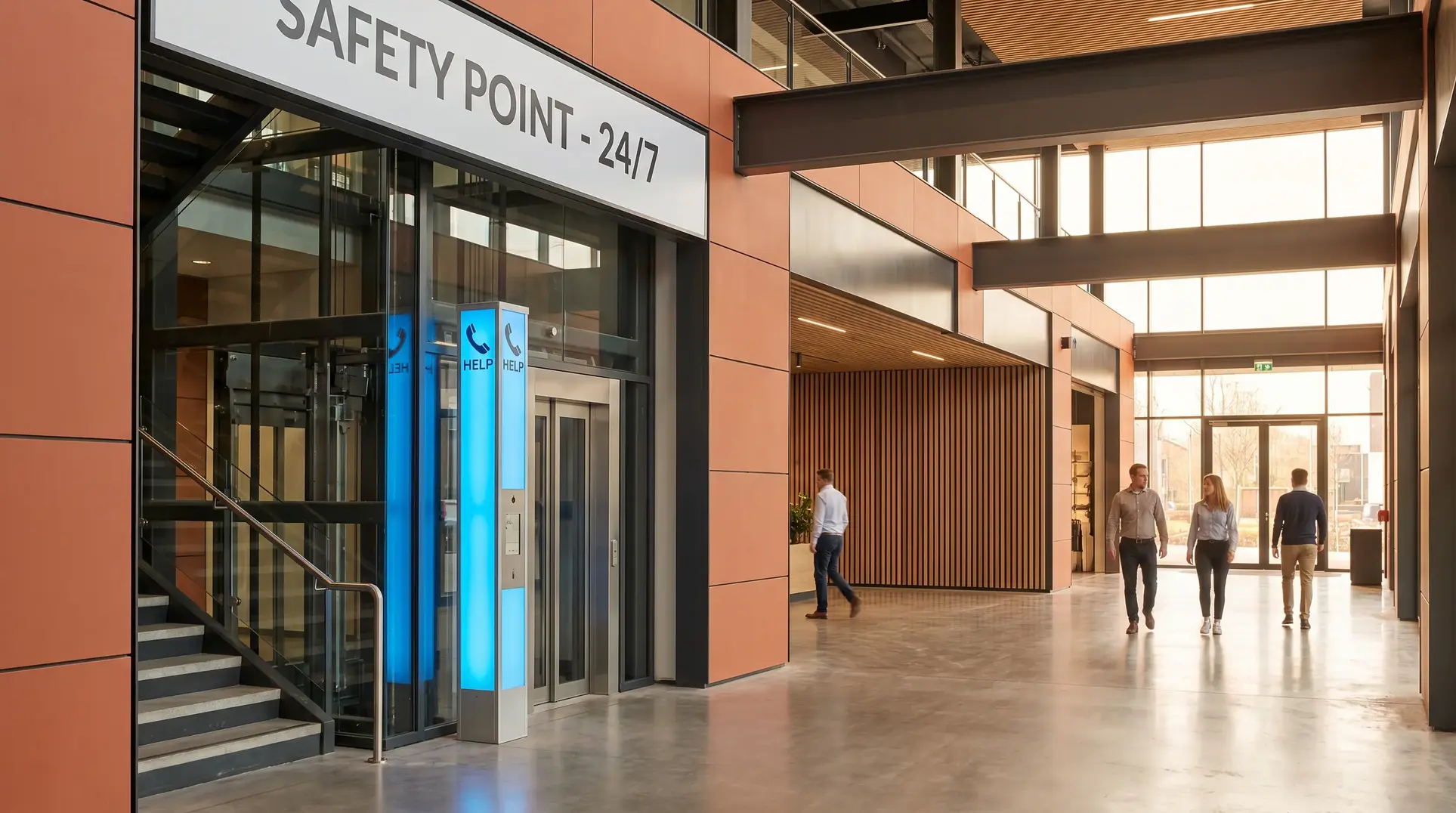
When a parking garage is empty at 11 PM and an employee walks to their car, the presence of a blue light tower near the stairwell does two things simultaneously. First, it creates a visible deterrent—anyone with bad intentions knows that help is one button press away. Second, it provides actual emergency communication capability if something goes wrong. This dual function is what separates emergency call box systems from ordinary security equipment: they work even when nothing happens, and they work even harder when something does.
We install these systems across commercial facilities throughout Canada and the United States, and the conversation with facility managers almost always starts the same way. Someone asks whether emergency call boxes are still necessary when everyone carries a cell phone. The answer requires understanding what these systems actually provide—and why they remain critical infrastructure for parking structures, corporate campuses, healthcare facilities, and educational institutions despite the smartphone in every pocket.
Who This Article Is For
This article is written for facility managers, property directors, and building owners responsible for life safety infrastructure in commercial properties. If you’re evaluating emergency call box systems for a parking garage, campus environment, healthcare facility, or corporate property, you’ll find practical guidance on technology selection, placement strategy, compliance requirements, and integration with existing security systems.
This article is not for residential property owners or homeowners looking for personal emergency devices. We’re addressing commercial-scale infrastructure decisions where compliance obligations, liability considerations, and integration with access control systems drive the conversation.
What Emergency Call Box Systems Provide Beyond Emergency Response
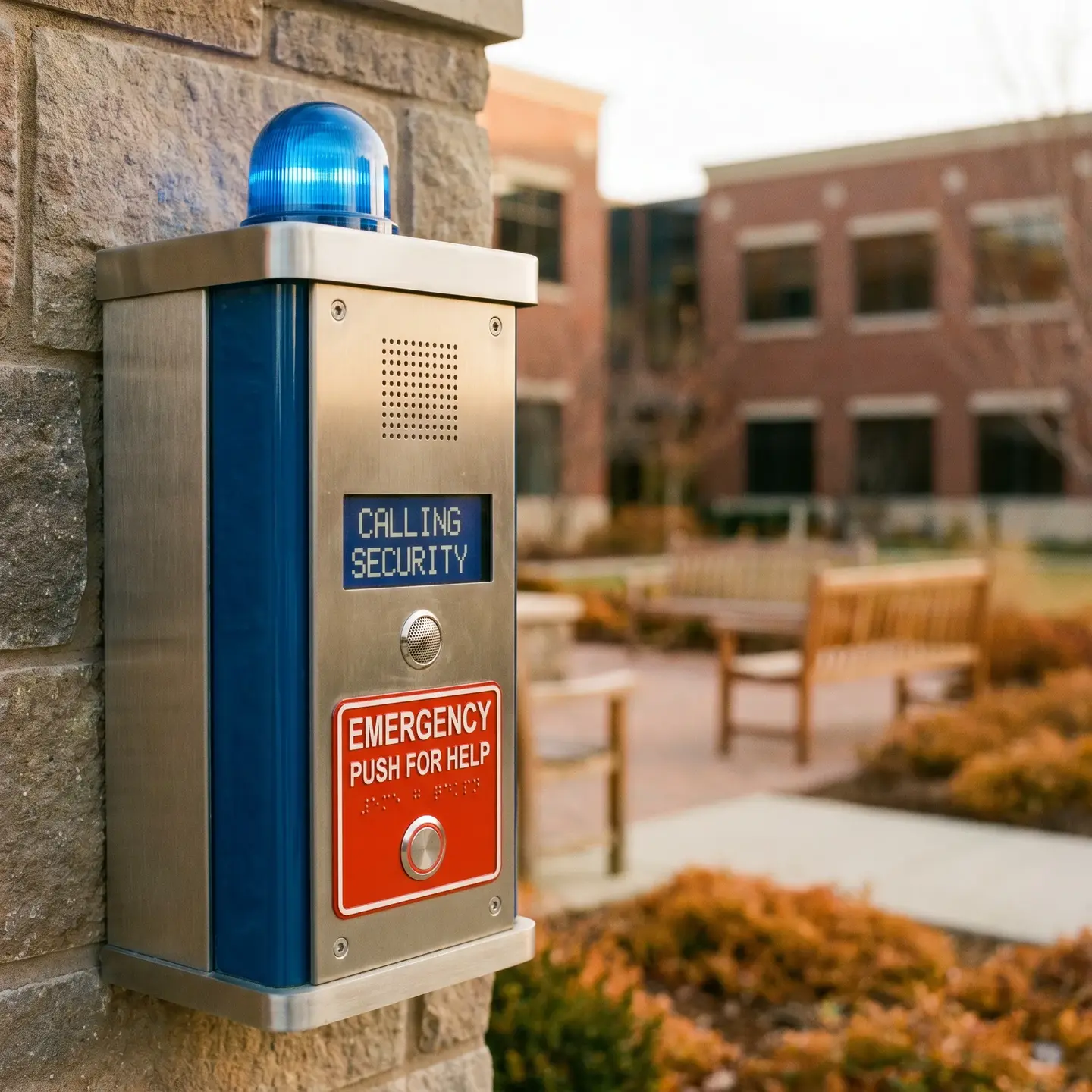
The most common misconception about emergency call boxes is that they’re purely reactive—sitting dormant until someone presses the button. In reality, their visible presence delivers continuous security value through psychological deterrence.
Research into crime prevention through environmental design consistently shows that visible emergency communication infrastructure reduces incident rates in parking structures and campus environments. When potential threats see blue light towers or wall-mounted emergency stations, they understand that the property owner has invested in security infrastructure and that help can arrive quickly. This perception alone changes behavior.
For property owners and facility managers, this deterrent effect translates directly into liability mitigation. Courts have consistently examined whether property owners took reasonable steps to provide for occupant safety. Emergency call box systems serve as documented evidence of that commitment, particularly in environments where people regularly move through isolated areas during off-hours.
The actual emergency communication function matters equally. When cell phone coverage is spotty in underground parking levels, when someone’s phone battery is dead, or when stress makes it difficult to remember phone numbers or navigate to emergency contacts, a single button press connects them to trained personnel who already know their exact location.
Technology Architecture Options and Selection Criteria
Emergency call box systems operate on four primary technology platforms. Each has specific infrastructure implications that affect both installation cost and long-term operational reliability. Understanding these options helps you make decisions based on your existing infrastructure rather than generic product comparisons.
Cellular and VoLTE Systems
Cellular-based emergency call boxes operate independently of building infrastructure, using commercial wireless networks to connect calls to monitoring centers or emergency services. This architecture makes sense for:
- Remote locations without existing network infrastructure
- Parking lots and outdoor areas where running structured cabling would be cost-prohibitive
- Properties where you need rapid deployment without construction disruption
- Facilities where cellular coverage is reliable throughout the protected area
The trade-off is ongoing cellular service costs and dependence on carrier network reliability. We’ve seen situations where cellular signal strength varies significantly across a parking structure, requiring site surveys before committing to this approach.
IP and VoIP Over Structured Cabling
IP-based systems connect emergency call boxes to your facility’s network infrastructure using CAT-5e, CAT-6, or fiber optic cabling. This approach offers the strongest integration capabilities with commercial security infrastructure, including:
- Automatic location identification that populates in monitoring software
- Integration with video surveillance systems to trigger camera presets
- Event logging that correlates with access control activity
- Power over Ethernet (PoE) delivery, eliminating separate electrical runs
This technology makes the most sense when you’re already investing in structured cabling infrastructure or when existing network infrastructure can support additional endpoints. The integration capabilities justify the cabling investment for facilities where emergency communication must connect to broader security operations.
Wireless Two-Way Radio Systems
Radio-based systems connect emergency call boxes to security personnel carrying two-way radios. This architecture works well for:
- Facilities with existing security radio infrastructure
- Properties where security personnel provide mobile patrol coverage
- Environments where direct communication with on-site security matters more than connection to external monitoring
Radio systems typically require less infrastructure investment but provide narrower integration capabilities. They excel in campus environments where security teams maintain continuous radio communication.
Traditional Analog POTS Lines
Analog phone lines represent the legacy approach, though they remain viable in some situations. However, telecommunications providers are actively phasing out traditional copper phone infrastructure, making this an increasingly poor choice for new installations. We generally recommend transitioning existing analog systems to cellular or IP-based alternatives during modernization projects.
Strategic Placement Requirements for Different Facility Types
Placement strategy for emergency call boxes varies significantly based on facility type, occupant patterns, and the specific risks you’re addressing. Generic advice about “high traffic areas” doesn’t help facility managers make practical decisions.
Parking Structures
Parking garages present unique challenges because they combine isolated locations, limited sightlines, and transitional spaces where people are vulnerable. Effective placement considers:
- Coverage intervals: Most specifications call for emergency stations within 300-500 feet of any location, though local requirements may specify different distances
- Sight line placement: Position call boxes where they’re visible from multiple approach directions, not hidden behind columns or in alcoves
- Lighting coordination: Emergency stations should be well-lit, with blue light beacons visible throughout the parking level
- Elevator and stairwell proximity: These transition points concentrate foot traffic and represent natural locations for emergency communication
- Level-by-level coverage: Underground levels often have reduced cellular coverage, making direct-line emergency communication more critical
Campus Environments
Educational and corporate campuses require coverage along pedestrian pathways, near remote buildings, and at facility access points. Key placement considerations include:
- Pathway coverage: Position stations along primary walking routes between buildings and parking areas
- Remote building access: Buildings with limited occupancy during off-hours need emergency communication near entry points
- Athletic and recreational facilities: These areas often operate during evening hours when general campus activity is reduced
- Perimeter locations: Campus edges where property meets public streets can present higher risk profiles
Healthcare Campuses
Healthcare environments add patient safety considerations to standard placement logic. Property management security solutions for healthcare facilities typically address:
- Patient parking areas: Visitors and patients may be emotionally stressed, unfamiliar with the facility, and visiting during off-hours
- Emergency department perimeters: High-activity areas with diverse populations require visible security infrastructure
- Remote outbuildings: Medical office buildings and treatment centers on hospital campuses need independent emergency communication
Corporate Facilities
Office buildings and industrial facilities focus emergency call box placement on locations where employees work alone or access the building outside standard hours:
- Loading docks: Receiving areas operate early mornings and late evenings with limited staffing
- Remote parking areas: Employee lots distant from building entrances
- After-hours access points: Building entrances used outside normal business hours
- Mechanical and maintenance areas: Locations where maintenance personnel work alone
ADA Compliance and Accessibility Requirements
Emergency call box systems carry specific ADA obligations that differ from general intercom or Access Control systems. Understanding these requirements is essential for facility managers who need to demonstrate ongoing compliance.
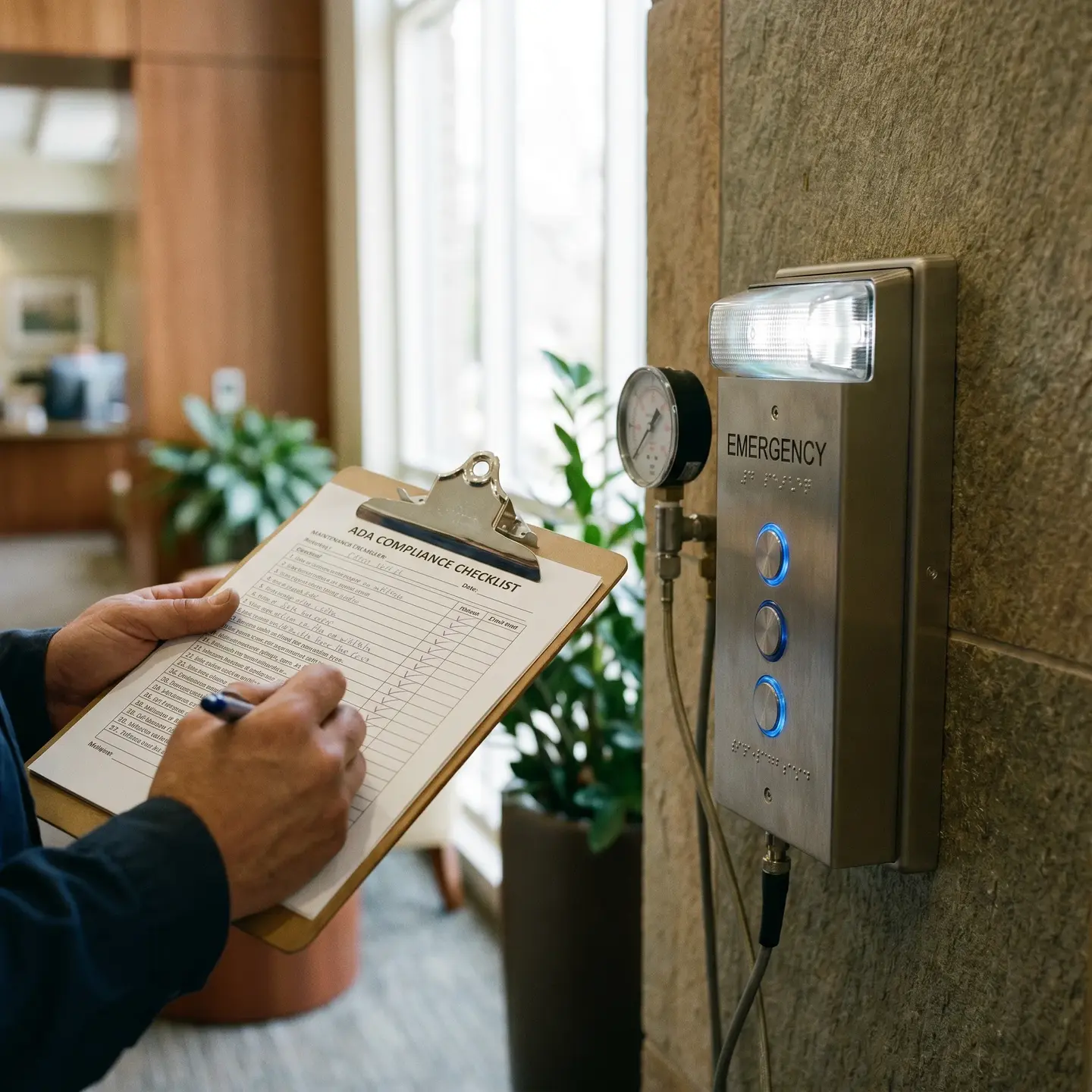
The ADA’s effective communication requirements establish that emergency communication systems must be accessible to individuals with disabilities. Specific requirements include:
- Mounting height: Operating controls must be positioned between 15 and 48 inches above the floor for forward approach, or 15 to 54 inches for side approach
- Visual and audible signaling: Systems must provide both visual indicators (typically blue lights) and audible confirmation that the call has connected
- Two-way communication: Emergency stations must support two-way voice communication, not simply one-way signaling
- Tactile identification: Call buttons should be identifiable by touch, with raised or contrasting surfaces
- Clear floor space: Emergency stations must have adequate clear floor space for wheelchair approach
Documentation and testing requirements extend beyond initial installation. Facility managers must maintain records demonstrating that emergency communication systems remain operational and accessible. This includes periodic testing logs, maintenance records, and documentation of any modifications or repairs.
Integration with Security Monitoring and Dispatch Protocols
The difference between a basic emergency call box and integrated life safety infrastructure lies in what happens when someone presses the button. Basic systems simply dial a phone number. Integrated systems trigger coordinated security responses.
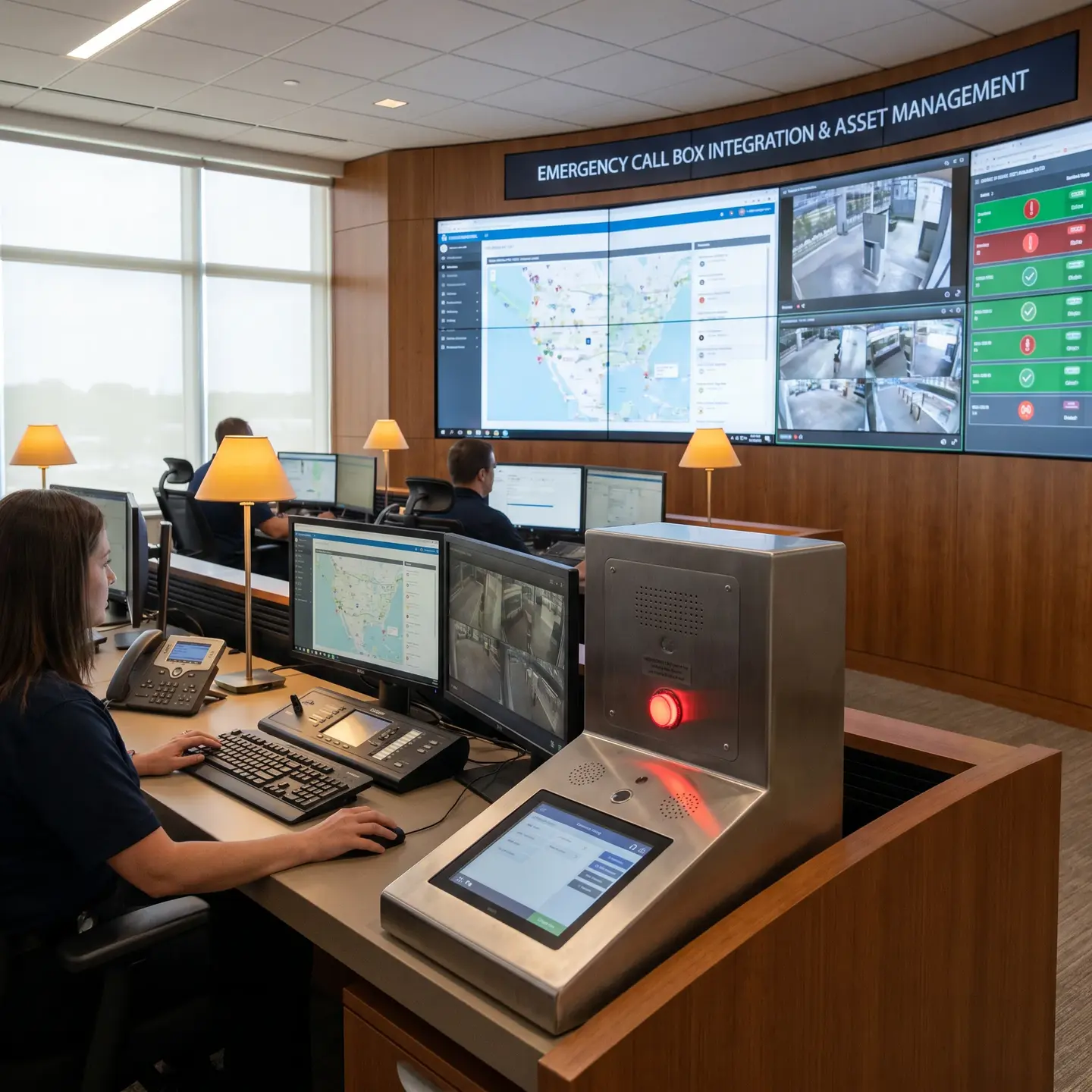
When emergency call boxes integrate with security system installation platforms, button activation can:
- Identify the exact location automatically, displaying the specific call station on monitoring software without requiring the caller to describe where they are
- Trigger camera presets that point surveillance cameras toward the emergency station and begin recording
- Create incident documentation with timestamps, audio recordings, and associated video footage
- Alert security personnel through multiple channels including monitoring station displays, mobile devices, and two-way radios
- Initiate access control responses such as unlocking nearby doors for emergency egress or triggering lockdown protocols
Dispatch Protocol Design
Effective emergency call box systems require documented dispatch protocols that define:
- Response hierarchy: Who receives the initial notification, and how does escalation proceed if the primary responder is unavailable?
- Response time expectations: What are acceptable response times for different emergency types, and how are these monitored?
- External emergency services coordination: When and how do monitoring personnel contact police, fire, or EMS?
- Documentation requirements: What information must be captured during and after each incident?
These protocols must be developed before system commissioning and reviewed regularly to ensure they reflect current staffing patterns and emergency response capabilities. As noted in NFPA 72 emergency communication standards, life safety communication systems require documented procedures that define how emergency signals are processed and responded to.
Maintenance, Testing, and Documentation Requirements
Life safety communication infrastructure demands maintenance attention that goes beyond standard security equipment care. Emergency call boxes must function reliably during the moments when they matter most—which means regular testing and documentation are non-negotiable obligations.
Testing Frequency and Procedures
Recommended testing protocols include:
- Monthly functional tests: Verify that each call box successfully connects to the monitoring center and that audio quality supports clear two-way communication
- Quarterly comprehensive tests: Test integration functions including camera triggers, access control responses, and location identification accuracy
- Annual inspections: Physical inspection of equipment condition, battery backup verification, signage condition, and compliance with accessibility requirements
Documentation Standards
Maintain records that demonstrate ongoing compliance and operational readiness:
- Test dates, results, and any corrective actions taken
- Maintenance performed, including battery replacements and component repairs
- Incident logs documenting actual emergency activations
- Protocol reviews and any updates to dispatch procedures
This documentation serves both operational purposes and liability protection. If an incident occurs, documented testing and maintenance records demonstrate that the property owner maintained the system in working condition.
Integration Architecture with Access Control and Building Management Systems
Modern emergency call box systems should integrate with enterprise access control platforms and building management systems rather than operating as standalone infrastructure. This integration creates unified security management and enables coordinated responses to emergency events.
Data Flow and Event Correlation
Integrated systems enable event correlation that connects emergency communication with other security data:
- Access control integration: Emergency calls from specific locations can trigger automatic door unlocking for emergency egress or lockdown for threat containment
- Video surveillance correlation: Emergency events automatically associate with video footage from nearby cameras, creating comprehensive incident documentation
- Unified management interfaces: Security operators monitor emergency communication status alongside access control, video surveillance, and intrusion detection from a single platform
System Health Monitoring
Enterprise integration also enables proactive system health monitoring. Rather than discovering that an emergency call box is offline when someone tries to use it, integrated systems provide continuous status monitoring with alerts for:
- Communication path failures
- Battery backup status
- Audio quality degradation
- Physical tamper detection
Making Emergency Call Box Infrastructure Work for Your Facility
Emergency call box systems represent infrastructure investment rather than product purchase. The technology you select, placement strategy you implement, and integration architecture you design will serve your facility for years—affecting both daily security operations and emergency response capabilities.
We approach these projects as components of comprehensive commercial security design. Emergency call boxes connect to access control platforms, video surveillance systems, and monitoring services to create unified security infrastructure. They require the same attention to compliance documentation, maintenance protocols, and integration architecture that defines professional commercial security work.
If you’re evaluating emergency call box systems for a parking structure, campus, healthcare facility, or corporate property, we can help you understand which technology architecture makes sense for your existing infrastructure, how placement strategy addresses your specific risk profile, and how integration with your broader security ecosystem creates coordinated emergency response capability. That’s the difference between installing products and building infrastructure.
Frequently Asked Questions
Choose based on your existing infrastructure: cellular for remote or outdoor areas, IP/VoIP for deep integration with security systems, radio for campuses with active patrols, and avoid new analog POTS installs where possible.
Prioritize visibility and access: in garages, near elevators and stairwells with clear sightlines every 300–500 feet; on campuses, along main walkways, at remote building entrances, and higher-risk perimeter areas.
Ensure accessible mounting height, visual and audible signals, two-way voice, tactile buttons, and clear floor space—and back it up with regular testing, documented maintenance, and incident logs to prove ongoing compliance.
They show you’ve taken reasonable, documented steps to protect occupants—especially in isolated areas and off-hours—which courts look at closely in incident and negligence claims.
Yes. Call boxes provide a visible deterrent, work when cell coverage is poor or phones are dead, and connect people with one button press to responders who already know their exact location.