

Virtual Concierge Systems
for Commercial Buildings
What Are Virtual Concierge Systems?
MANUFACTURER-AUTHORIZED VIDEO INTERCOM & VISITOR MANAGEMENT
Ainger Cabling + Security installs virtual concierge systems that replace or supplement front desk staff for commercial buildings across Canada and the United States. As a manufacturer-authorized dealer for Akuvox, we provide factory-backed warranties and certified installation on every video intercom and visitor management system we deploy. Established 30+ years ago, we serve property managers, facility directors, and building owners who need a single accountable partner for both access control systems and security system wiring, so the virtual concierge hardware and the infrastructure it depends on are installed and supported by one team.
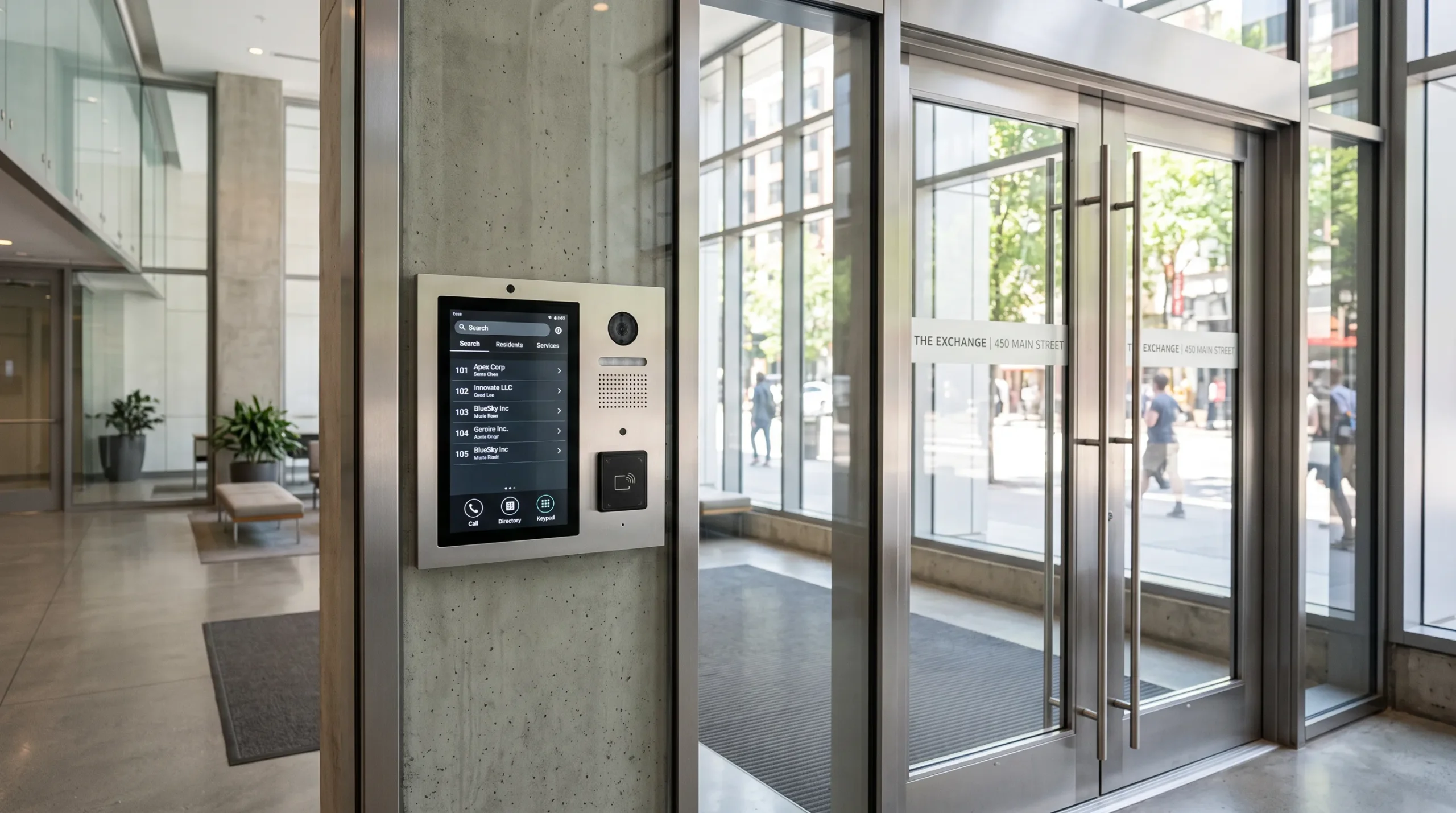
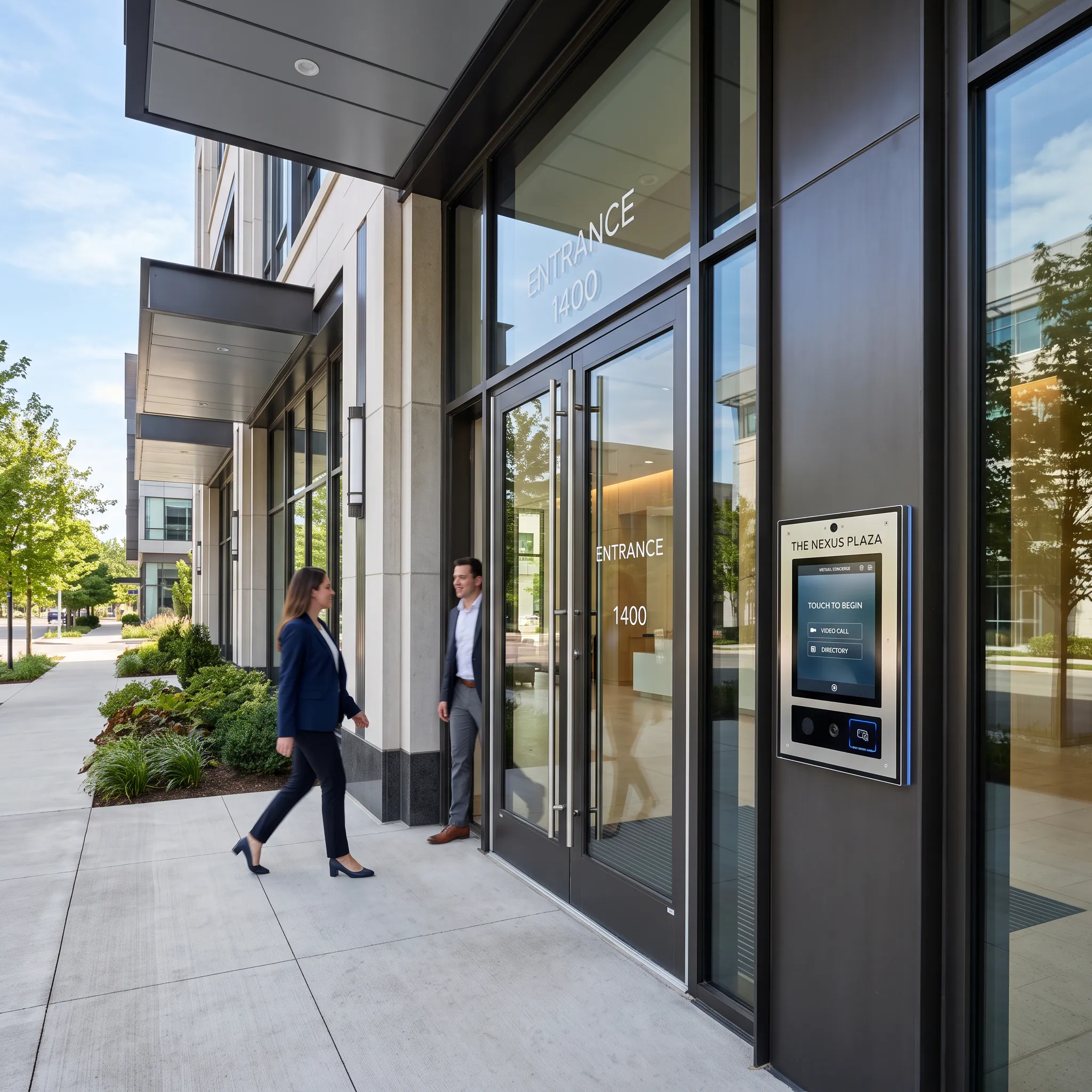
Virtual concierge systems are video intercom and visitor management platforms that enable remote communication and access control for building lobbies, parking structures, and secured entry points. The three core components: lobby station (video intercom panel with camera, touchscreen, and directory), communication platform (connects visitors to remote operators or tenants via video/audio), and access control integration (grants or denies door release remotely). Virtual concierge systems differ from traditional intercom solutions through video documentation of every visitor interaction, integration with CCTV camera systems, and centralized management across multiple building locations.
The operational benefits eliminate front desk staffing costs for after-hours or low-traffic periods, provide visitor documentation for compliance or incident investigation, and enable tenant-controlled access for deliveries and guests. Every installation comes with factory-backed warranties from authorized brands including Akuvox, all backed by certified technician training on commercial reliability standards.
Use Cases for Virtual Concierge Systems
Commercial clients deploy virtual concierge systems across multiple operational scenarios based on building type and staffing requirements:
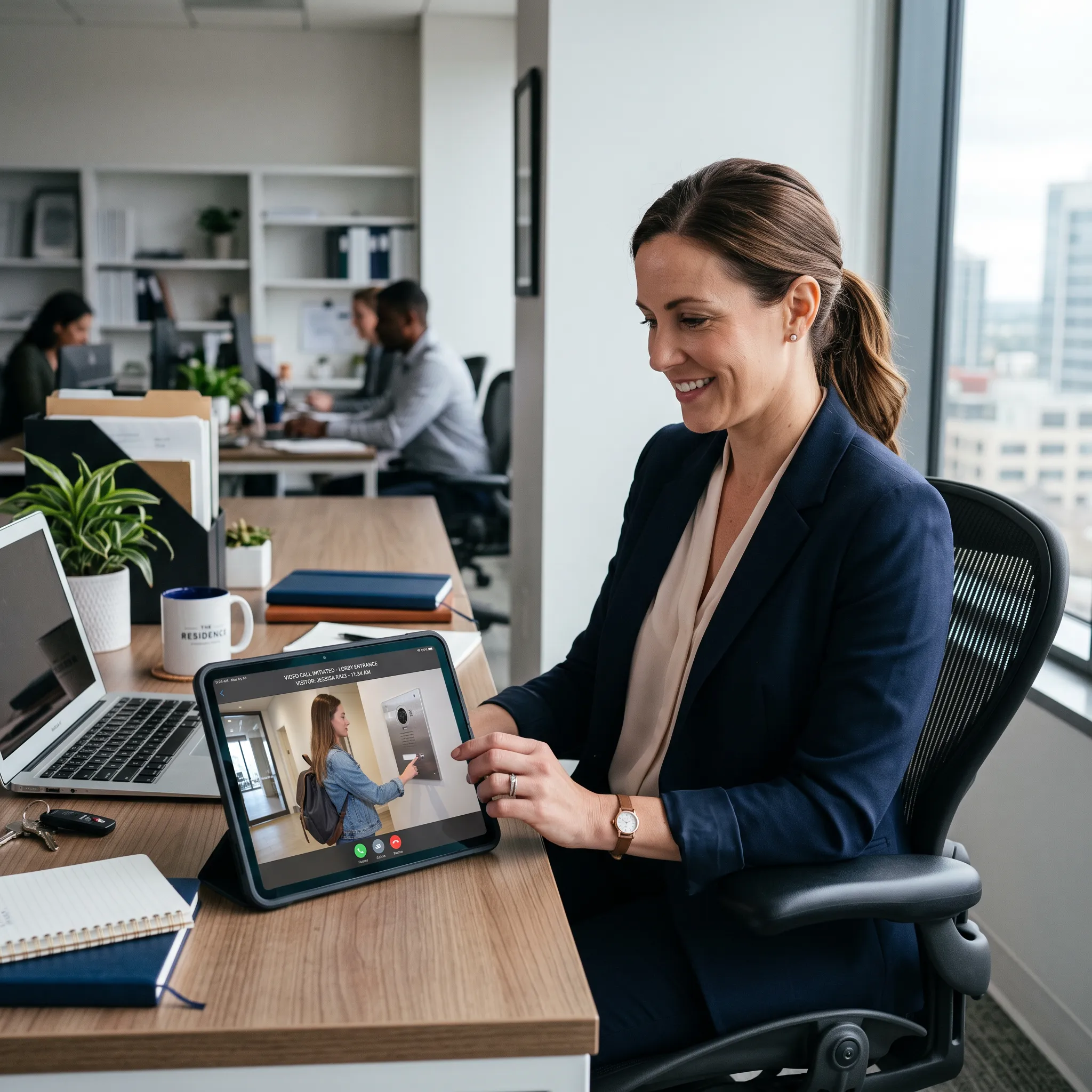
- Multi-tenant lobbies: visitors call tenants directly from lobby station, tenants view video feed and grant access remotely without front desk staff, suitable for office buildings and commercial complexes.
- After-hours visitor management: remote operators monitor lobby stations during nights and weekends, verify visitor identity via video before granting access, common in corporate offices and healthcare facilities.
- Package delivery verification: delivery drivers call from lobby station, building staff or tenants confirm delivery via video and release door remotely, reducing package theft and unauthorized access.
- Parking structure entry: visitors request access from parking gate station, property staff verify vehicle and occupant before granting entry, often deployed in residential and mixed-use properties.
- Integrated visitor documentation: every interaction logs timestamp, video recording, and access decision for compliance reporting or incident investigation, required in government and high-security facilities.
How Virtual Concierge Systems Work in Commercial Buildings
Understanding system operation helps property managers and building owners make informed decisions before committing to installation:
- Visitor call process: visitor approaches lobby station and selects tenant or calls operator, station initiates video/audio connection, tenant or operator views visitor via camera feed and communicates in real-time.
- Remote access control: after verifying visitor identity, tenant or operator triggers door release command, access control system unlocks door for specified duration, system logs visitor entry with timestamp and video snapshot.
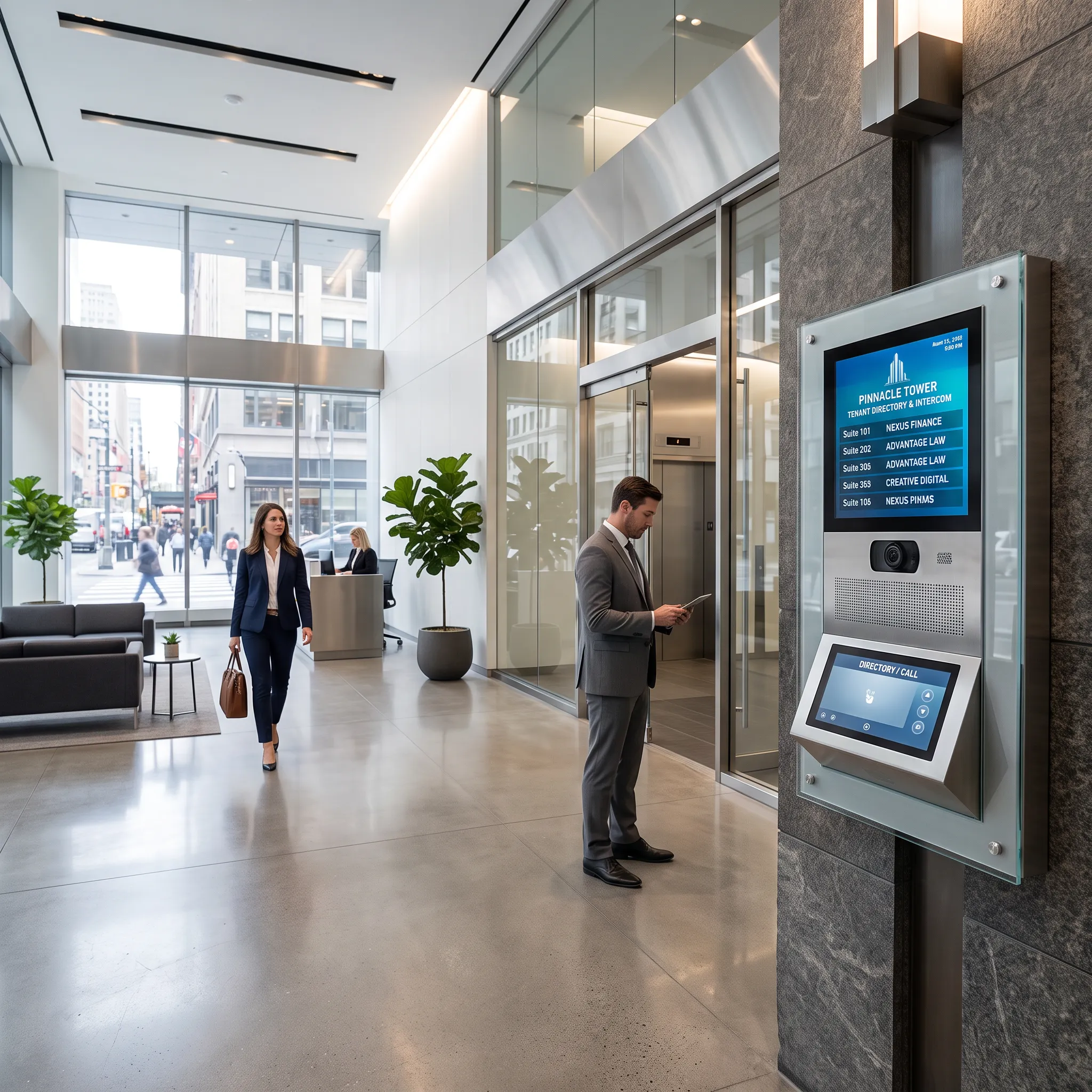
- Tenant directory management: property managers update tenant listings and contact information remotely, visitors search directory by company name or suite number, system routes calls to tenant’s smartphone or desktop application.
- Integration with building systems: virtual concierge platforms communicate with access control panels for door release, with CCTV systems to record visitor interactions, with live remote video monitoring for security escalation.
Industries We Serve with Virtual Concierge Systems
VISITOR MANAGEMENT EXPERTISE
Ainger serves commercial clients across eight verticals, each with distinct virtual concierge requirements and operational considerations:
- Commercial offices and multi-tenant buildings: enable tenant-controlled visitor access, eliminate front desk staffing during off-hours, provide directory search for visitors.
- Property management portfolios: deploy cloud-managed systems across multiple buildings with centralized tenant directory management and visitor reporting.
- Healthcare facilities: verify visitor identity before granting access to restricted areas, document all entry attempts for compliance and security audits.
- Industrial facilities: manage contractor and vendor access to loading docks and service entrances with video verification and remote door release.
- Hospitality (hotels and residential): provide guest communication with front desk or property management, enable package delivery verification and after-hours access.
- Retail and mixed-use developments: control employee and vendor entrances, manage parking structure access, integrate with commercial security systems.
Our Virtual Concierge System Installation Process
PREDICTABLE PROJECT DELIVERY
Ainger follows a structured installation process that sets clear expectations for commercial decision-makers evaluating vendors:
Site assessment: Ainger technician visits facility to document entry points, existing access control infrastructure, network connectivity, and power availability at each lobby or gate location. System design: specify lobby station models, tenant directory structure, remote operator requirements, and integration with existing access control, CCTV, or building management systems. Proposal delivery: itemized quote includes equipment (manufacturer and model), labor, security system wiring if required, and factory warranty terms.
Installation: mount lobby stations and door release hardware, run network cabling between stations and control panel locations, terminate connections, configure tenant directory and access permissions. Testing and commissioning: verify every station connects to tenants or operators correctly, test video/audio quality and door release operation, confirm visitor logging and reporting, train property staff on tenant management and system administration.
What’s Included in Our Virtual Concierge System Installations
COMPLETE SYSTEM SCOPE
Lobby station hardware
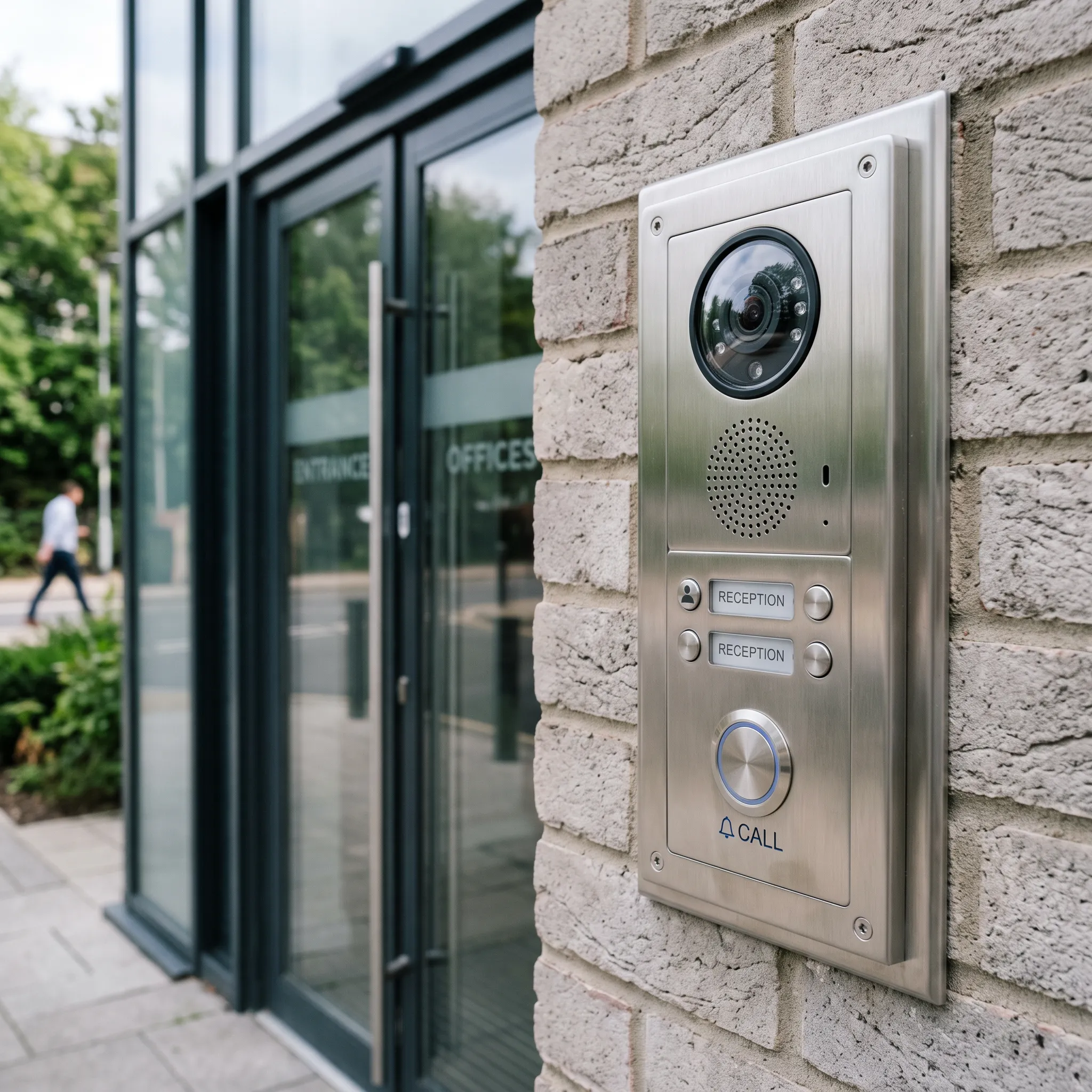
Video intercom panel with HD camera, touchscreen display, and tenant directory interface, specified for indoor or outdoor environment with weather-resistant enclosure.
Communication platform
Cloud or on-premise server for call routing, tenant smartphone/desktop applications for receiving visitor calls, remote operator workstation if specified in design.
Access control integration
Door release hardware (electric strikes or magnetic locks), integration with existing access control panels for remote unlock, request-to-exit sensors and door position switches.
Network cabling and power
Cat6 for IP-based lobby stations, PoE (Power over Ethernet) or local power supply as required, integration with existing CCTV or building management systems where specified.
Factory-backed equipment warranty (terms vary by manufacturer: Akuvox), technician training on system operation and tenant directory management, as-built documentation and admin credentials. Remote operator monitoring or ongoing maintenance requires separate service agreement.
Client Testimonials
What Our Customers Have to Say




















Get a Quote for Your Virtual Concierge System
READY TO START?
Every project starts with a site assessment. We’ll evaluate your facility, identify visitor management requirements, and provide a detailed scope covering equipment, cabling, integration, and timeline. No obligation, no pressure.
Request a QuoteFrequently Asked Questions
Akuvox intercom systems operate on the local network, so lobby-to-tenant calls within the same building continue to function during internet outages. Remote mobile forwarding requires internet connectivity. The access control system maintains local decision-making capability through door controllers that store access rules locally, so credential-based entry continues to work independently of network status.
Yes. Akuvox intercom systems support call forwarding to mobile devices and desk phones. When a visitor calls from the lobby station, the call rings through to the tenant’s designated device. The tenant can see the visitor via live video, communicate through two-way audio, and release the door directly from their phone if they choose to grant access.
Virtual concierge systems work for both after-hours and full-time lobby management. Many multi-tenant properties use them as the primary visitor management system around the clock, replacing the cost of staffing a front desk with a technology solution that provides the same greeting, verification, and access control functions at a fraction of the ongoing cost.
A virtual concierge system requires a one-time hardware and installation investment plus minimal ongoing costs for maintenance and network connectivity. Front desk staff represent continuous payroll, benefits, and scheduling overhead that scales with coverage hours. Most multi-tenant properties recover the system investment within the first year compared to the equivalent staffing cost for the same coverage hours.
The virtual concierge connects to the building’s access control system so operators can release doors remotely during a video call with a visitor. When access is granted, the door event is logged in the access control system with the visitor’s identity, timestamp, and the operator who authorized entry. This creates a complete audit trail without requiring physical credentials for every visitor.
A virtual concierge is a video intercom and visitor management platform that handles lobby reception functions remotely. Visitors use a touchscreen station in the lobby to call tenants or a remote operator, who can verify the visitor’s identity via live video and grant or deny access by releasing the door remotely. It replaces or supplements front desk staff for after-hours, weekends, or full-time lobby management.
Yes. Every call, access event, and visitor interaction is logged with timestamps, call duration, which tenant or operator responded, and whether access was granted or denied. When integrated with CCTV, video footage of the visitor at the lobby station is automatically bookmarked alongside the call log entry, providing both audio and visual documentation of every visitor interaction.
1996–2026

Contact Us
Get in Touch with Ainger Cabling + Security
Find Us Online