

Industrial Security Systems
for Manufacturing and Heavy Industry
What Makes Industrial Security Different?
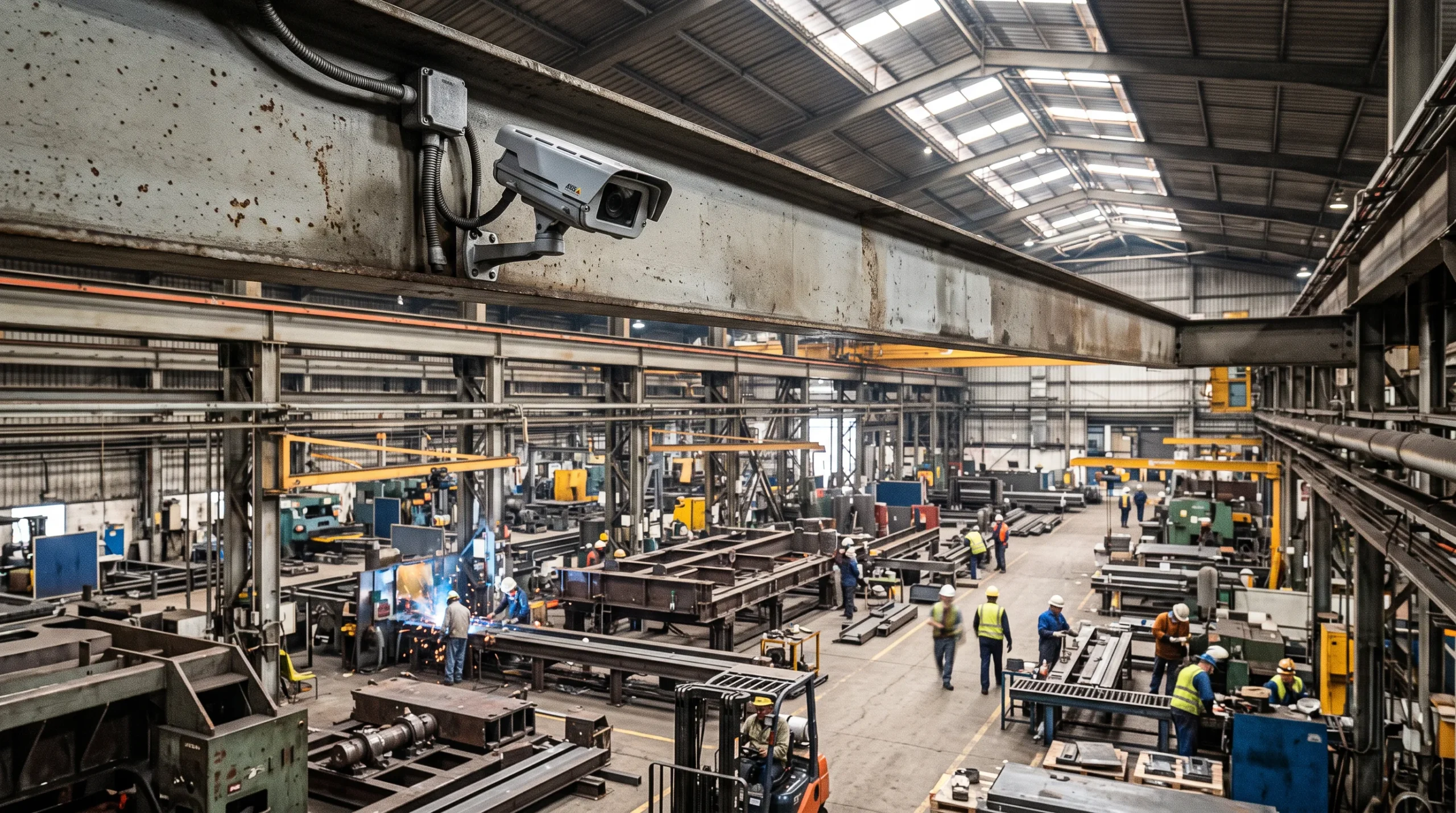
HARSH ENVIRONMENTS AND LARGE SITES
Industrial security systems operate in conditions that destroy standard commercial equipment. Manufacturing plants, processing facilities, mining operations, and heavy industry sites present challenges that office buildings and retail spaces never encounter. For three decades, Ainger Cabling + Security has delivered security infrastructure built to survive these environments across Canada and the United States.
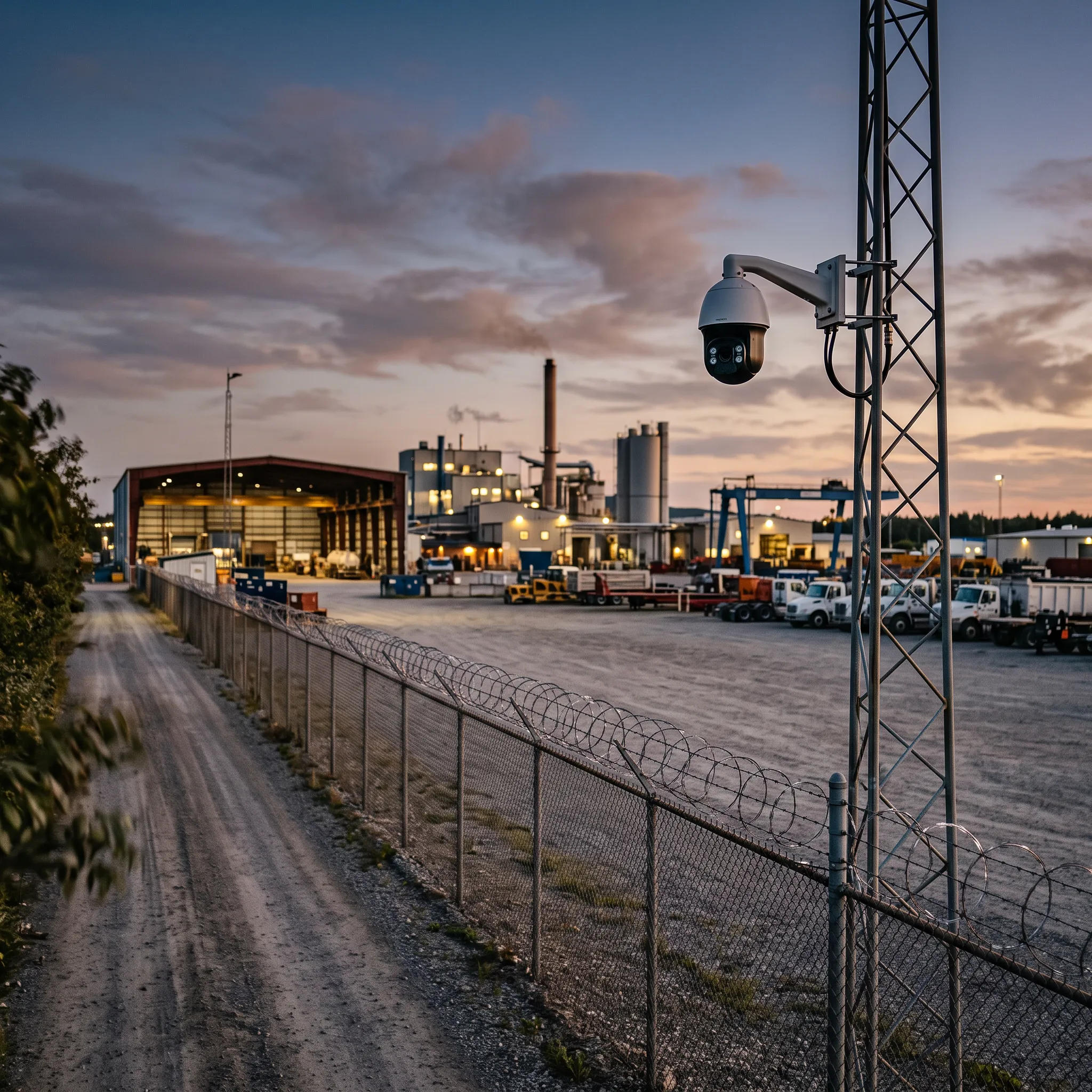
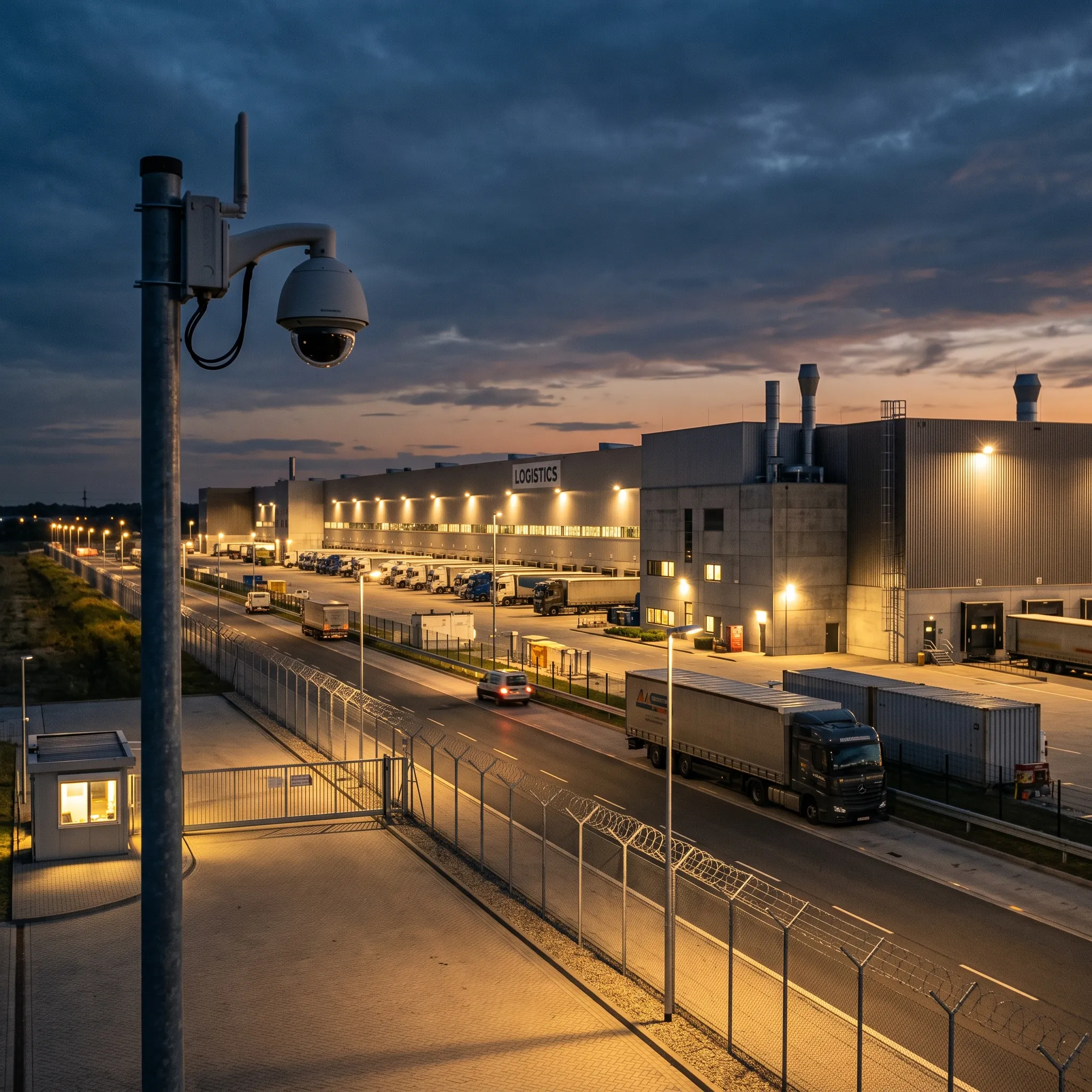
Industrial facilities span acres rather than floors. Perimeter fencing, equipment yards, and laydown areas extend hundreds of meters from the main building. Shift-based workforces run around the clock. Contractor and delivery traffic flows through gates that must balance security with operational throughput. High-value equipment, raw materials, and finished inventory create targets that require detection before a breach occurs, not just recording after the fact.
Dust, moisture, vibration, temperature extremes, and unheated spaces define the operating environment. Cameras and sensors must function in conditions ranging from -40°C Canadian winters to +50°C summer heat near furnaces and processing equipment. Electromagnetic interference from variable frequency drives and heavy machinery disrupts improperly shielded cabling. Equipment rated for climate-controlled office spaces fails within months when deployed in industrial conditions.
Security Systems Industrial Sites Deploy
Industrial facilities layer multiple security technologies to protect perimeters, buildings, equipment, and personnel. Each system addresses specific operational requirements:
- CCTV camera systems with long-range and thermal-capable cameras covering perimeters, yards, loading docks, and production areas where standard commercial cameras lack sufficient range or environmental durability.
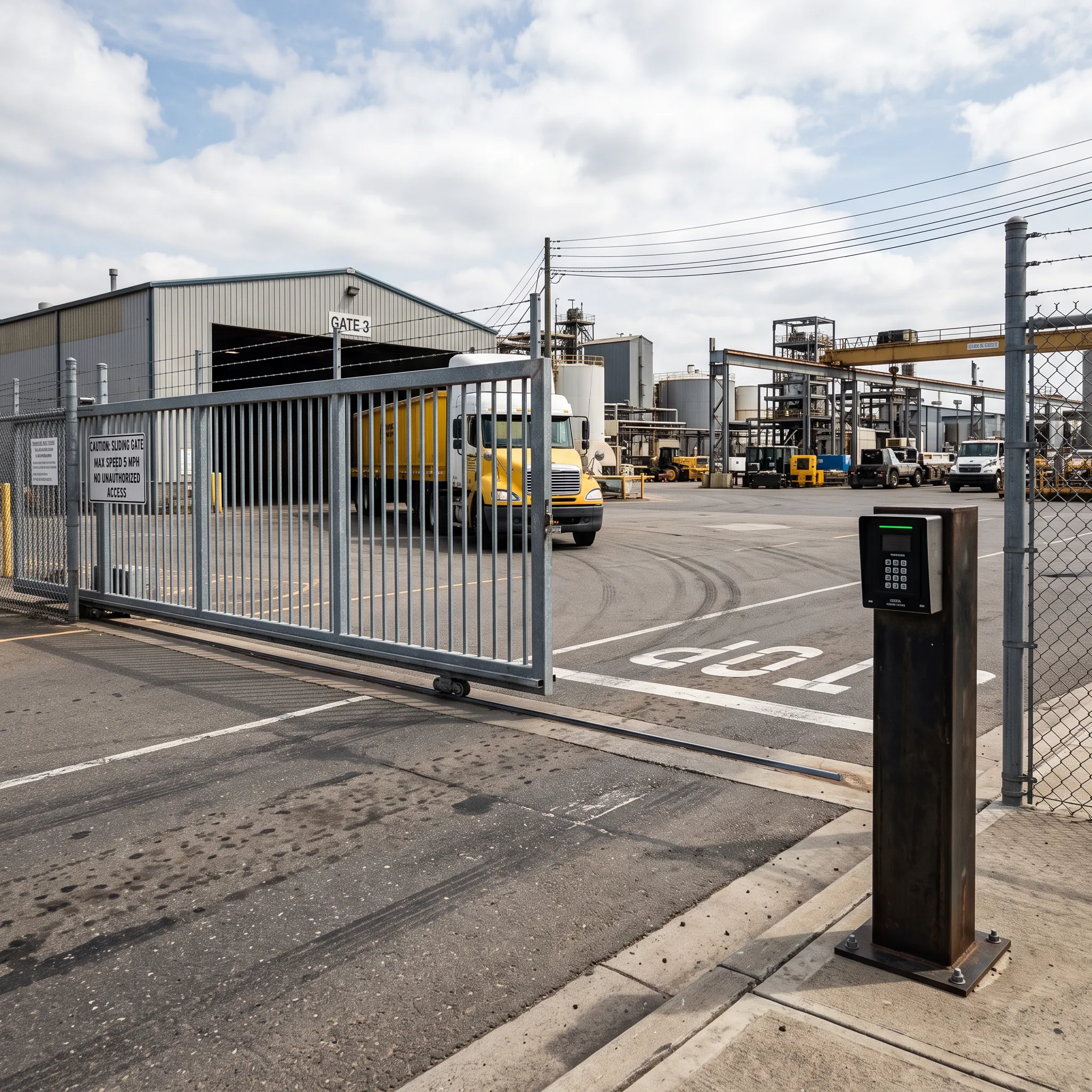
- Access control systems managing employee credentials, contractor access, vehicle gate entry, and zone-based permissions that restrict access to hazardous or high-value areas.
- Intrusion alarm systems with perimeter detection, fence line sensors, and building entry monitoring that trigger coordinated responses across video and access control platforms.
- Live remote video monitoring providing real-time surveillance of unmanned facilities, after-hours operations, and high-risk zones with immediate response protocols.
- Emergency call box systems positioned throughout large sites where cellular coverage is unreliable and workers need immediate communication with security or emergency services.
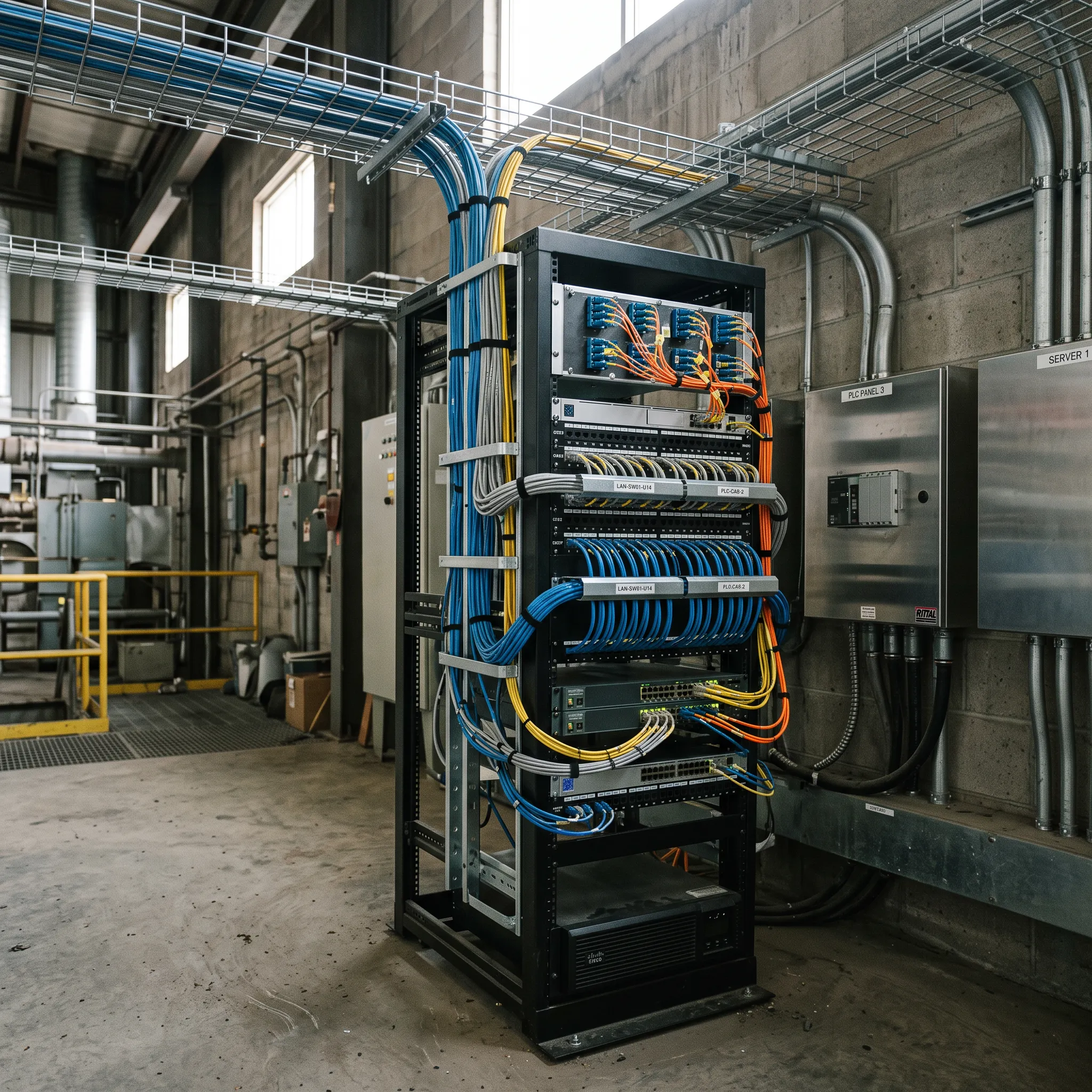
- Network infrastructure and structured cabling connecting buildings across multi-acre sites with fibre backbone and shielded copper distribution designed for industrial electromagnetic environments.
Perimeter and Yard Security for Large Industrial Sites
Industrial facilities require security coverage that extends far beyond building entry points. Perimeter fencing, equipment yards, and vehicle gates create detection challenges that standard commercial systems cannot address:
- Fence line detection systems using vibration sensors, taut wire, or fibre optic cable detect intrusion attempts before a breach occurs, providing early warning that triggers camera presets and alarm responses.
- Long-range and thermal-capable cameras cover distances that standard commercial cameras cannot reach, with commercial surveillance cameras specified for 200+ meter detection ranges and thermal imaging for low-light perimeter monitoring.
- Gate and vehicle access control manages truck traffic, contractor entry, and employee parking with credential readers, license plate recognition, and intercom systems that balance security with operational throughput.
- Lighting integration coordinates perimeter and yard lighting with motion detection and alarm events, illuminating specific zones when intrusion is detected rather than flooding the entire site continuously.
- Equipment yards and laydown areas require coverage of high-value machinery, raw materials, and finished goods stored outdoors, where theft and vandalism risk is highest during overnight and weekend hours.
- Distance and coverage challenges demand camera placement, lens selection, and network infrastructure designed for sites where the distance from the main building to the perimeter fence exceeds what standard commercial security systems can reliably cover.
Equipment Specification for Harsh Industrial Environments
BUILT TO SURVIVE INDUSTRIAL CONDITIONS
Consumer-grade and light-commercial security equipment fails rapidly when deployed in industrial environments. Equipment specification for manufacturing, processing, and heavy industry requires components engineered for conditions that office buildings never encounter:
- IP-rated and vandal-resistant housings protect cameras, sensors, and access control readers from dust, moisture, impact, and tampering. IP66 and IP67 ratings ensure equipment survives washdown procedures, outdoor Canadian weather, and the physical abuse of industrial operations.
- Operating temperature ranges for unheated warehouses, outdoor Canadian installations, and proximity to furnaces and processing equipment. Industrial-grade cameras and sensors function reliably from -40°C to +50°C, where standard commercial equipment shuts down or fails permanently.
- Shielded cabling in high electromagnetic interference environments near heavy machinery, variable frequency drives, and high-voltage equipment. Improperly shielded security wiring experiences data corruption, false alarms, and intermittent failures that standard commercial installations never encounter.
- Dust and washdown considerations for food processing, pharmaceutical manufacturing, and facilities requiring regular cleaning. Cameras and sensors must maintain IP ratings after repeated exposure to high-pressure water, cleaning chemicals, and airborne particulates.
- Why consumer or light-commercial equipment fails on industrial sites: inadequate environmental protection, insufficient operating temperature ranges, lack of electromagnetic shielding, and mechanical housings not designed for the vibration, impact, and abuse that industrial environments deliver daily.
Why Industrial Sites Use a Single Accountable Partner
SECURITY AND CABLING FROM ONE CONTRACTOR
Industrial facilities that split security system installation and cabling infrastructure between separate contractors create coordination overhead that delays projects and obscures accountability when problems occur. Plant managers and facility engineers eliminate that complexity by working with a single partner for both disciplines.
Ainger Cabling + Security delivers manufacturer-authorized security systems from Kantech, Uniview, Avigilon, DSC, Akuvox, Mircom, Active Watch, and Panduit, installed on structured cabling infrastructure we design and install ourselves. Industrial sites often span multiple buildings and require fibre backbone between them. When the same contractor specifies the fibre route, termination hardware, and camera locations, the entire system is designed as one coordinated installation rather than layered on separately.
Our manufacturer-authorized dealer status ensures factory-backed warranties on every installation. Technicians receive training on both the security hardware and the network infrastructure it runs on. When a camera goes offline or an access control reader stops responding, there’s one phone number to call and one contractor accountable for resolution. For three decades, we’ve served commercial and industrial clients across Canada and the United States with this integrated approach to system installation and ongoing maintenance contracts.
Industrial Security Project Timelines
DEPLOYMENT SCHEDULES FOR INDUSTRIAL SITES
Single industrial building
Basic perimeter cameras, building entry access control, and intrusion detection for a single manufacturing or warehouse facility typically completes within 1–2 weeks including cabling, equipment installation, and system commissioning.
Manufacturing plant with yard
Comprehensive coverage including fence line detection, long-range perimeter cameras, gate access control, equipment yard monitoring, and building security systems typically requires 3–5 weeks with phased deployment to minimize operational disruption.
Multi-building industrial campus
Enterprise security infrastructure with fibre backbone connecting multiple buildings, centralized access control and video management, perimeter detection, and integrated alarm systems typically requires 6–10 weeks with coordinated installation across active production areas.
Multi-site rollout
Standardized security configurations deployed across multiple industrial facilities with centralized management platforms, coordinated deployment schedules, and consistent equipment specifications to ensure uniform security posture across the entire portfolio.
Site assessment and system design typically require 1–2 weeks before installation begins. Camera placement, cable routing, and equipment installation are coordinated with production schedules to minimize disruption. After-hours and weekend installation is available for facilities that cannot accommodate work during operating hours.
Client Testimonials
What Our Customers Have to Say




















Get a Quote for Your Industrial Security System
READY TO START?
Every project starts with a site assessment. We’ll evaluate your facility, identify perimeter and yard security requirements, specify equipment for your operating environment, and provide a detailed scope covering cameras, access control, intrusion detection, cabling, and timeline. No obligation, no pressure.
Request a QuoteFrequently Asked Questions
Usually not for long. Dust ingress, washdown, vibration from heavy machinery and unheated space through a Canadian winter all shorten the life of light-commercial equipment considerably. Industrial installations need IP-rated housings, an operating temperature range that matches the actual conditions, and vandal-resistant enclosures where equipment sits within reach. Specifying correctly at the design stage costs far less than replacing failed cameras a year in.
Yes. Installation is scheduled around production, using planned shutdowns, maintenance windows or off-shift hours for work in active areas. Cable routing uses existing tray and conduit pathways where available. We coordinate with plant management and EHS on site access, lockout procedures and any permit requirements before work begins.
24/7 monitoring with emergency response is available as an additional service for intrusion detection, fire alarm and CCTV systems. For sites with large perimeters and high-value equipment sitting in yards overnight, live remote video monitoring is often the better fit, with operators watching feeds and issuing audio warnings rather than responding after an alarm has already triggered.
Access control credentials can be restricted by door, by zone and by time, so day, afternoon and night shift each carry their own access rules. Contractor credentials are issued with an expiry date so they stop working when the job finishes. Every entry is logged against the individual, which also provides a record of who was on site during any incident or safety investigation.
Yes. Industrial campuses typically exceed the 100 metre limit of copper cabling between buildings, so a fibre backbone connects each building back to a central point. That allows cameras, access control and network systems across the whole site to run on one platform with a single management interface rather than separate systems per building.
Industrial environments generate significant electromagnetic interference, particularly around variable frequency drives, large motors and welding operations. Shielded cabling, correct separation from power runs, proper grounding and in some cases fibre rather than copper all address it. This is one of the most common causes of intermittent camera and access control faults on industrial sites, and it traces back to the cabling rather than the equipment.
Yes. We install the access control side of gate entry, including readers, credentials, intercom at the lane and integration with the site access platform, so vehicle entry is logged the same way pedestrian entry is. The physical gate hardware and barrier installation is handled by a specialist gate contractor, and we coordinate with them so the access control integrates properly.
Long perimeters are covered with a combination of long-range fixed cameras along the fence line, PTZ cameras for active monitoring of larger open areas, and detection technologies that trigger a camera rather than relying on continuous watching. The design depends on what the footage needs to achieve, general awareness of movement requires far fewer cameras than identifying an individual at distance.

Contact Us
Get in Touch with Ainger Cabling + Security
Find Us Online