
Other Security & Safety Solutions
for Commercial Facilities
What Other Security & Safety Solutions Does Ainger Provide?
ENTRY, COMMUNICATION & MONITORING SYSTEMS
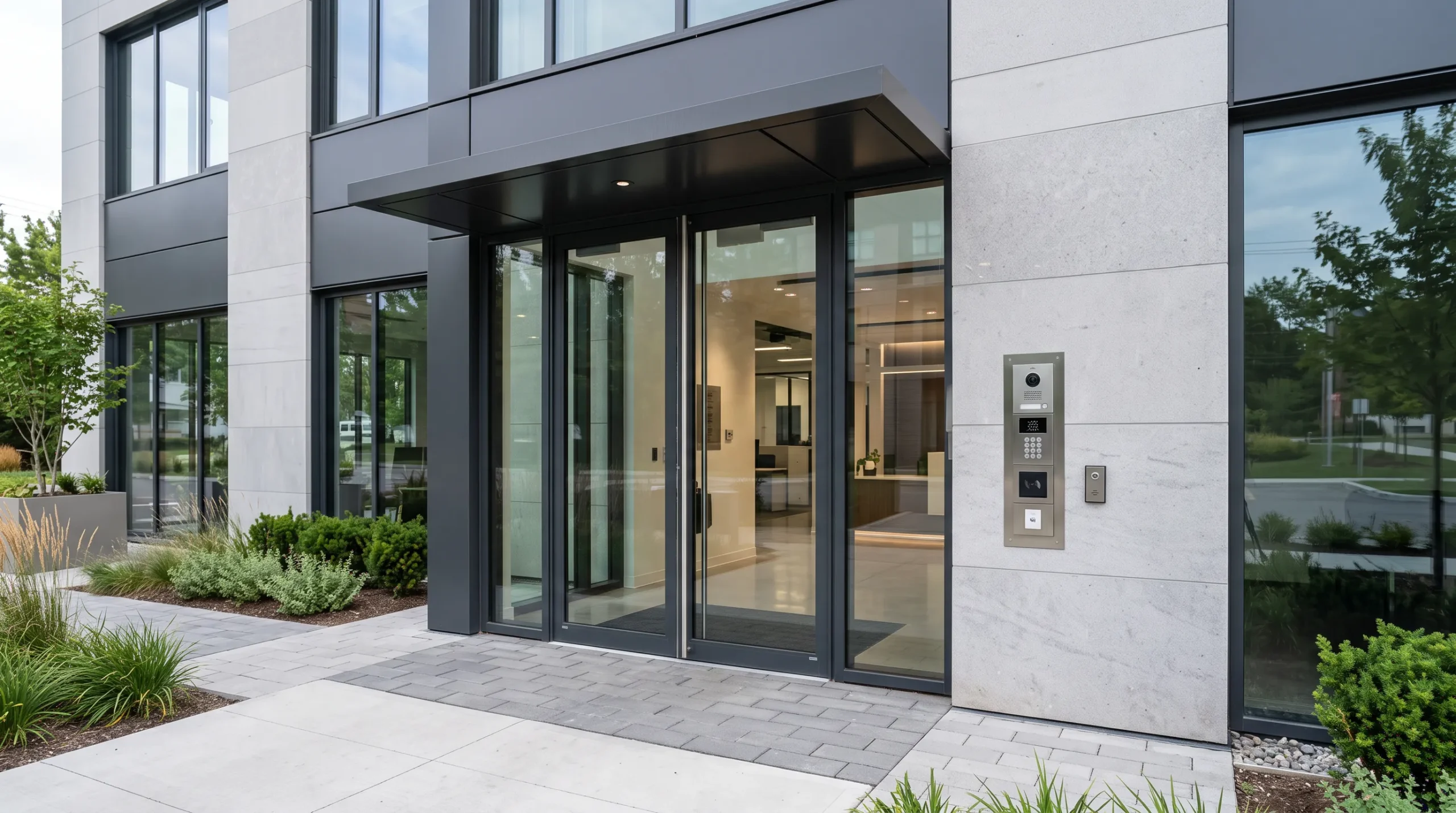
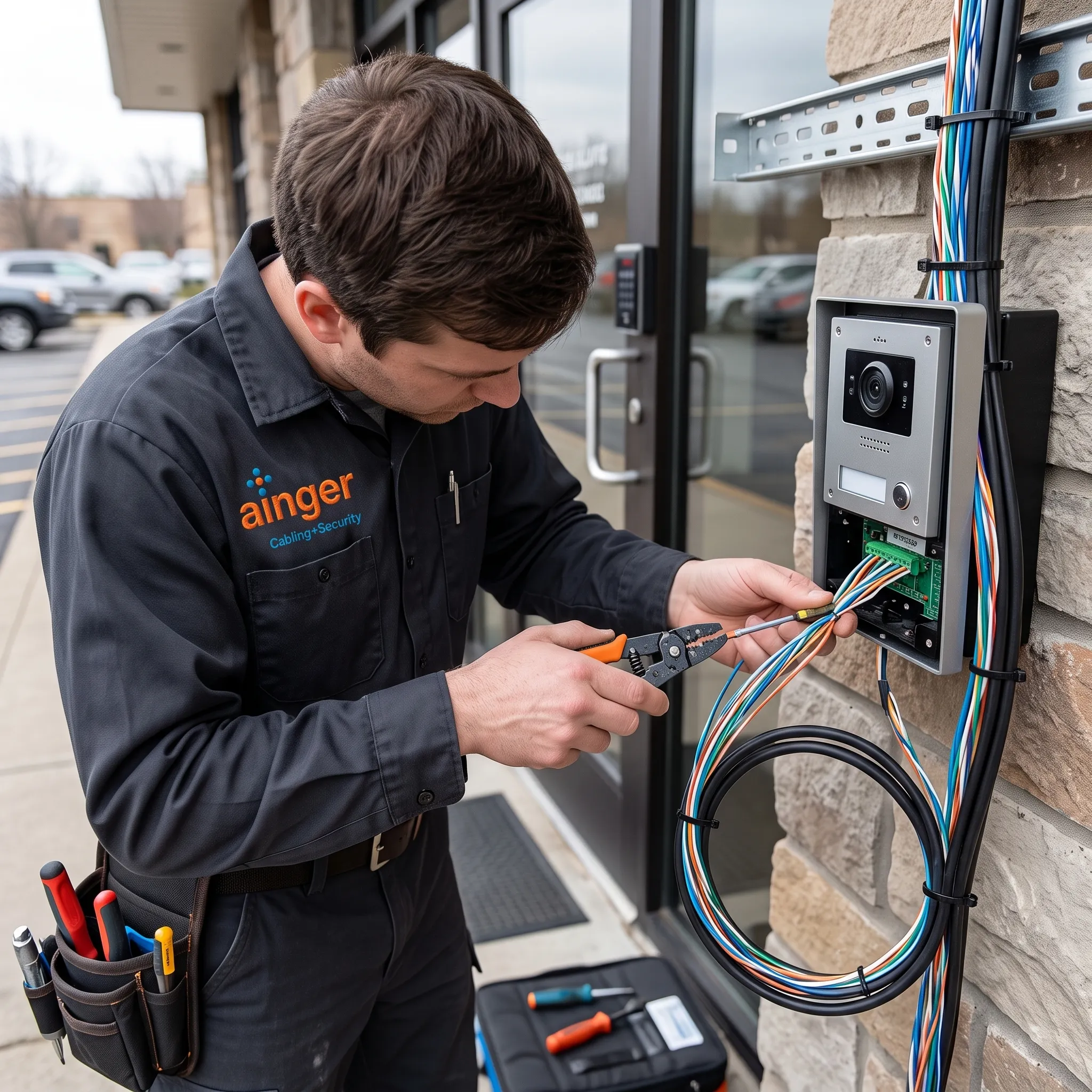
Beyond core access control, video surveillance, and intrusion alarm systems, commercial facilities need infrastructure for visitor communication, remote door release, fire alarm monitoring connections, and residential security installations. Ainger Cabling + Security delivers these complementary systems as part of the same integrated security platform, installed by the same technicians who handle your core security infrastructure.
These solutions sit alongside the primary security systems because they share the same structured cabling infrastructure, integrate with the same access control and video platforms, and require the same manufacturer-authorized installation standards. Rather than coordinating separate vendors for entry systems, fire monitoring connections, and security wiring, you work with one accountable partner for the complete security and safety infrastructure serving your facility.
Whether your building needs a video intercom system for multi-tenant entry management, a telephone entry system routing calls to existing phone lines, a ULC-certified fire alarm monitoring connection, or a residential security installation for executive housing, every system is built on commercial-grade infrastructure designed for reliability and long-term serviceability across Canada and the USA.
Our Other Solutions
EXPLORE THE FULL OFFERING
Intercom
Systems
Video intercom and tenant communication for commercial and multi-tenant buildings
Learn MoreULC Fire Alarm Monitoring
Monitoring connections linking your existing fire alarm panel to a monitoring station
Learn MoreResidential Security Systems
Commercial-grade alarm, camera and monitoring systems for homes
Learn More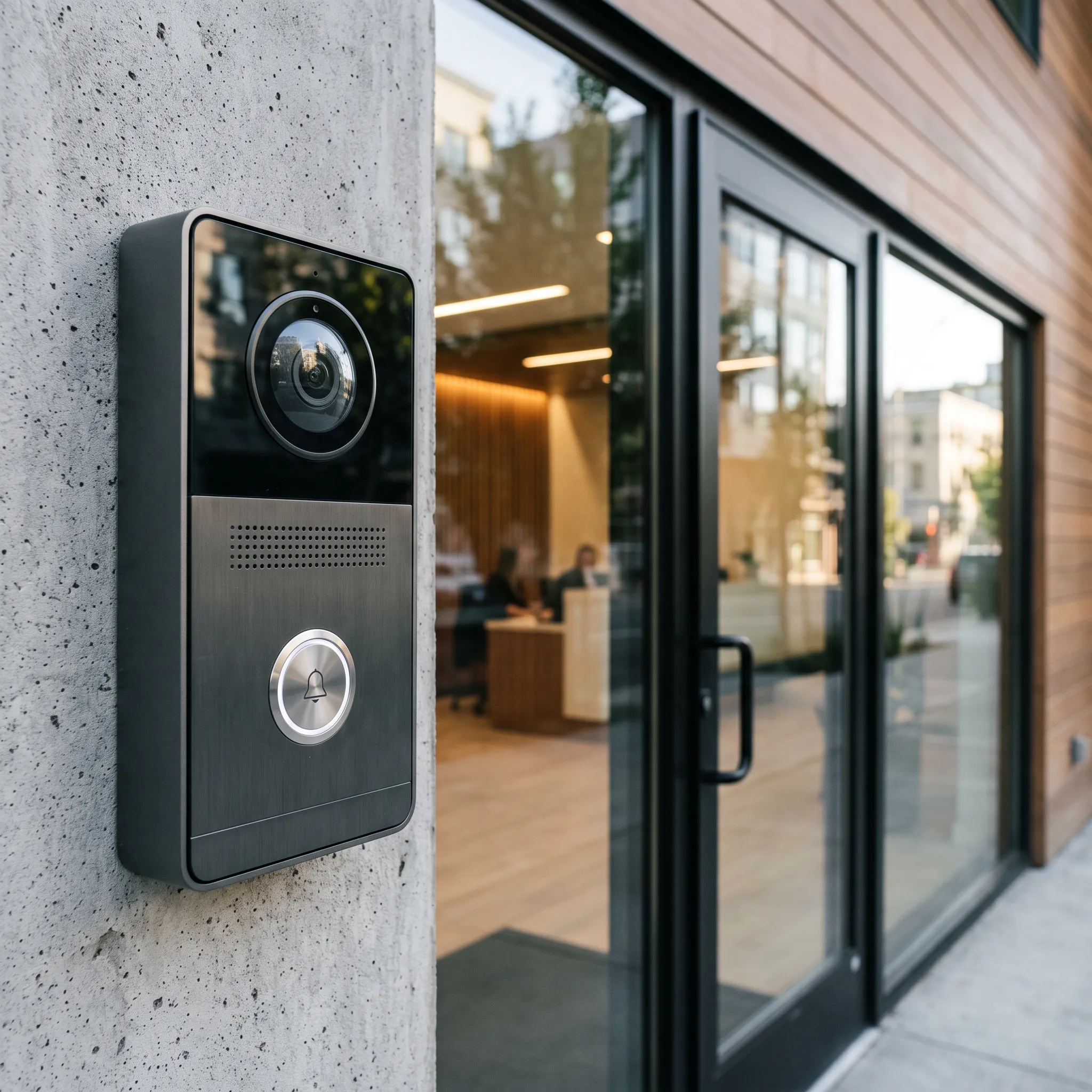
What Security & Safety Solutions Are Available?
Ainger delivers four complementary security and safety systems that integrate with your core security infrastructure:
- Intercom systems provide two-way audio and video communication between entry points and indoor stations or mobile apps, with remote door release integration for multi-tenant buildings, offices, and facilities requiring visual verification before granting access.
- Telephone entry systems route visitor calls to existing phone lines or mobile devices, allowing remote door release without dedicated indoor stations, suited for buildings with simpler entry requirements and existing phone infrastructure.
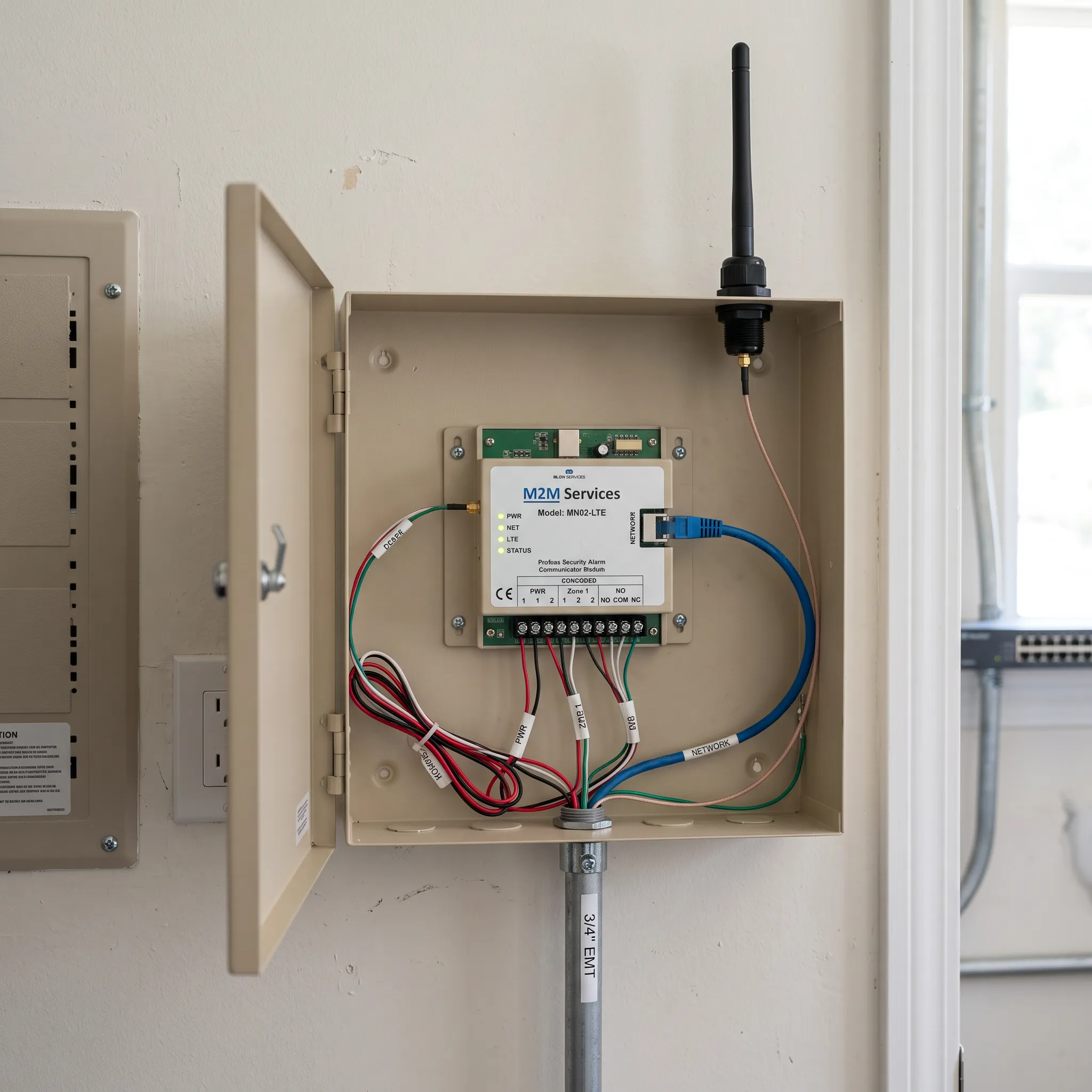
- ULC fire alarm monitoring provides the communication connection between your fire alarm panel and a ULC-certified monitoring station, with both ULC-certified and non-ULC commercial monitoring available. Ainger provides the monitoring connection only and does not install or service fire alarm panels, pull stations, notification appliances, or duct detectors.
- Residential security systems deliver the same manufacturer-authorized access control, video surveillance, and intrusion detection platforms used in commercial facilities, adapted for executive homes, estates, and residential properties requiring professional-grade security infrastructure.
How Do You Choose Between Intercom and Telephone Entry?
Intercom and telephone entry systems both provide visitor communication and remote door release, but they serve different facility requirements:
- Intercom systems use dedicated hardware with video cameras and indoor stations or mobile apps. Residents or staff see who is at the door before granting access, with video verification recorded and integrated with the facility’s video surveillance system.
- Telephone entry systems route calls to ordinary phone lines and mobile devices. Visitors dial a directory code, the system calls the resident or staff member on their existing phone, and door release happens via DTMF tone without dedicated indoor stations.
- Intercom suits buildings wanting video verification and richer features. Multi-tenant residential buildings, corporate offices with reception areas, and facilities requiring visual confirmation before granting access benefit from dedicated video intercom infrastructure.
- Telephone entry suits simpler requirements and existing phone infrastructure. Smaller buildings, facilities with straightforward entry needs, and properties where staff already carry mobile phones benefit from telephone entry without the cost of dedicated indoor stations.
- Both integrate with access control for remote door release. Whether the call comes through an intercom station or a telephone line, the door release command triggers the same access control hardware, with the event logged and camera footage bookmarked for audit purposes.
How Do These Systems Connect to Your Wider Security Setup?
INTEGRATED SECURITY INFRASTRUCTURE
These complementary systems do not operate in isolation. They share the same infrastructure and integrate with the same security platforms that protect your facility:
- Entry systems integrate with access control so door releases are logged. When a visitor is granted access through an intercom or telephone entry system, the door release event is recorded in the access control database with a timestamp, the credential or call that triggered it, and the camera footage bookmarked for audit purposes.
- Entry events bookmark camera footage automatically. When someone presses the call button on an intercom or telephone entry panel, the nearest CCTV cameras begin recording and the footage is tagged, eliminating the need to search through hours of video after an incident.
- Fire alarm monitoring shares the communication path supervision used by intrusion monitoring. The same network and cellular communication infrastructure that supervises intrusion alarm panels also carries fire alarm signals to the monitoring station, with path redundancy and supervision ensuring reliable emergency response.
- All of it depends on the same structured cabling. Entry systems, monitoring connections, and security devices all run on the same security wiring infrastructure, with proper cable gauge, shielding, and routing designed to support the complete security platform rather than layered on separately.
Why Get These Systems from the Same Partner as Your Core Security?
YOUR SINGLE ACCOUNTABLE PARTNER
Most facilities coordinate separate vendors for entry systems, fire monitoring connections, and security wiring. That creates multiple points of accountability when something goes wrong and requires you to manage the integration between systems that were never designed to work together. Our model eliminates that entirely.
As both your security system installer and security wiring contractor, we design the entry system locations, monitoring connections, and cable routes together from the outset. The wiring is specified for the exact devices it will carry, with proper cable gauge, shielding, and routing to support reliable operation. Integration with access control, video surveillance, and intrusion detection is built into the design rather than retrofitted afterward.
Our manufacturer-authorized dealer status for Akuvox on intercom systems, Mircom on fire alarm equipment, Kantech on access control, and DSC on alarm panels means factory-backed warranties on every installation. Technicians receive manufacturer training on system programming, integration protocols, and installation standards that ensure long-term reliability.
One infrastructure partner. One accountability chain. One warranty behind everything we install. Serving commercial clients across Canada and the USA for over 30 years.
How Does the Installation Process Work?
PROJECT STAGES & ENGAGEMENT
Site assessment
We evaluate your facility to identify entry points, communication requirements, monitoring needs, and integration with existing security systems. The assessment covers device locations, cable routing, power requirements, and operational workflows.
System design
Based on the site assessment, we provide a detailed scope covering equipment specifications, wiring infrastructure, integration protocols, monitoring services, and project timeline. The design includes device placement drawings, cable schedules, and integration diagrams.
Installation and commissioning
Manufacturer-authorized technicians install the devices, run the wiring, configure the integration with access control and video surveillance, and test the complete system. Installation is coordinated with your operational schedule to minimize disruption, with after-hours and weekend work available.
Ongoing maintenance and support
After installation, maintenance contracts provide scheduled inspections, firmware updates, device testing, and priority response for service calls. The same technicians who installed the system handle ongoing support, ensuring continuity and accountability.
Project timelines vary based on facility size and system complexity. Small installations typically complete within 1-2 weeks, while larger deployments with multiple entry points and extensive integration may require 3-6 weeks with phased deployment.
Client Testimonials
What Our Customers Have to Say




















Get a Quote for Your Security & Safety Systems
READY TO START?
Every project starts with a site assessment. We’ll evaluate your facility, identify entry points and communication requirements, and provide a detailed scope covering equipment, wiring, integration, and timeline. No obligation, no pressure.
Request a QuoteFrequently Asked Questions
Yes. Entry systems integrate with access control so a door release triggered from an intercom or phone is logged the same way a credential swipe is, with the time, the visitor and who authorised entry. When cameras are also integrated, the corresponding footage is bookmarked automatically against the entry event.
An intercom uses dedicated hardware. A visitor calls from a lobby station and the tenant answers on an indoor monitor or a mobile app, usually with video. A telephone entry system routes the call through ordinary phone lines to a landline or mobile, and the tenant releases the door with a key press. Intercom offers richer features and visual verification. Telephone entry is simpler and works with the phone infrastructure you already have. Both integrate with access control for remote door release.
ULC certification means the monitoring station, equipment and installation meet nationally recognised standards, and it is required by building code for many commercial applications in Canada. Not every facility needs it. We offer both ULC-certified and standard commercial fire alarm monitoring, and confirm during the site assessment which applies to your building based on occupancy classification, local requirements and insurance conditions.
They run on the same structured cabling backbone as your security, network and phone systems. Intercom stations, entry panels and monitoring communicators all need properly specified cabling with the right category, routing and power. Having one contractor install both the systems and the cabling means the infrastructure is specified for the actual load and there is one point of accountability.
Frequently, yes. Legacy analog intercom and entry systems can be replaced with IP-based platforms that use your network infrastructure and add video, mobile access and remote management. In many buildings the new cabling can follow the same pathways as the original wiring. The site assessment determines the most efficient migration route.
No. Ainger provides the monitoring connection that links your existing fire alarm panel to a monitoring station. We do not install or service fire alarm panels, pull stations, notification appliances or duct detectors, which are handled by your fire protection contractor. The one exception is smoke and heat detectors, which we do install when they connect to an intrusion or access control panel rather than to the fire alarm system.
Yes. Both intercom and telephone entry allow a tenant or operator to see or speak with a visitor and release the door from wherever they are. For buildings that want the reception function handled entirely off site, virtual concierge extends that to a remote operator who manages visitor entry on your behalf.
Ainger primarily serves commercial clients and has done for thirty years. We do offer residential security for homeowners who want manufacturer-authorized equipment and professional installation rather than a consumer-grade system, typically larger properties, home offices holding business assets, and homes where insurance requires a professionally installed and monitored system.
1996–2026

Contact Us
Get in Touch with Ainger Cabling + Security
Find Us Online