Business Security Systems Built
for Commercial Clients
What Business Security Systems Does Ainger Install?
MANUFACTURER-AUTHORIZED COMMERCIAL SECURITY
Ainger Cabling + Security delivers manufacturer-authorized business security systems across Canada and the United States, serving commercial clients for over 30 years. As a single accountable partner for both security infrastructure and structured cabling, we eliminate the coordination overhead of managing separate vendors for separate systems.
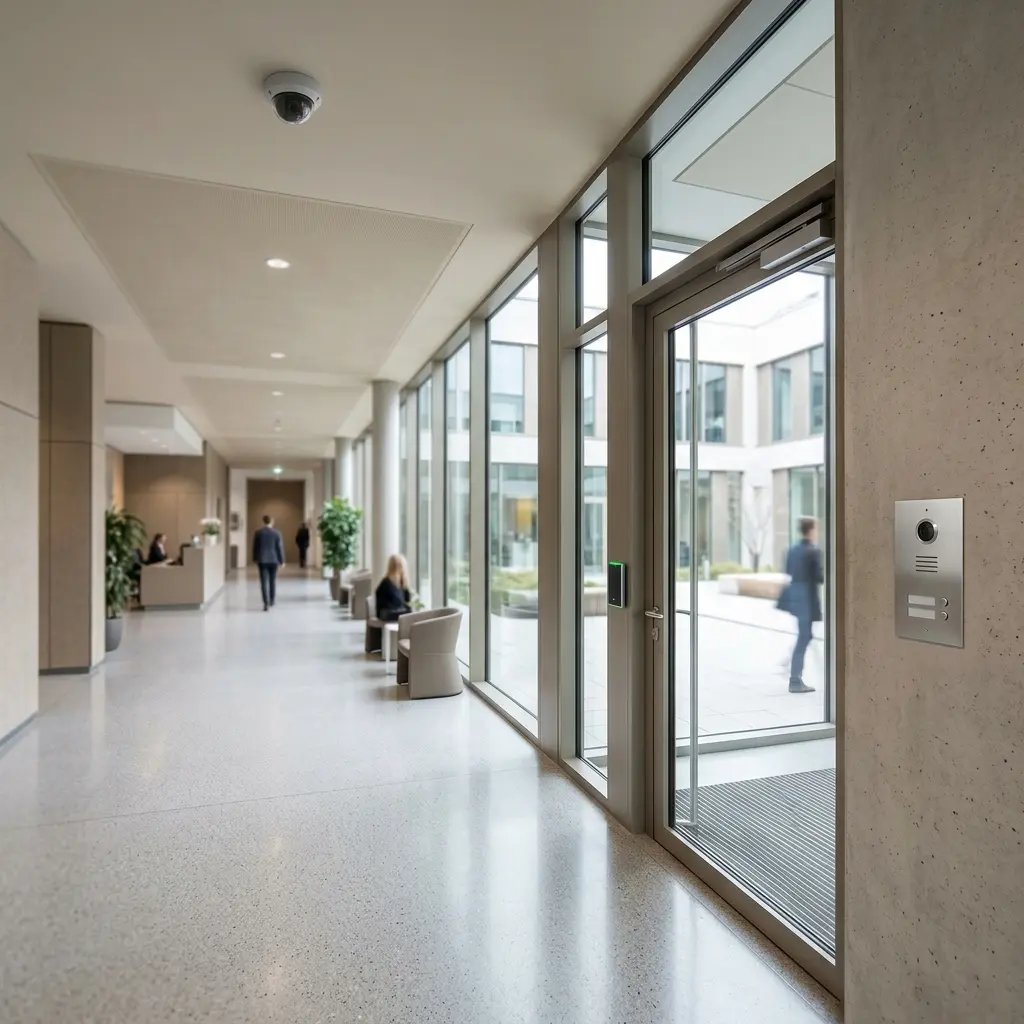
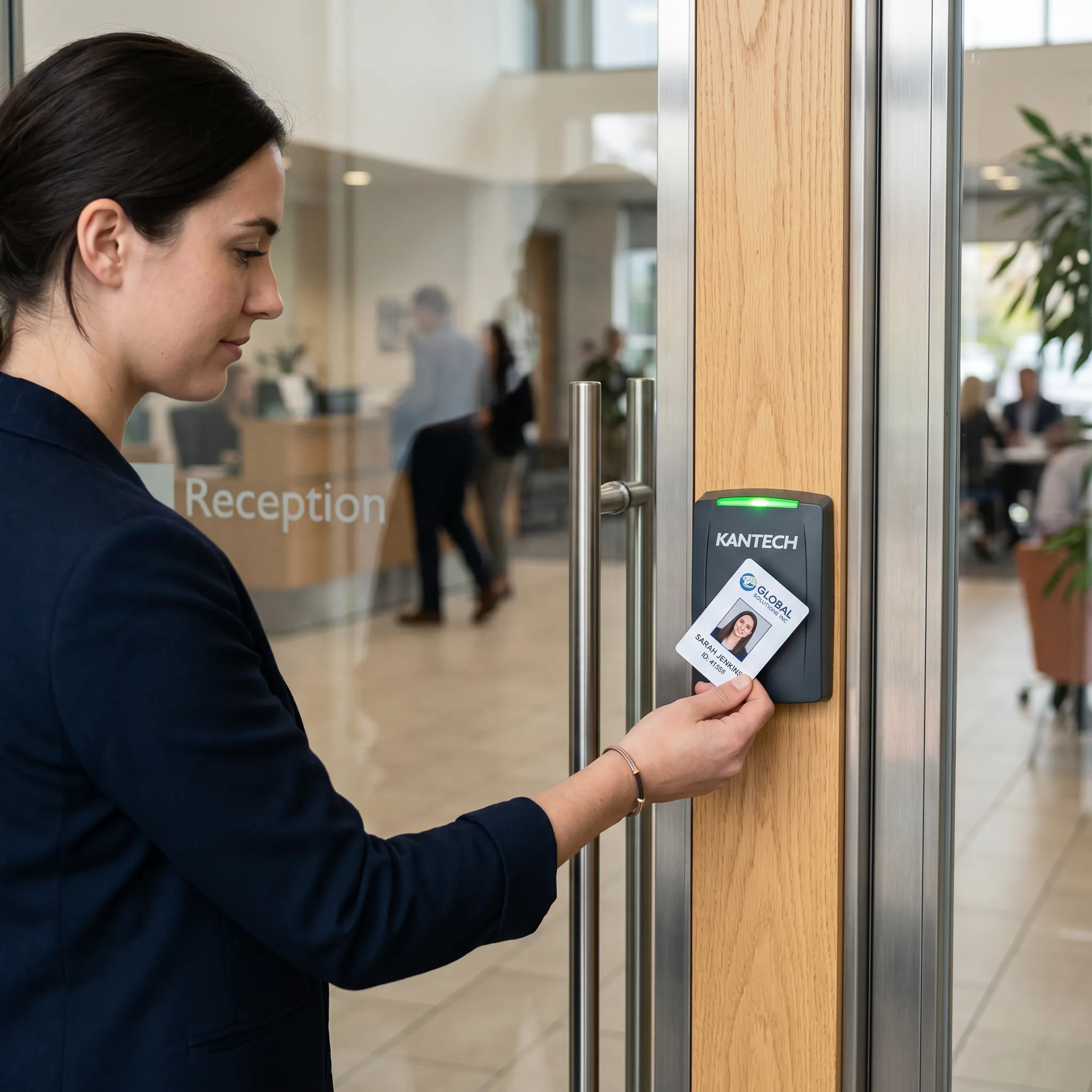
Our technicians install access control, CCTV surveillance, intrusion detection, fire alarm monitoring, and intercom systems from authorized brands including Kantech, Uniview, Avigilon, DSC, and Akuvox, all backed by factory warranties. These systems don’t operate in isolation. We design integrated security platforms that connect access control, video, and alarm systems under unified management, giving facility managers a single view of their entire security posture.
Whether your facility needs a scalable card access system, IP camera surveillance with remote monitoring, perimeter security, or emergency response systems including panic buttons and mass notification, every installation is built on commercial-grade infrastructure designed for reliability and long-term serviceability.
Who Are Business Security Systems For?
Our business security systems serve commercial decision-makers across eight verticals, each with distinct security requirements and compliance considerations:
- Facility managers overseeing commercial offices, warehouses, and industrial facilities requiring access control and surveillance that integrates with existing building operations.
- Property directors managing multi-tenant buildings, retail plazas, and mixed-use developments where multiple tenants share common areas and entry points.
- Healthcare administrators securing hospitals, clinics, and long-term care facilities with access control that meets compliance requirements for restricted areas and patient safety.
- Hospitality operators protecting hotels, gyms, and entertainment venues with guest safety systems and asset protection that operates around the clock.
- Retail and entertainment venue managers preventing theft and ensuring customer safety with CCTV surveillance and intrusion detection across large floor areas.
- School and daycare administrators implementing visitor management, lockdown systems, and perimeter security to protect students and staff.
- Industrial facility managers securing manufacturing plants, distribution centers, and logistics hubs with layered access control and 24/7 monitoring.
How Does Ainger’s Single Accountable Partner Model Work?
Most commercial security projects involve at least two vendors: one for the security equipment and one for the cabling infrastructure. That means two schedules, two warranty chains, and two companies pointing at each other when something doesn’t work. Our model eliminates that entirely:
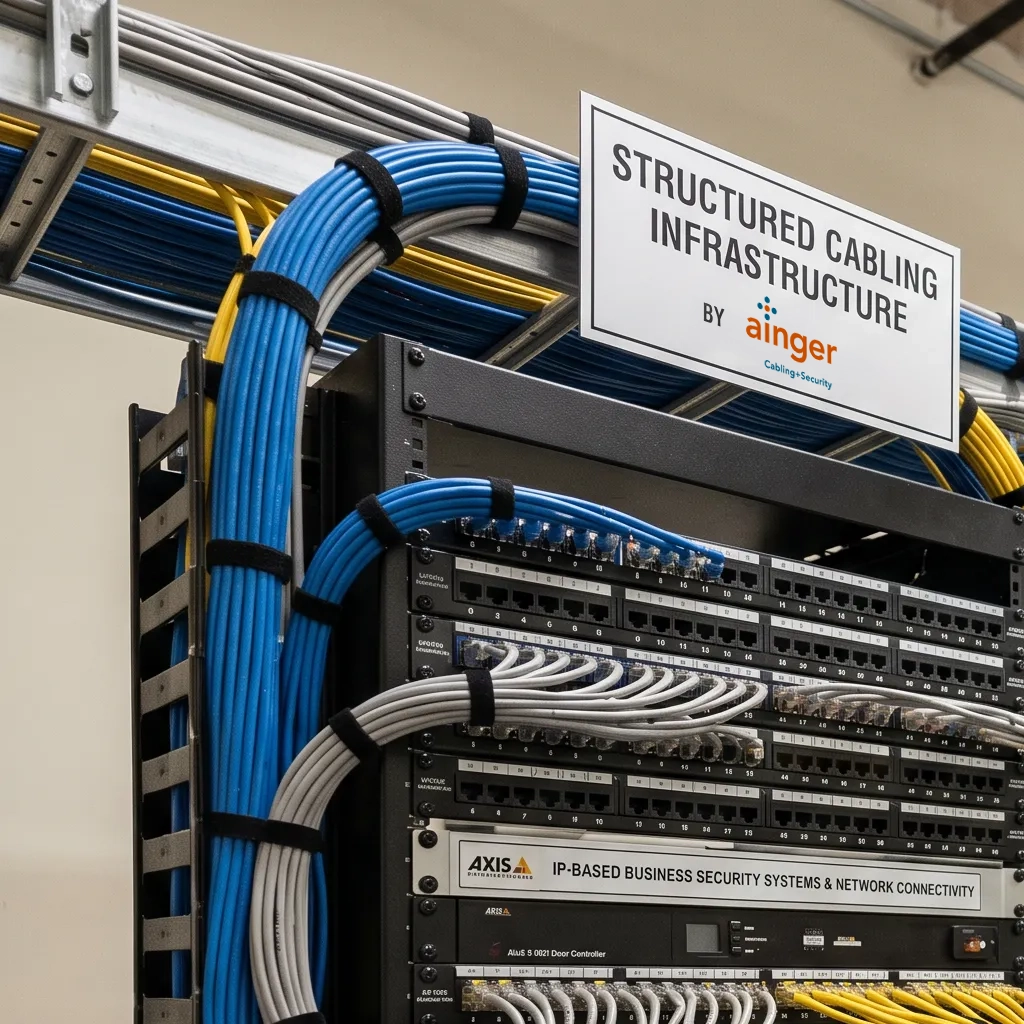
- One vendor handles both security and cabling. We install the access control, cameras, and alarm systems, and we install the structured cabling infrastructure that supports them. No coordination delays between separate contractors.
- Unified project management from design through commissioning. One point of contact for scheduling, change orders, and warranty claims. One team that understands the full scope.
- Integrated troubleshooting. When issues arise, our team diagnoses whether the problem stems from security equipment, network infrastructure, or integration points, without escalating between vendors.
- Ongoing maintenance by the same team that installed the system. Continuity and institutional knowledge of your facility, not a cold handoff to a third-party service provider.
- Infrastructure designed for future expansion. Cabling and network capacity planned from the start to support additional cameras, access points, or monitoring capabilities without requiring a second vendor to assess existing work.
How Do Business Security Systems Integrate with Existing Infrastructure?
COMMERCIAL SECURITY CAPABILITIES
Commercial security systems that operate in isolation create blind spots. The value of integrated infrastructure is that events in one system trigger responses across others:
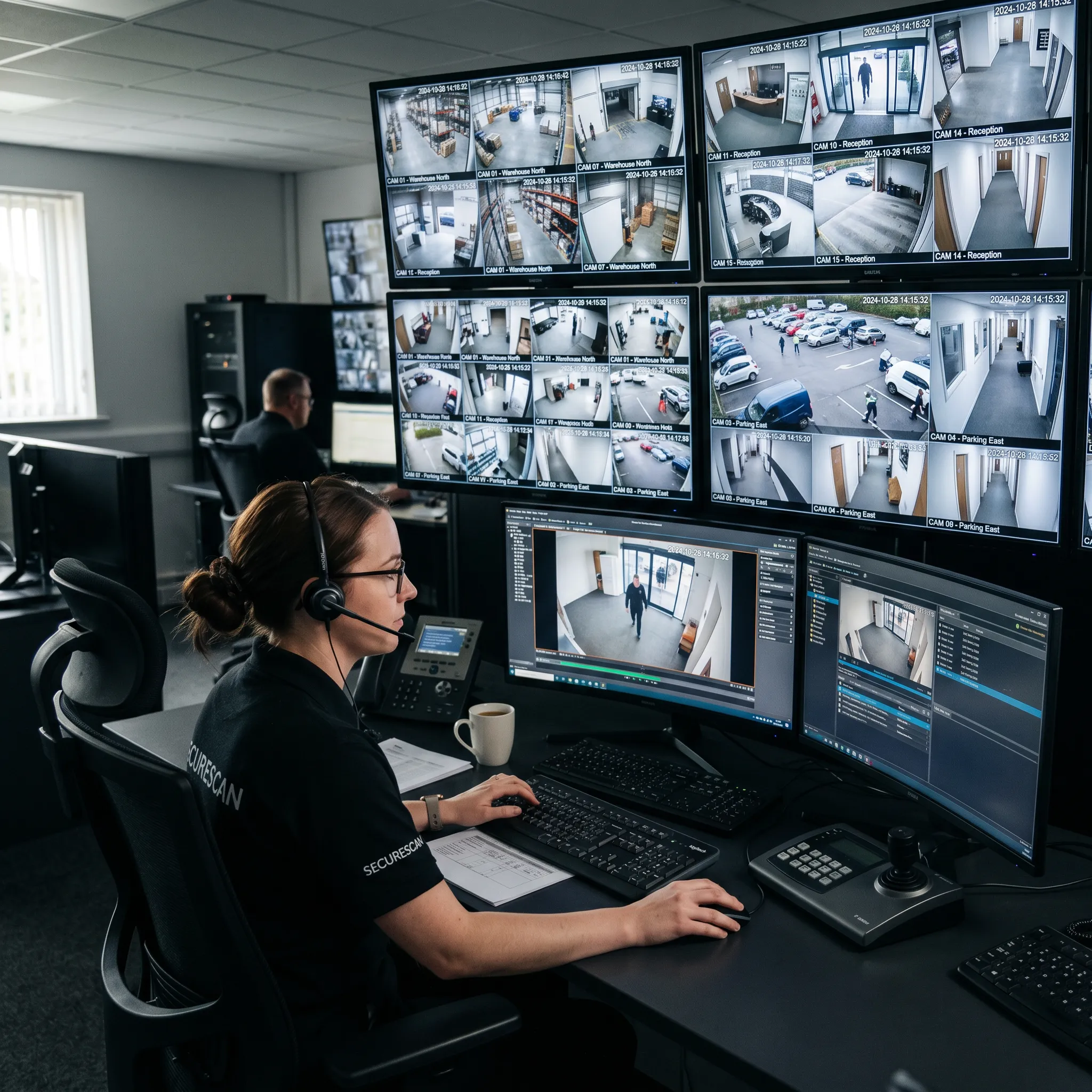
- Access control integrates with CCTV surveillance to trigger recording when doors open or motion is detected in restricted areas, giving you both the audit trail and the visual evidence.
- Intrusion detection integrates with fire alarm monitoring to coordinate emergency response protocols, ensuring the right alerts reach the right people through the right channels.
- IP-based security systems integrate with existing network infrastructure using VLANs to segregate security traffic from business data, designed on the same security wiring backbone rather than bolted on after the fact.
- Video door entry and intercom systems integrate with access control for visitor management workflows in multi-tenant properties, connecting front-of-building verification with building-wide credential management.
- Remote monitoring platforms integrate with mobile devices for real-time alerts and video access, so facility managers and designated personnel can verify and respond from anywhere.
- Legacy analog systems can be migrated incrementally to IP-based platforms without requiring full replacement, protecting existing investment while upgrading capability over time.
What Does Manufacturer-Authorized Dealer Status Mean for Your Business?
FACTORY-BACKED WARRANTIES & BRAND AUTHORITY
Most security contractors install equipment. Manufacturer-authorized dealers install it to factory specifications with warranty coverage that independent contractors cannot offer.
Our authorized dealer status for Kantech, Uniview, Avigilon, DSC, Akuvox, Mircom, Active Watch, and Panduit means every installation comes with factory-backed warranties. Technicians receive manufacturer training on installation standards, ensuring compliance with both warranty terms and commercial reliability requirements.
When complex issues arise, we escalate directly to manufacturer engineering support, the same engineers who designed the equipment. Independent contractors don’t have that path. We also receive priority access to replacement parts and warranty claims processing, reducing downtime during service calls.
How Long Does Business Security System Installation Take?
PROJECT TIMELINES & SCHEDULING
Small office installations
Single door access control with 4–8 cameras typically complete within 2–3 business days, including system commissioning and operator training.
Mid-size facilities
Multi-door access control, 12–24 cameras, and intrusion detection typically require 1–2 weeks for installation, integration testing, and commissioning.
Large facility deployments
Enterprise access control, 50+ cameras, and integrated fire alarm and access control systems typically require 6–8 weeks with phased deployment to minimize operational disruption.
Multi-site rollouts
Standardized design templates customized per location, with centralized management platforms and phased deployment schedules coordinated across all sites.
Site assessment and system design typically require 1–2 weeks before installation begins. Structured cabling infrastructure installation runs parallel to security equipment work when both are part of the project scope. Installations are scheduled to minimize disruption to business operations, with after-hours and weekend work available for occupied facilities.
Client Testimonials
What Our Customers Have to Say




















Get a Quote for Your Business Security System
READY TO START?
Every project starts with a site assessment. We’ll evaluate your facility, identify vulnerabilities, and provide a detailed scope covering equipment, cabling, monitoring, and timeline. No obligation, no pressure.
Request a QuoteFrequently Asked Questions
Ainger Cabling + Security has operated for over 30 years and holds BBB accreditation since February 2022. We maintain manufacturer-authorized dealer status for commercial security and cabling brands including Kantech, Uniview, Avigilon, DSC, Akuvox, Mircom, Active Watch, and Panduit. Technicians receive factory training on each authorized product line to ensure compliance with commercial reliability standards and warranty terms.
Multi-site deployments follow a standardized design template customized to each location’s layout and security requirements. Centralized management platforms allow facility managers to monitor and control access, video, and alarms across all sites from a single interface. Phased deployment schedules minimize disruption to business operations, with installations coordinated across locations to meet project deadlines.
We provide ongoing maintenance and 24/7 live monitoring beyond initial installation, operating as an infrastructure partner rather than a one-time project vendor. Service requests are handled by the same team that installed your system, ensuring continuity and familiarity with your facility. Manufacturer-authorized dealer status provides direct access to factory technical support and priority warranty claims processing for equipment issues.
Yes. Ainger provides business security systems across 19 US states including New York, California, Texas, Florida, Illinois, and Pennsylvania among others. Primary operational density remains in Eastern Canada and Ontario (Ottawa, Kitchener, Windsor, Halifax, Moncton, Toronto), with US coverage through our established contractor network.
Yes. IP-based security systems integrate with existing network infrastructure using VLANs to segregate security traffic from business data. Our technicians assess your current network capacity during the site assessment and recommend upgrades if bandwidth or switch port availability is insufficient. As a structured cabling contractor, we install the network infrastructure upgrades alongside the security system installation, eliminating the need for a separate vendor.
Business security systems are built for commercial reliability standards, supporting larger user counts, more complex access control hierarchies, and integration with building management systems. Commercial systems use manufacturer-authorized equipment with factory-backed warranties and 24/7 live monitoring, whereas residential systems typically use consumer-grade equipment with self-monitoring or basic alarm response. Business systems also meet commercial building code requirements for fire alarms, emergency egress, and accessibility that residential installations don’t require.
1996–2026

Contact Us
Get in Touch with Ainger Cabling + Security
Find Us Online