

24/7 Live CCTV and Remote Video Monitoring
for Commercial Facilities
What Is Live Remote Video Monitoring?
24/7 PROFESSIONAL MONITORING THROUGH ACTIVE WATCH
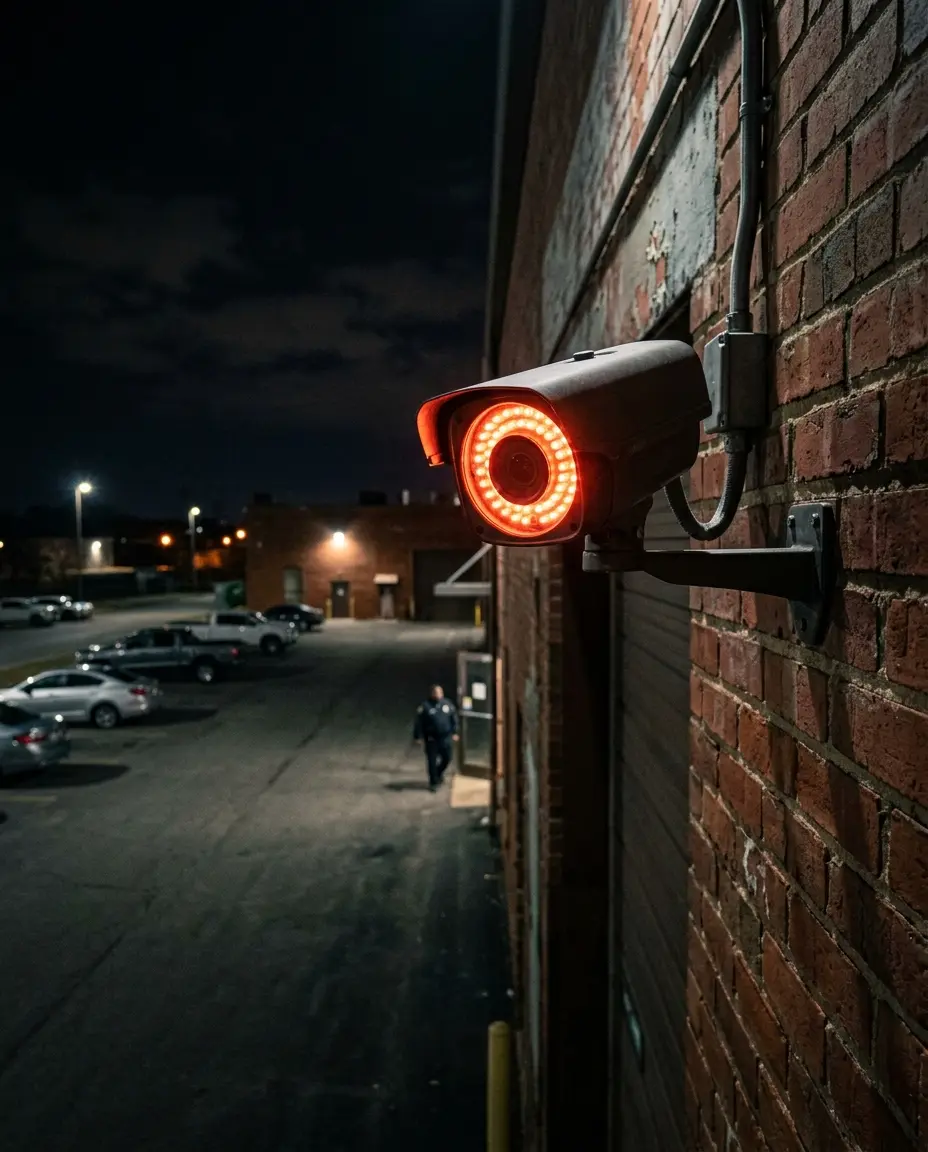
Live remote video monitoring replaces passive surveillance with active threat prevention. Instead of reviewing camera footage after an incident has already happened, our remote video monitoring services put trained operators on live CCTV monitoring of your facility, so they can respond to events as they unfold.
Ainger Cabling + Security provides live remote video monitoring through Active Watch, delivering 24/7 professional monitoring for commercial facilities across Canada and the United States. When cameras detect motion or an alarm triggers after hours, monitoring operators verify the event visually, assess the threat level, and initiate the appropriate response protocol, whether that is issuing a live audio warning through on-site speakers, dispatching security personnel, or contacting emergency services.
This is fundamentally different from a passive CCTV camera system that simply records. Live monitoring turns your existing cameras into an active security layer that prevents incidents rather than just documenting them.


Who Benefits from Live Remote Video Monitoring?
Live monitoring delivers the highest value for facilities where after-hours security events need immediate response rather than next-day investigation:
- Construction sites and equipment yards where theft of materials, tools, and heavy equipment during overnight hours can cost tens of thousands per incident. Live monitoring with audio deterrent capabilities stops most trespassing events before theft occurs.
- Warehouses and distribution centres with high-value inventory, loading dock activity, and large perimeters that cannot be cost-effectively covered by on-site security guards around the clock.
- Parking structures and surface lots where vehicle break-ins, vandalism, and personal safety concerns affect both tenants and visitors. Live monitoring provides visual verification and real-time response.
- Multi-tenant commercial properties where shared common areas, lobbies, and parking garages need after-hours surveillance that no single tenant would fund independently. Buildings that also want remote lobby reception can add a virtual concierge with video verification and remote door release.
- Industrial facilities and critical infrastructure where perimeter breach, unauthorized access, or equipment tampering requires immediate detection and response, not next-morning discovery.
- Retail locations protecting against after-hours break-ins, smash-and-grab incidents, and loading dock theft where the speed of response directly determines the extent of loss.
How Does Live Remote Video Monitoring Work?
Active Watch monitoring follows a structured detection-verification-response cycle:
- Detection. Cameras with motion analytics detect activity in defined zones during monitored hours. Not every motion event triggers a response. Analytics are tuned to filter out animals, weather, and normal environmental movement so operators focus on genuine security events.
- Verification. When a real event is detected, the monitoring operator views the live feed to verify the threat. Is it a person? Are they attempting unauthorized access? Are they carrying tools or materials? Visual verification eliminates the false alarm problem that plagues traditional alarm-only systems.
- Audio deterrent. For verified trespassing or suspicious activity, operators can issue a live audio warning through on-site speakers, addressing the individual directly. In most cases, a targeted verbal warning stops the activity before it escalates to a security incident.
- Dispatch. If audio deterrent does not resolve the situation, or if the event is assessed as a genuine threat, the monitoring operator dispatches security personnel or contacts emergency services according to your facility’s response protocols.
- Documentation. Every event is logged with timestamps, operator actions, video clips, and response outcomes. This documentation supports insurance claims, incident investigations, and ongoing security program evaluation.

Live Monitoring vs. Traditional Security: What Is the Difference?
COMPARING SECURITY APPROACHES
Facility managers typically evaluate three approaches to after-hours security. Each serves a different purpose and cost profile:
- On-site security guards provide physical presence and can respond immediately to events within their patrol area. However, they cannot cover every corner of a large facility simultaneously, they represent an ongoing staffing cost that scales with hours and locations, and coverage gaps occur during breaks, shift changes, and patrol routes.
- Passive camera systems record everything but respond to nothing. They are useful for post-incident investigation but provide no deterrent or real-time response. A break-in that triggers no alarm and no monitoring response means the footage is reviewed only after the loss is discovered, sometimes days later.
- Live remote video monitoring combines the awareness advantage of cameras with the response capability of personnel. It provides 24/7 coverage across every camera simultaneously, at a fraction of the cost of equivalent guard hours. Audio deterrent resolves most events without requiring dispatch, further reducing response costs.
- The strongest approach combines layers. Many facilities use live monitoring as the primary after-hours layer with on-site guards during business hours and passive recording as the continuous documentation baseline. This layered model delivers comprehensive coverage at a lower total cost than guard-only or camera-only approaches.
Why Choose Ainger for Live Remote Video Monitoring?
CAMERAS, CABLING, AND MONITORING FROM ONE PARTNER
Most live monitoring services require you to bring your own camera system, and if the camera placement, resolution, or network configuration is not optimized for monitoring, the service underperforms. Ainger installs both the camera system and the security wiring infrastructure, then connects it to Active Watch monitoring. The cameras are specified for monitoring from the start.
Camera placement, analytics zones, and lens selection are designed around Active Watch’s monitoring requirements during the system design phase, not retrofitted after the cameras are already on the wall. Detection zones are tuned to minimize false alerts while catching genuine security events.
When the monitoring team identifies a camera angle issue, a detection zone that needs adjustment, or a coverage gap, our technicians handle the modification because they installed the original system. No third-party coordination, no finger-pointing between the camera vendor and the monitoring provider.
One infrastructure partner. Camera system, cabling, and monitoring from the same team.
Client Testimonials
What Our Customers Have to Say





















Get a Quote for Live Remote Video Monitoring
READY TO START?
Every project starts with a site assessment. We’ll evaluate your facility’s risk profile, camera coverage, and monitoring requirements to design a live monitoring solution that fits your operational needs. No obligation, no pressure.
Request a QuoteFrequently Asked Questions
No. Live CCTV monitoring is a paid monthly service you can add to a commercial camera system we install or to a compatible existing system. You choose 24/7 coverage or after-hours schedules, and the fee depends on camera count, monitoring hours and response requirements.
Monitoring schedules are flexible. Many facilities activate monitoring only during after-hours periods when the building is unoccupied, typically evenings, weekends, and holidays. Construction sites often monitor 24/7 during active project phases. The monitoring schedule is configured based on your operational hours and risk profile, and it can be adjusted seasonally or as your operations change.
Facilities with high after-hours risk and large perimeters see the greatest return: construction sites, warehouses, distribution centres, parking structures, industrial yards, and multi-tenant commercial properties. Any location where the cost of a single theft or vandalism incident exceeds several months of monitoring fees is a strong candidate. Facilities that already have camera systems but no active monitoring represent the easiest activation since the infrastructure is already in place.
Motion analytics on each camera are tuned to filter environmental triggers like animals, weather movement, shadows, and normal traffic patterns. Detection zones are configured to focus on entry points and high-risk areas rather than entire camera views. When motion is detected, the monitoring operator verifies the event visually before taking any action. This verification step eliminates the false alarm dispatches that make traditional alarm-only monitoring unreliable and expensive.
Every event generates a documented report including the timestamp, camera that triggered the detection, operator assessment, actions taken (audio warning, dispatch, or cleared as non-threat), and video clips of the event. These reports are available for review and support insurance claims, incident investigations, and ongoing security program evaluation.
Live remote video monitoring typically costs a fraction of equivalent security guard coverage. A single security guard at standard rates provides one person covering one area during one shift. Live monitoring covers every camera on your property simultaneously, 24/7, for a monthly service fee that is typically less than one week of guard wages. The exact cost depends on camera count, monitoring hours, and response protocol requirements. Contact us for a quote specific to your facility.
If the audio deterrent does not resolve the situation, the monitoring operator escalates according to your facility’s response protocol. This typically means dispatching security personnel or contacting local emergency services. Every event is documented with timestamps, operator actions, and video clips regardless of the outcome, providing evidence for insurance claims or law enforcement if needed.
In many cases, yes. Active Watch monitoring can connect to existing IP camera systems that meet minimum resolution and network connectivity requirements. During the site assessment, we evaluate your current cameras, network infrastructure, and recording equipment to determine whether they support effective monitoring or whether upgrades are needed. If camera placement or analytics capabilities need improvement for monitoring purposes, we recommend specific changes before activating the service.
1996–2026

Contact Us
Get in Touch with Ainger Cabling + Security
Find Us Online