
ULC Fire Alarm Monitoring
for Commercial Facilities
What Is ULC Fire Alarm Monitoring?
ULC AND NON-ULC FIRE ALARM MONITORING
Ainger Cabling + Security provides ULC-certified and non-ULC fire alarm monitoring for commercial facilities across Canada and the United States. We connect commercial fire alarm panels, including Mircom panels, to a 24/7 monitoring centre, while the fire alarm system itself stays with your fire protection contractor. Established 30+ years ago, we serve facility managers, property directors, and business owners who need a single accountable partner for fire alarm monitoring, intrusion alarm systems, and security wiring infrastructure, so your security systems and your fire alarm monitoring connection are handled by one team.
ULC fire alarm monitoring is required for many commercial buildings in Canada. The Underwriters Laboratories of Canada (ULC) independently tests, inspects, and certifies fire alarm monitoring services to ensure they meet national safety standards. When a fire alarm panel detects smoke, heat, or manual activation, it transmits an alarm signal to a ULC-listed central monitoring station. Trained operators verify the alarm, confirm the location, and immediately dispatch the fire department while notifying designated facility contacts.
The operational benefits include immediate fire department notification without relying on occupants to call 911, documented alarm history for insurance and compliance audits, and integration with access control systems to unlock doors during emergency evacuation.
We offer both ULC-certified fire alarm monitoring and commercial fire alarm monitoring without ULC certification. ULC certification is required by building code in many commercial applications, but not all facilities need it. During the site assessment, we confirm which option applies to your building based on occupancy classification, local requirements, and insurance conditions.


What Fire Alarm Devices Connect to the Monitoring System?
Commercial fire alarm systems consist of multiple device types working together to detect fire conditions and alert occupants. Understanding what your system includes helps clarify what gets communicated to the monitoring centre when an alarm activates:
- Smoke detectors: photoelectric or ionization sensors installed in corridors, offices, and common areas to detect visible smoke particles or combustion byproducts.
- Heat detectors: fixed-temperature or rate-of-rise sensors for environments where smoke detectors would cause false alarms, such as kitchens, mechanical rooms, and warehouses with airborne dust.
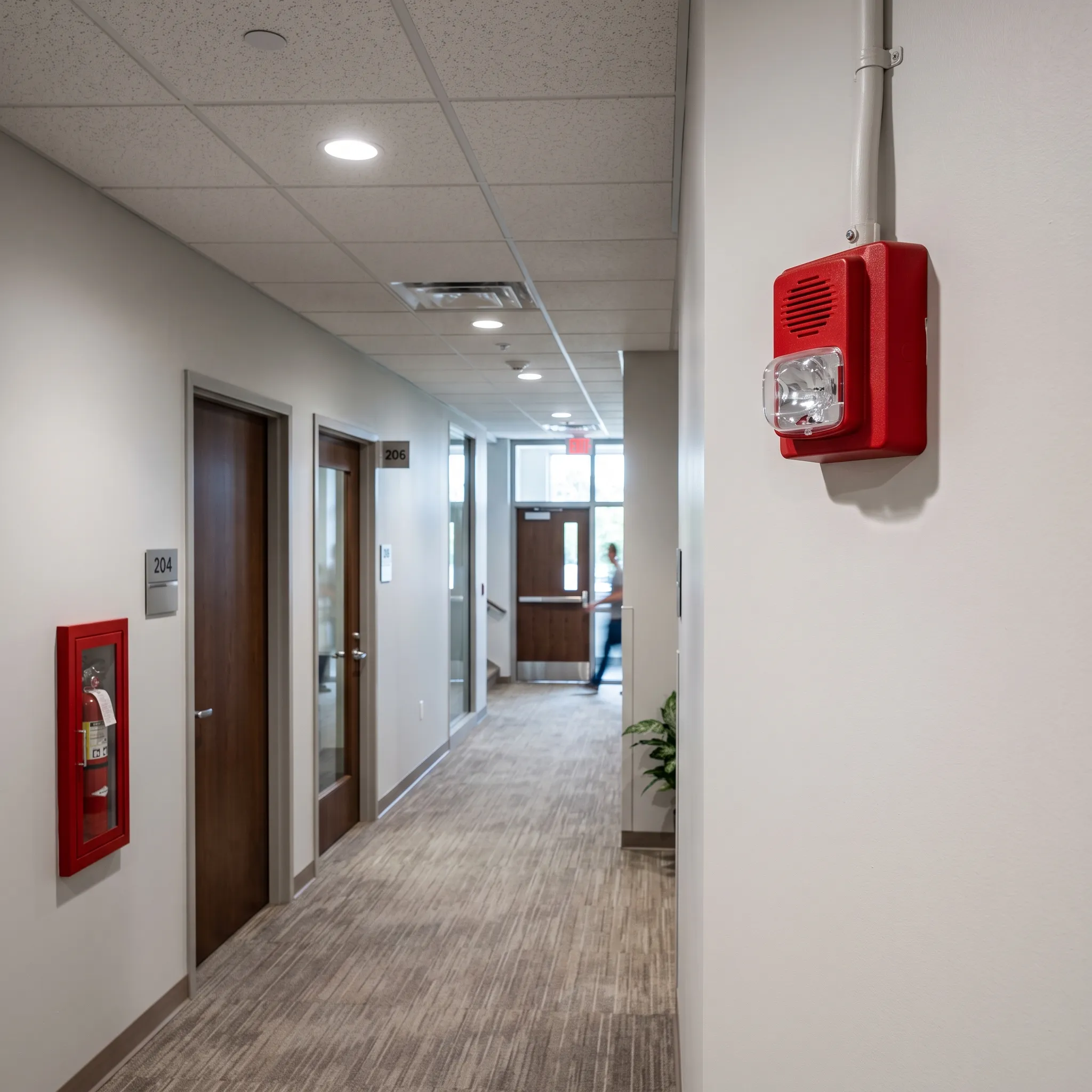
- Manual pull stations: red wall-mounted devices at building exits allowing occupants to manually trigger the fire alarm during emergency evacuation.
- Notification appliances: horns, strobes, and speaker systems that alert occupants when the fire alarm activates.
- Duct detectors: specialized smoke detectors installed in HVAC ductwork to shut down air handling systems and prevent smoke circulation during fire events.
Ainger’s role is the monitoring connection, not the fire alarm system itself. Fire alarm panels, detection devices, and notification appliances are installed and serviced by your fire protection contractor. We connect your existing fire alarm panel to a monitoring centre and maintain that communication path.
We do install smoke and heat detectors in one specific case: when those detectors connect to an intrusion or access control panel rather than the fire alarm system.
Schedule a Monitoring AssessmentHow ULC Fire Alarm Monitoring Works
Understanding the monitoring process helps facility managers and business owners make informed decisions about fire alarm compliance:
- Alarm detection and transmission: fire alarm panel detects activation from smoke detector, heat detector, or manual pull station, then transmits alarm signal to ULC-listed central monitoring station via phone line, cellular, or IP connection.
- Operator verification and dispatch: trained monitoring operator receives alarm, verifies building location and zone information, immediately dispatches fire department, and contacts designated facility personnel.
- Integration with building systems: fire alarm panel communicates with access control systems to unlock all doors for emergency egress, with intrusion systems to prevent false burglar alarms during evacuation, with CCTV systems to trigger recording at alarm zones.
- Audit trail and compliance reporting: every alarm event logs timestamp, device location, operator actions, and fire department response for insurance claims, compliance audits, and incident investigation.

ULC Compliance Requirements for Commercial Buildings
MEETING CANADIAN FIRE SAFETY STANDARDS
Commercial buildings in Canada must meet specific ULC requirements to maintain fire insurance coverage and occupancy permits:
- ULC-listed monitoring service: fire alarm panel must communicate with a ULC-certified central monitoring station that meets national standards for operator training, redundant communication paths, and backup power.
- Annual inspection and testing: certified fire alarm technician must inspect and test all devices, notification appliances, and panel communication annually, with documented results submitted to authority having jurisdiction.
- Emergency egress coordination: fire alarm system must integrate with access control to unlock doors, with elevator recall to prevent occupants from using elevators during fire events.
- Device placement and coverage: smoke detectors, heat detectors, and notification appliances must be installed according to building code requirements for spacing, mounting height, and zone coverage.
- Documentation and record-keeping: maintain as-built drawings, device inventory, inspection reports, and alarm history for compliance audits and insurance verification.
- Maintenance contracts: ongoing service agreements ensure prompt repair of faulty devices, software updates, and compliance with evolving fire code requirements.
Our Fire Alarm Monitoring Connection Process
PREDICTABLE PROJECT DELIVERY
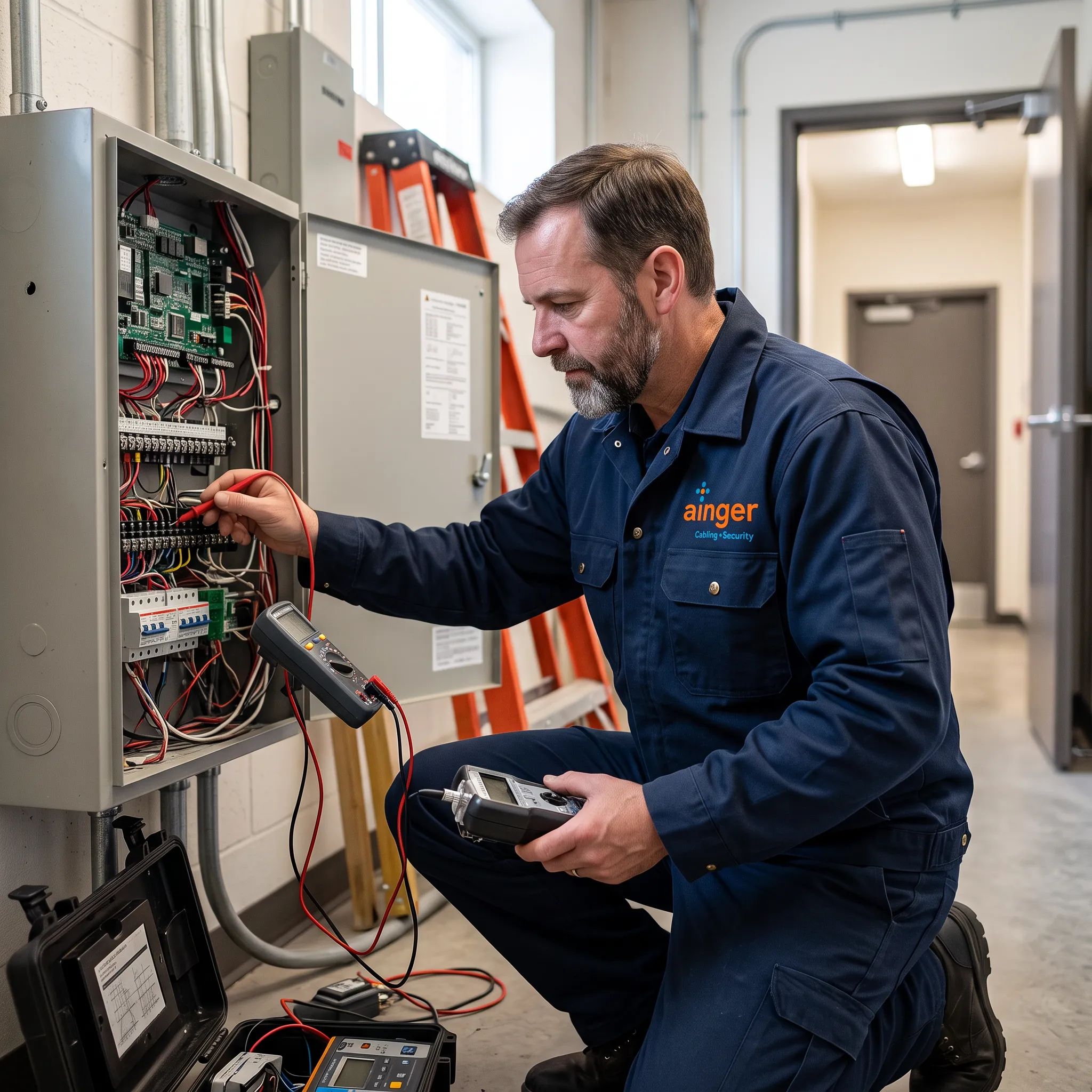
Ainger follows a structured connection process that sets clear expectations for commercial decision-makers evaluating fire alarm monitoring vendors:
Site assessment: Ainger technician visits facility to document building layout, existing fire alarm equipment, and communication infrastructure for the monitoring connection. Connection design: choose the communication path (phone line, cellular, or IP) and confirm integration requirements with existing access control, intrusion, or CCTV systems. Proposal delivery: itemized quote includes monitoring connection equipment, labour, security wiring if required, and the ULC or non-ULC monitoring service, billed as a paid add-on.
Connection: connect your existing fire alarm panel to the monitoring centre over phone line, cellular, or IP, run any wiring the connection needs, and register zone and contact information with the central station. Testing: confirm monitoring signal transmission to the central station and walk facility staff through how alarms are reported and who is contacted.
What’s Included in Our Fire Alarm Monitoring Service
COMPLETE MONITORING SCOPE
24/7 ULC monitoring service
ULC-listed central monitoring station with trained operators, redundant communication paths, and immediate fire department dispatch for every alarm signal.
Monitoring connection
Connection between your existing fire alarm panel, including Mircom panels, and the monitoring centre, with the communication path maintained by our team.
System integration
Integration with access control for emergency door unlocking, with intrusion systems to prevent false alarms during evacuation, with CCTV for alarm zone recording.
Connection testing
Testing of the communication path between your fire alarm panel and the monitoring centre, with alarm history available for compliance audits and insurance verification.
Fire alarm monitoring is a paid add-on service. Your fire protection contractor continues to install, inspect, and service the fire alarm panel and devices. Ongoing maintenance contracts are available for the security systems we install.
Client Testimonials
What Our Customers Have to Say



















Get a Quote for ULC Fire Alarm Monitoring
READY TO START?
Every project starts with a site assessment. We’ll evaluate your facility, identify fire alarm monitoring requirements, and provide a detailed scope covering equipment, monitoring service, integration, and compliance timeline. No obligation, no pressure.
Request a QuoteFrequently Asked Questions
When a fire alarm device activates, whether a smoke detector, heat detector, pull station, or duct detector, the alarm panel communicates the event to the ULC-listed monitoring centre. A monitoring operator receives the alarm with the specific zone and device information, verifies the event, and dispatches the local fire department according to the facility’s response protocol. The entire detection-to-dispatch sequence operates 24/7 with redundant communication paths.
Most Canadian commercial building codes require fire alarm systems in buildings over a certain size or occupancy classification, and many jurisdictions require those systems to be monitored by a ULC-listed monitoring station. Requirements vary by province and building type. During the site assessment, we identify the specific fire alarm monitoring requirements for your facility based on its location, occupancy classification, and applicable building codes.
ULC (Underwriters Laboratories of Canada) certification means the fire alarm monitoring station, equipment, and installation meet nationally recognized safety standards for commercial fire protection. ULC certification is required by building code in many commercial applications, but not all facilities need it, so Ainger offers both ULC-certified and non-ULC commercial fire alarm monitoring. It ensures the monitoring centre maintains specific staffing levels, response times, and communication redundancy standards.
Commercial fire alarm monitoring uses redundant communication paths to ensure alarm signals reach the monitoring centre even if one path fails. Primary communication typically uses an internet or cellular connection, with a secondary path on a different technology. The monitoring system continuously supervises these communication paths and alerts the monitoring centre immediately if a path goes down, so the issue is addressed before an actual alarm event occurs.
Yes. Fire alarm monitoring integrates with intrusion detection and access control systems to coordinate emergency response. When a fire alarm triggers, access control can automatically unlock emergency egress doors, intrusion alarm zones in the affected area can be bypassed to prevent false security alerts during evacuation, and the monitoring centre receives coordinated information across all systems to dispatch the appropriate response.
Commercial fire alarm systems require annual inspection and testing per Canadian fire codes. Inspections verify that all detection devices, notification appliances, communication paths, and backup batteries are functioning correctly. This inspection is carried out by your fire protection contractor; Ainger maintains the monitoring connection between your fire alarm panel and the monitoring centre.
No. Fire alarm control panels, manual pull stations, notification appliances (horns and strobes) and duct smoke detectors are installed and serviced by your fire protection contractor. Ainger connects your existing fire alarm panel, including Mircom panels, to the monitoring centre and maintains that communication path. We install smoke and heat detectors only when they connect to an intrusion or access control panel rather than to the fire alarm system.
1996–2026

Contact Us
Get in Touch with Ainger Cabling + Security
Find Us Online