
Commercial Security System Installation
From Design to Commissioning
How Does Ainger Approach Security System Installation?
STRUCTURED PROJECT MANAGEMENT FOR COMMERCIAL SECURITY
Ainger Cabling + Security uses best-in-class project management methods to deliver commercial security system installations on time, on budget, and done right the first time. With over 30 years of experience serving commercial clients across Canada and the United States, we have refined a structured installation process that eliminates the surprises, delays, and coordination failures that plague multi-vendor security projects.
What makes our installation approach different is scope. Because Ainger installs both the security system hardware and the structured cabling infrastructure it runs on, every installation is designed, scheduled, and executed by one team with one project plan. There is no coordination gap between the security vendor and the cabling contractor, no finger-pointing when something does not work, and no separate warranty chains to manage.
From a single-door access control reader to a multi-building enterprise security deployment, every project follows the same structured process: site assessment, system design, installation, testing, commissioning, and handover with complete documentation.
What Does the Installation Process Look Like?
Every commercial security system installation follows a structured seven-step process from initial contact through post-installation support:
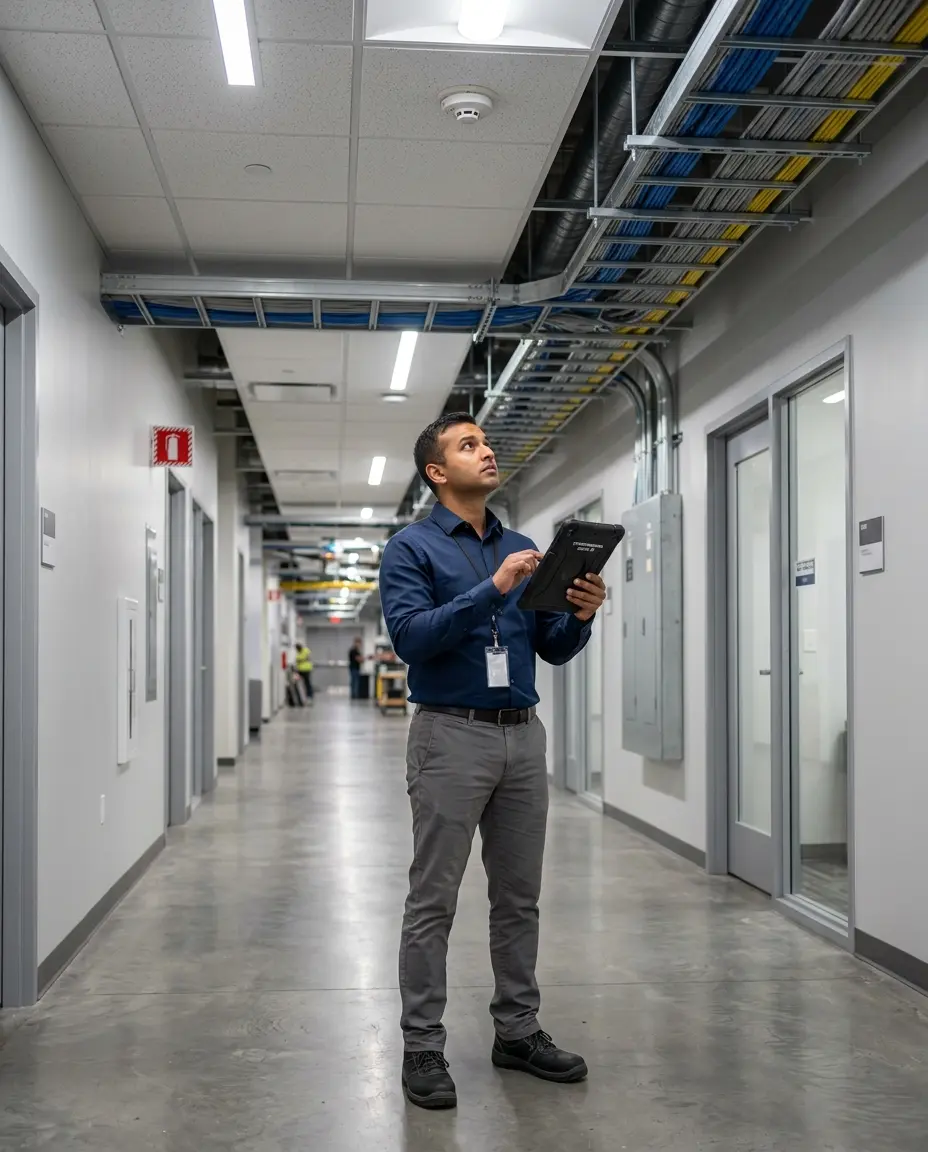
- Site assessment. We walk the facility to document the physical layout, existing infrastructure, cable pathways, electrical systems, and environmental factors. This assessment identifies what needs to be protected, where the vulnerabilities are, and what constraints will affect installation.
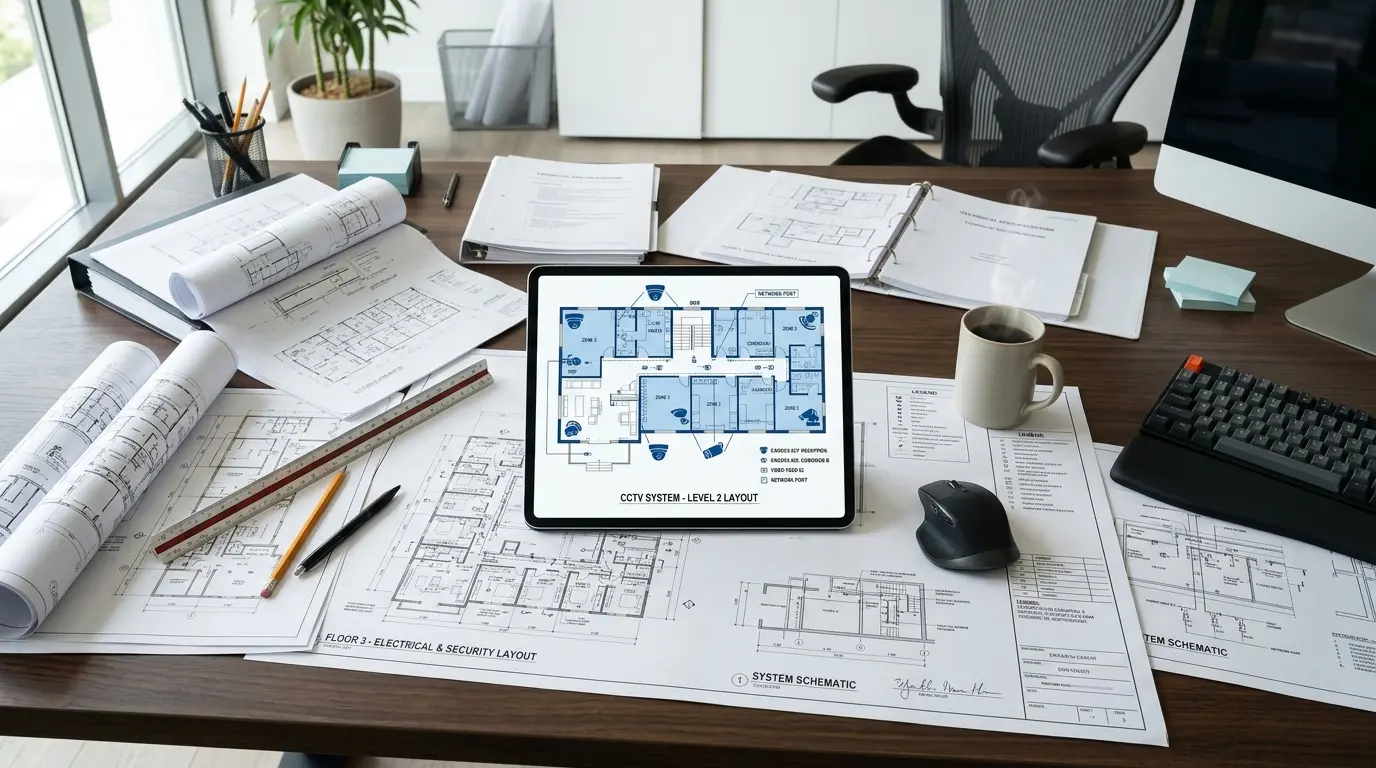
- System design. Based on the assessment, our team creates a detailed design including equipment specifications, camera placement maps, door hardware schedules, sensor locations, cable routing diagrams, and network requirements. You receive this design for approval before any work begins.
- Proposal and scheduling. A detailed scope of work with equipment lists, manufacturer part numbers, project timeline, and pricing. Installation is scheduled around your operational requirements with minimal disruption to daily business.
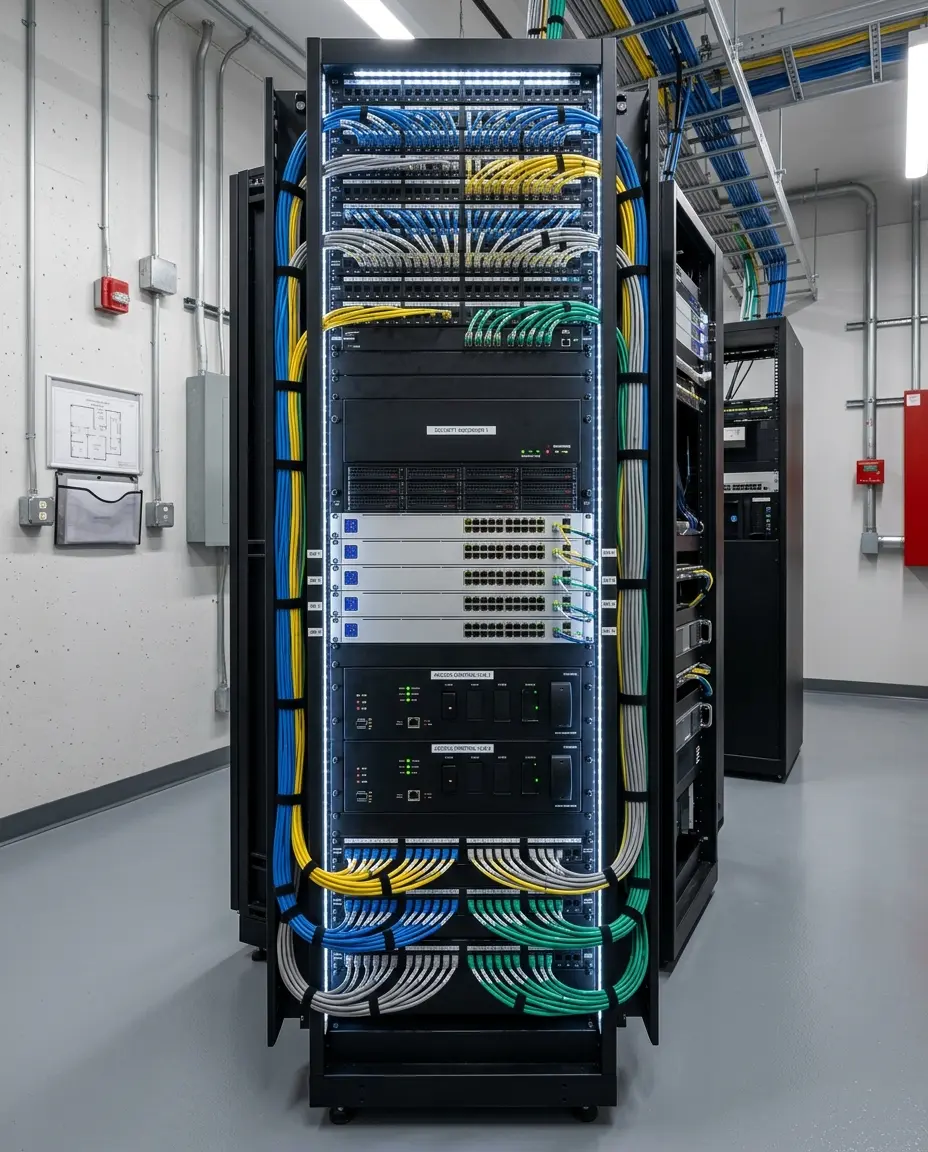
- Cabling infrastructure. Security wiring is installed first: cable pulling, conduit routing, termination, labeling, and testing. This foundation determines whether the security equipment above it performs reliably.
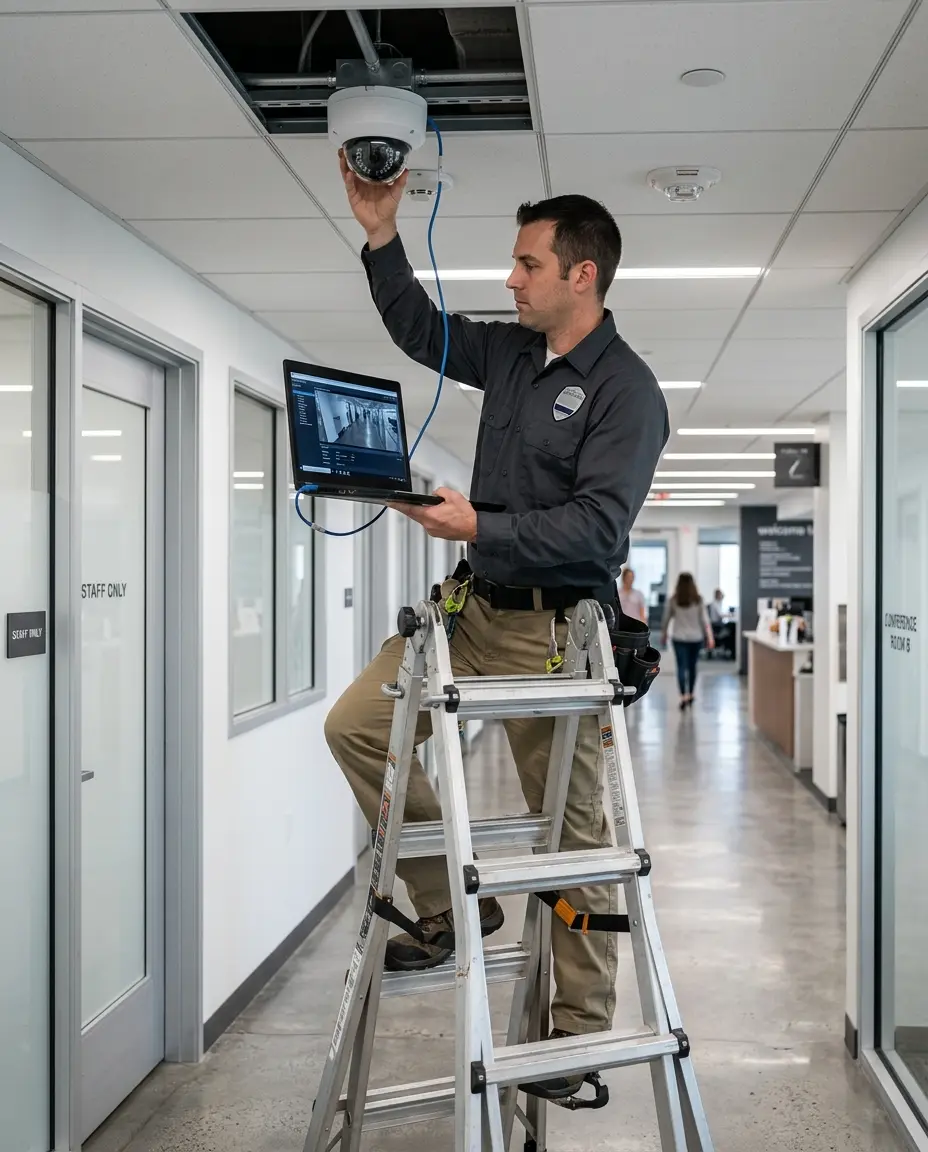
- Equipment installation. Cameras, card readers, alarm panels, sensors, intercoms, and network hardware are mounted, connected, and configured according to manufacturer specifications.
- Testing and commissioning. Every component is tested individually and as part of the integrated system. Camera angles, motion detection zones, access control credentials, alarm triggers, and remote access are all verified before handover.
- Training and documentation. Your team receives hands-on training on system operation, and we provide complete as-built documentation including cable maps, equipment manuals, and warranty information. This documentation ensures future service work can be completed efficiently.
What Quality Standards Does Ainger Follow During Installation?
Commercial security system installations require adherence to standards that residential work does not. Every Ainger installation meets these requirements:
- Manufacturer installation specifications. As an authorized dealer for Kantech, Uniview, Avigilon, DSC, Akuvox, Mircom, Active Watch, and Panduit, every component is installed according to factory specifications. This ensures warranty compliance and commercial-grade reliability.
- ULC certification for fire alarm monitoring. Fire alarm monitoring connections meet ULC standards required for commercial buildings in Canada.
- TIA/EIA-568 structured cabling standards. All security cabling meets industry standards for commercial installations, ensuring proper cable category selection, termination quality, and testing certification.
- Local building codes and fire codes. Plenum-rated cables for air-handling spaces, proper conduit specifications, and fire stopping at all penetration points.
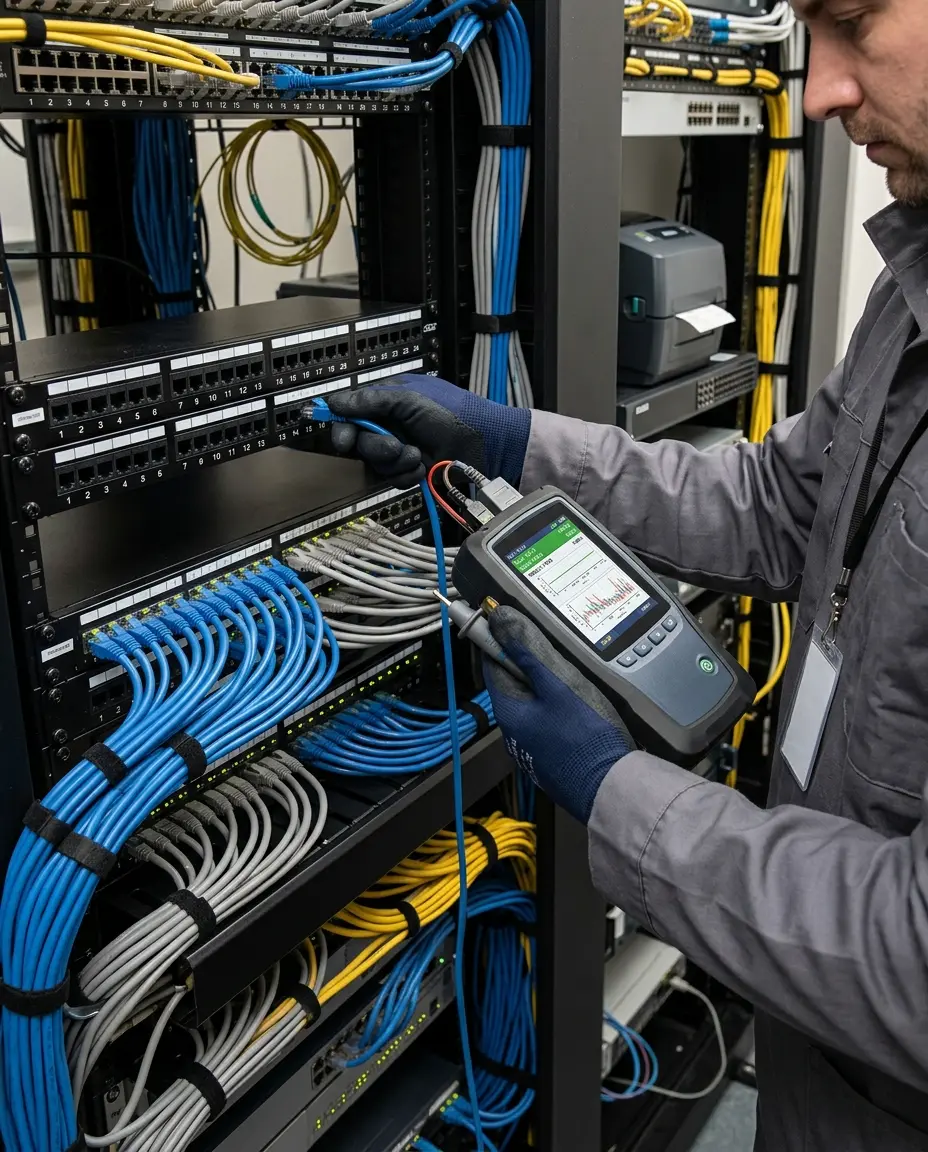
- Cable testing and certification. Every cable run is tested with professional certification equipment and documented. Nothing goes live without verified performance.
What Security Systems Does Ainger Install?
COMMERCIAL SECURITY SYSTEM CATEGORIES
Our installation teams handle the full range of commercial security infrastructure, with every category following the same structured project management process:
- Access control systems including card readers, mobile credentials, biometric scanners, door controllers, and centralized management platforms from Kantech and DSX.
- CCTV and IP camera systems including dome, bullet, and PTZ cameras, network video recorders, and video management software from Uniview and Avigilon.
- Intrusion alarm systems including motion sensors, door contacts, glass break detectors, perimeter protection, and alarm panel programming from DSC.
- ULC fire alarm monitoring including certified monitoring connections for your existing fire alarm panel. We provide the monitoring connection; fire alarm panels, pull stations, and notification appliances are installed and serviced by your fire protection contractor.
- Intercom and video entry systems including lobby intercoms, video door stations, and tenant communication platforms from Akuvox.
- Emergency call box systems including blue light towers, panic buttons, and mass notification systems for parking structures and campus environments.
What Happens After Your Security System Is Installed?
POST-INSTALLATION SUPPORT
Installation is not the end of the relationship. Ainger operates as an infrastructure partner, not a one-time project vendor. The same team that designed and installed your system continues to support it.
Factory-backed warranties from every manufacturer we represent cover equipment defects and failures. When issues arise, we handle the warranty claim process directly with the manufacturer, including access to factory engineering support that independent contractors cannot reach.
Maintenance agreements are available for ongoing preventive inspections, firmware updates, battery replacements, and system testing. For sites requiring it, 24/7 monitoring with emergency response protocols is available as an additional service for intrusion, fire alarm, and CCTV systems through Active Watch.
When your facility grows or operational needs change, system expansion is straightforward because the original cabling infrastructure was designed with future capacity in mind. Adding cameras, access points, or alarm zones does not require a second vendor to assess work they did not install.
How Long Does Security System Installation Take?
PROJECT TIMELINES & SCHEDULING
Small office projects
A few cameras and a single access control door typically complete within 2-3 business days from cabling through commissioning and staff training.
Mid-size facilities
Multi-system installations with cameras, access control, and alarm integration typically require 1-2 weeks for cabling, equipment, testing, and commissioning.
Large facility deployments
Enterprise security with 50+ cameras, multi-door access control, and integrated alarm systems typically require 6-8 weeks with phased deployment to minimize operational disruption.
Multi-site rollouts
Standardized system designs deployed across multiple locations with coordinated scheduling, centralized management platforms, and consistent documentation across all sites.
Site assessment and system design typically require 1-2 weeks before physical installation begins. Cabling and equipment installation run in parallel when both are part of the project scope. After-hours and weekend work is available for occupied facilities where daytime disruption is not an option.
Client Testimonials
What Our Customers Have to Say




















Get a Quote for Your Security System Installation
READY TO START?
Every project starts with a site assessment. We’ll evaluate your facility, identify security requirements, and provide a detailed scope covering equipment, cabling, installation timeline, and ongoing support options. No obligation, no pressure.
Request a QuoteFrequently Asked Questions
Yes. Every installation includes hands-on training for your designated operators. Training covers day-to-day system operation, adding and removing user credentials, reviewing camera footage and access logs, responding to alarm events, and basic troubleshooting. We also provide documentation that new staff members can reference when they join your team. Additional training sessions are available if your team changes or you need a refresher.
Every installation includes complete as-built documentation: cable routing maps showing all pathways and termination points, equipment manuals and manufacturer warranty information, system configuration records including credentials, zone programming, and network settings, and certified cable test results for every run. This documentation is yours permanently and ensures future service work can be completed efficiently regardless of who performs it.
Installation timelines depend on project scope. Small office projects with a few cameras and a single access control door typically complete within 2-3 business days. Mid-size facilities with multi-system installations require 1-2 weeks. Large facility deployments with 50+ cameras, multi-door access control, and integrated alarm systems typically require 6-8 weeks with phased deployment. Site assessment and system design add 1-2 weeks before physical installation begins.
We schedule installations to minimize disruption. Most work can be performed during regular business hours without affecting operations, but after-hours and weekend installation is available for occupied facilities where daytime work is not practical. For larger projects, we phase the installation by floor, wing, or department so most of the facility remains operational throughout the project. The installation schedule is coordinated with your facility management team during the planning phase.
Most security contractors install the equipment but subcontract the cabling to a separate company. That creates two schedules, two warranty chains, and two companies pointing at each other when something does not work. Ainger installs both the security hardware and the structured cabling infrastructure it runs on, with one team, one project plan, and one accountability chain. The wiring is specified for the exact equipment it will carry, and both are covered under manufacturer-backed warranties.
Yes. Our technicians specialize in retrofit installations that work within existing building infrastructure. We use drop ceilings, wall cavities, existing conduit, and cable trays to route security wiring without extensive demolition. For buildings without adequate pathways, surface-mounted raceway systems provide a clean alternative. The site assessment identifies the most efficient routing options based on your building’s construction and operational constraints.
Ainger operates as an infrastructure partner, not a one-time project vendor. The same team that installed your system handles ongoing support, which means your service calls go to technicians who already know your facility. All equipment comes with factory-backed manufacturer warranties, and we handle the warranty claim process directly. Maintenance agreements are available for ongoing preventive inspections, firmware updates, and priority response. For sites requiring it, 24/7 monitoring with emergency response is available as an additional service for intrusion, fire alarm, and CCTV systems.
1996–2026

Contact Us
Get in Touch with Ainger Cabling + Security
Find Us Online