

Commercial Intrusion Alarm Systems
for Business Facilities
What Intrusion Alarm Systems Does Ainger Install?
MANUFACTURER-AUTHORIZED ALARM SYSTEMS
Ainger Cabling + Security delivers manufacturer-authorized intrusion alarm systems for commercial clients across Canada and the United States, serving businesses for over 30 years. As a single accountable partner for both alarm system hardware and the security wiring it runs on, we eliminate the coordination overhead of managing separate vendors for your intrusion detection infrastructure.
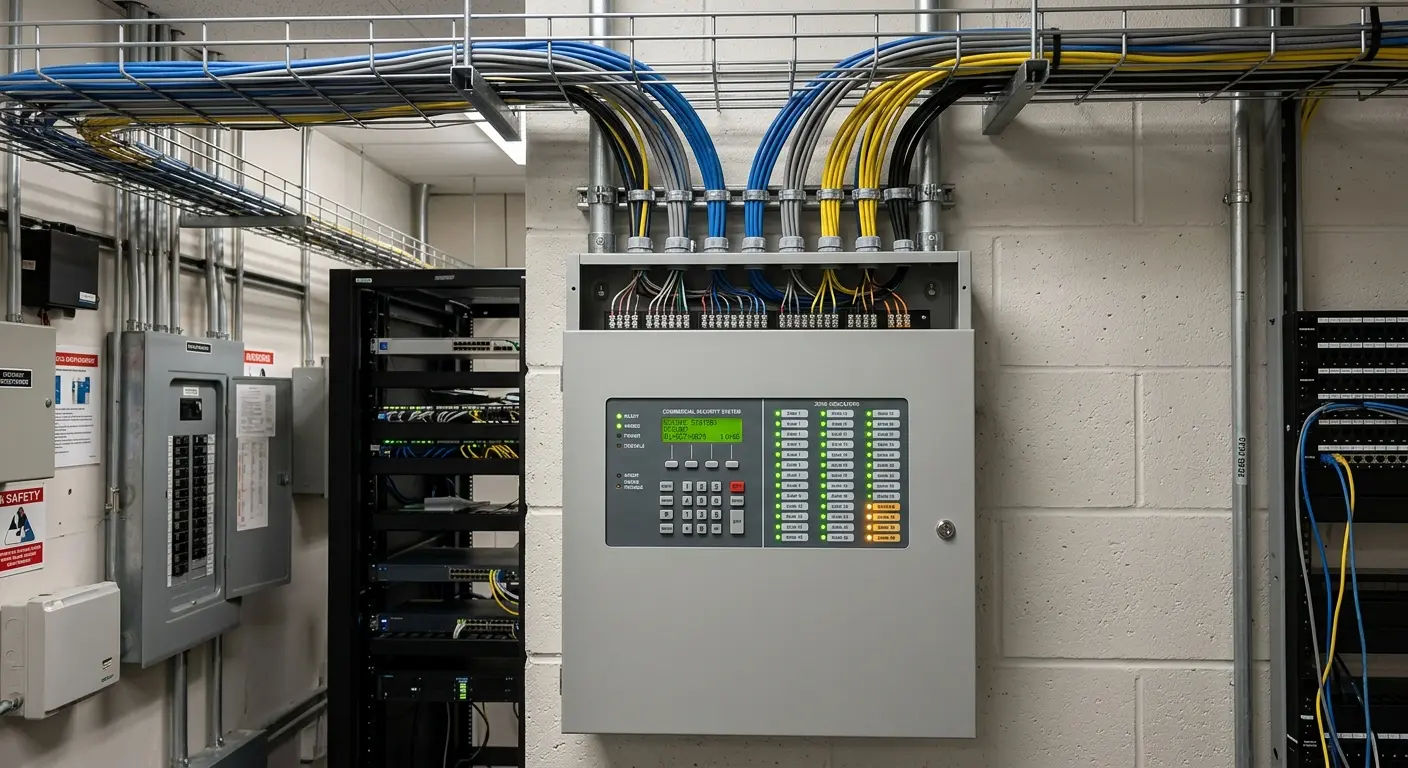
Our technicians install commercial-grade intrusion detection from DSC and other authorized brands, including motion sensors, door and window contacts, glass break detectors, vibration sensors, and perimeter protection. For sites requiring it, 24/7 monitoring with emergency response protocols is available as an additional service. These alarm systems integrate with access control, CCTV surveillance, and fire alarm monitoring under unified management, so a single intrusion event triggers coordinated responses across all systems.
Whether your facility needs a basic perimeter alarm for an office, a multi-zone intrusion detection system for a warehouse, or an enterprise-grade alarm platform integrated with video verification and access control lockdown, every installation is built on commercial-grade infrastructure designed for reliability and long-term serviceability.
Who Needs a Commercial Intrusion Alarm System?
Commercial intrusion alarm systems serve businesses that need to detect and respond to unauthorized entry during and after operating hours:
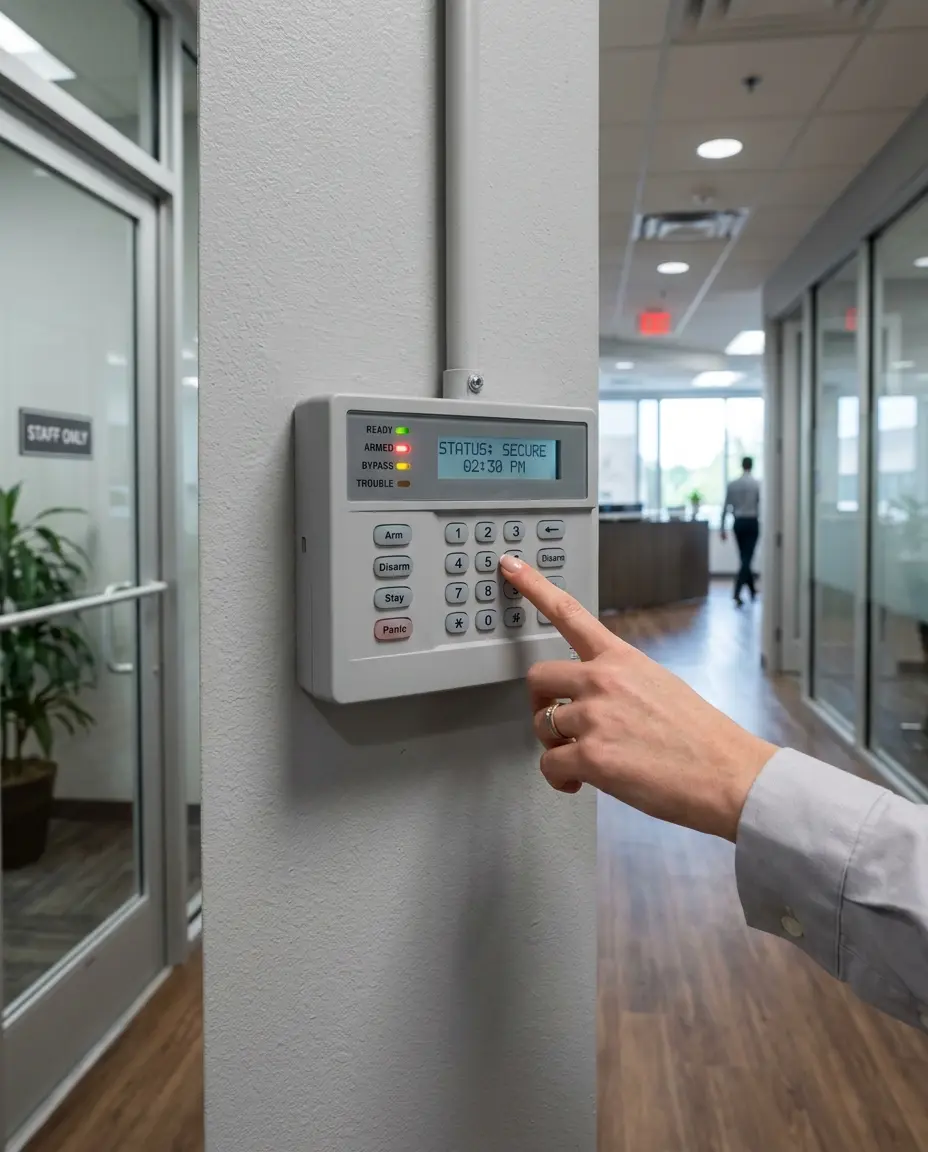
- Commercial offices and corporate facilities protecting after-hours access to server rooms, executive areas, and sensitive document storage with zone-based alarm coverage.
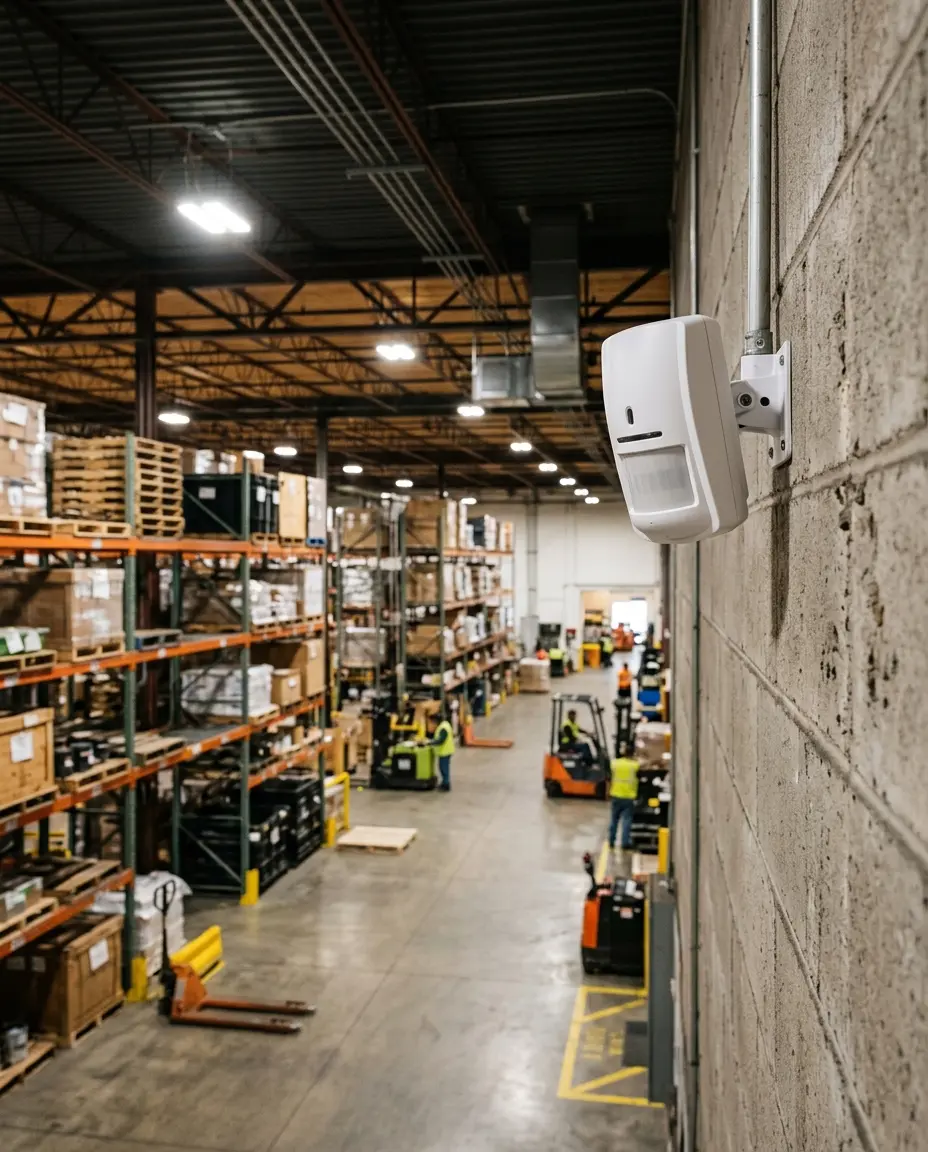
- Warehouses and distribution centres securing large floor areas, loading dock doors, and perimeter access points where break-in risk is highest during overnight and weekend hours.
- Retail and entertainment venues protecting inventory, cash handling areas, and high-value merchandise with motion detection and glass break sensors after closing.
- Healthcare facilities securing pharmaceutical storage, medical equipment areas, and restricted zones where unauthorized access creates both safety and compliance risks.
- Industrial and manufacturing plants monitoring perimeter fences, equipment yards, and production areas with vibration sensors, beam detectors, and outdoor motion sensors.
- Property management portfolios standardizing alarm systems across multiple commercial properties with centralized monitoring and consistent response protocols.
How Do Intrusion Alarm Systems Integrate with Other Security Infrastructure?
A standalone alarm that only sounds a siren leaves you with noise and no actionable information. The value of integrated intrusion detection is that alarm events trigger coordinated responses across your entire security platform:
- Alarm events trigger video recording. When a motion sensor or contact trips, the nearest cameras begin recording and the corresponding footage is bookmarked for immediate review, eliminating the need to search through hours of video after an incident.
- Access control integration automates arming and disarming. When the last person exits and presents their credential, the alarm arms automatically for that zone. When an authorized user enters after hours, the system disarms. No separate alarm codes, no manual arming steps.
- Fire alarm coordination ensures proper emergency response. Intrusion and fire alarm systems share the monitoring infrastructure, ensuring the right response protocol activates for the right event type.
- Remote monitoring platforms deliver real-time alerts. Facility managers and designated personnel receive instant notifications with video verification on mobile devices, enabling informed response decisions from anywhere.
- The same structured cabling infrastructure supports all systems. Because Ainger installs both the alarm hardware and the wiring it runs on, sensor locations, cable routes, and network capacity are designed as one coordinated system rather than layered on separately.

What Types of Intrusion Detection Sensors Are Available?
COMMERCIAL ALARM SENSOR TYPES
Commercial intrusion alarm systems use layered detection to cover entry points, interior spaces, and facility perimeters:
- Door and window contacts detect when entry points are opened while the system is armed. Magnetic contacts are the most common sensor type and form the first layer of perimeter detection for any commercial alarm system.
- Passive infrared (PIR) motion sensors detect body heat movement within interior spaces. Commercial-grade PIR sensors include pet immunity, anti-masking detection, and adjustable sensitivity to reduce false alarms in environments with HVAC airflow or equipment vibration.
- Glass break detectors use acoustic analysis to detect the specific frequency pattern of breaking glass, providing coverage for storefront windows, glass partition walls, and display cases without requiring contact sensors on every pane.
- Vibration and shock sensors detect forced entry attempts on walls, safes, vaults, and reinforced doors before a breach actually occurs, providing early warning for high-value targets.
- Photoelectric beam detectors create invisible detection lines across large open areas like warehouse floors, parking lots, and facility perimeters where traditional motion sensors lack sufficient range.
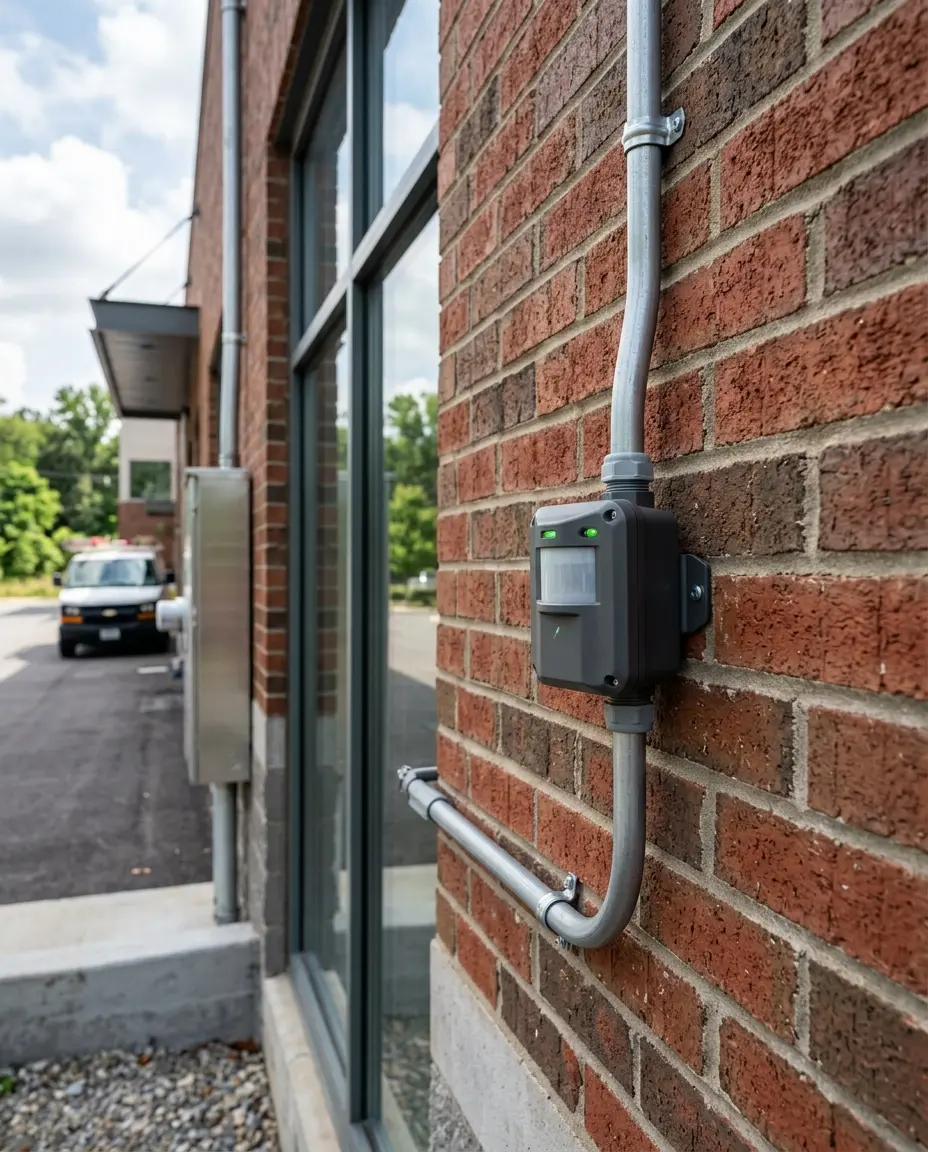
- Outdoor motion and perimeter sensors extend detection beyond building walls with weatherproof enclosures, adjustable detection zones, and environmental compensation to maintain reliability in Canadian climate conditions.
Why Choose Ainger for Intrusion Alarm Installation?
YOUR SINGLE ACCOUNTABLE PARTNER
Most alarm companies install the sensors and panels but subcontract the wiring to a separate cabling contractor. That creates two points of accountability when something goes wrong. Our model eliminates that entirely.
As both your alarm system installer and security wiring contractor, we design the sensor locations and cable routes together from the outset. The wiring is specified for the exact sensors it will carry, with proper cable gauge, shielding, and routing to minimize false alarms caused by electrical interference.
Our manufacturer-authorized dealer status for DSC means factory-backed warranties on every installation. Technicians receive manufacturer training on panel programming, zone configuration, and integration with commercial security systems including access control and video surveillance.
One infrastructure partner. One accountability chain. One warranty behind everything we install.
How Long Does Intrusion Alarm Installation Take?
PROJECT TIMELINES & SCHEDULING
Small office systems
Basic perimeter alarm with door contacts and motion sensors typically completes within 1–2 business days, including panel programming and staff training.
Multi-zone facilities
Multi-zone alarm systems with 20+ sensors, glass break detectors, and access control integration typically require 1–2 weeks for installation and commissioning.
Large facility deployments
Enterprise intrusion detection with perimeter sensors, video verification, access control integration, and monitoring setup typically requires 3–6 weeks with phased deployment.
Multi-site rollouts
Standardized alarm configurations deployed across multiple locations with centralized monitoring accounts and coordinated deployment schedules.
Site assessment and system design typically require 3–5 days before installation begins. Sensor placement, cable routing, and zone programming are coordinated with your operational schedule to minimize disruption. After-hours and weekend installation is available for occupied facilities.
Client Testimonials
What Our Customers Have to Say




















Get a Quote for Your Intrusion Alarm System
READY TO START?
Every project starts with a site assessment. We’ll evaluate your facility, identify vulnerable entry points and high-risk zones, and provide a detailed scope covering sensors, wiring, monitoring, and timeline. No obligation, no pressure.
Request a QuoteFrequently Asked Questions
Commercial intrusion alarm systems are built for larger facilities with multiple zones, higher sensor counts, and integration with access control and video surveillance. They use commercial-grade panels like DSC with programmable zone logic, scheduled arming profiles, and multi-user code management. Residential systems typically use simpler panels with fewer zones and basic monitoring. Commercial systems also meet building code requirements for fire alarm integration and emergency egress that residential installations do not require.
Yes. Our technicians specialize in retrofit installations that minimize disruption to occupied commercial spaces. We use existing cable pathways, drop ceilings, wall cavities, and conduit systems to route alarm wiring without extensive demolition. For buildings without adequate pathways, surface-mounted raceway systems provide a clean alternative. Site assessment identifies the most efficient routing options based on your building’s construction.
24/7 monitoring with emergency response protocols is available as an additional service for intrusion alarm systems. This is a paid service that includes professional monitoring of alarm events, video verification when integrated with camera systems, and dispatching emergency response according to your facility’s protocols. Not all sites require 24/7 monitoring. We design the alarm system independently and add monitoring based on your operational needs and risk profile.
Commercial alarm panels and sensors typically last 10-15 years with proper maintenance. Panel firmware and software should be updated periodically, and sensors should be tested on a regular schedule to verify detection performance. Battery backup systems require replacement every 3-5 years. We offer maintenance agreements that include periodic system testing, battery replacement, and firmware updates to keep your alarm system operating reliably throughout its lifespan.
Yes. Intrusion alarm systems integrate with access control to automate arming and disarming based on credential events. When the last person exits and badges out, the alarm arms automatically for that zone. Alarm events also trigger video recording on nearby cameras, bookmarking the footage for immediate review. Because Ainger installs both the alarm hardware and the cabling infrastructure, these integrations are designed from the outset rather than retrofitted.
False alarms in commercial settings are typically caused by HVAC airflow triggering motion sensors, electrical interference on poorly shielded wiring, or improper sensor placement. We address this through commercial-grade PIR sensors with adjustable sensitivity and pet immunity, proper cable shielding and separation from power lines, strategic sensor placement during the design phase, and zone programming that accounts for your facility’s operational patterns. Because we install the wiring and the sensors together, interference issues are caught during installation rather than after commissioning.
When an alarm triggers, the response depends on your monitoring setup. For sites with 24/7 monitoring, the monitoring centre receives the alert immediately, verifies the event through video feeds or sensor data, and dispatches emergency response according to your facility’s protocols. For self-monitored systems, designated personnel receive instant mobile notifications with zone and sensor details. In both cases, if the alarm system is integrated with access control and cameras, the event is logged with corresponding video footage for post-incident review.

Contact Us
Get in Touch with Ainger Cabling + Security
Find Us Online