

Residential Security Systems
Built to Commercial Standards
Home Security System Installation and Monitoring
PROTECTING WHAT MATTERS MOST
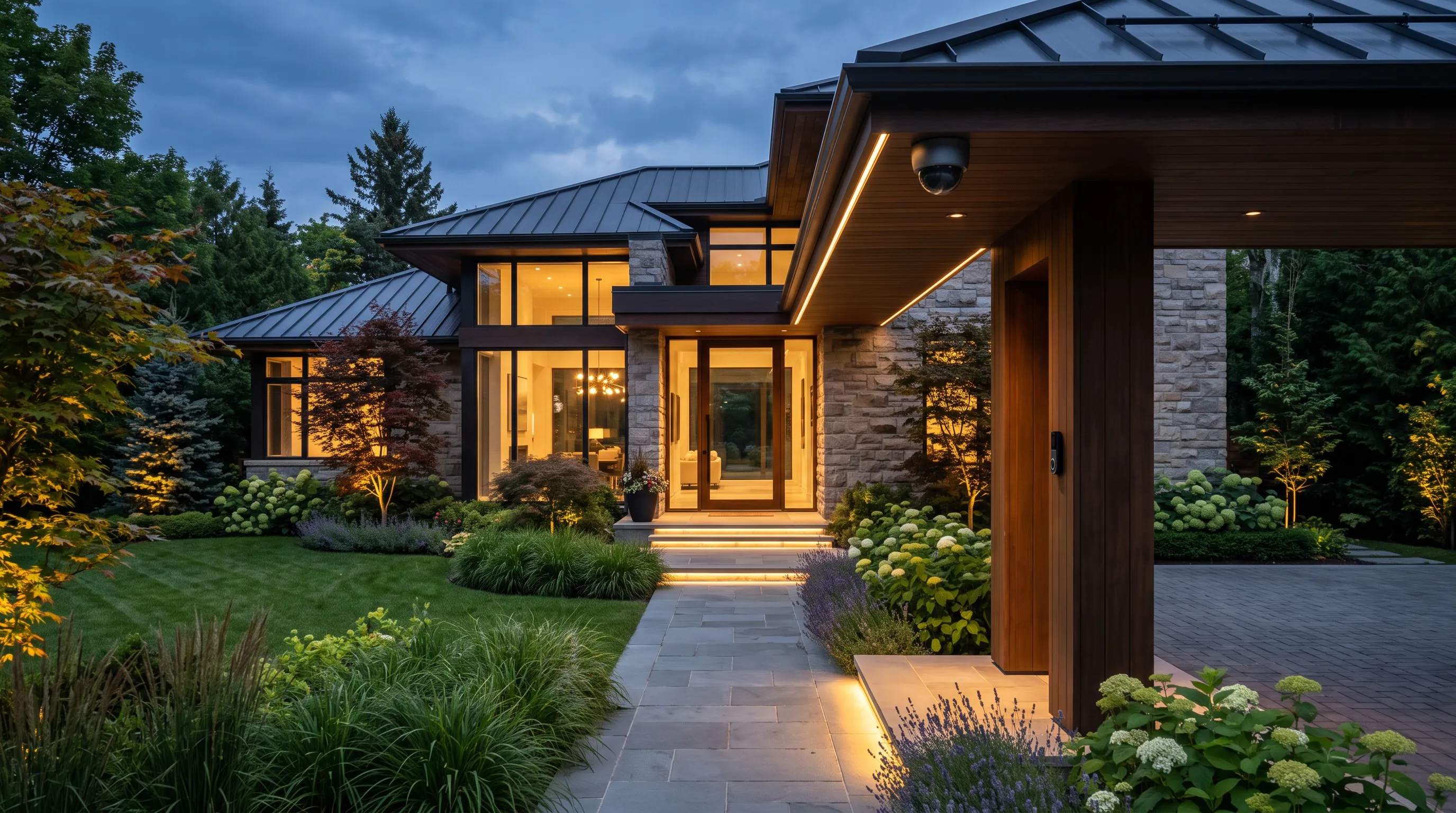
In addition to our commercial security solutions, Ainger provides professionally installed and monitored home security systems, bringing the same trusted expertise and service to residential customers. Homeowners across Eastern Ontario and Western Quebec trust us for systems designed, installed, and supported to the same standards we apply to commercial facilities.
The difference between a professionally installed system and an off-the-shelf kit shows up over time. Consumer systems rely on Wi-Fi, batteries, and self-installation, which means dead zones, missed alerts, and sensors mounted where they were easy to reach rather than where they actually protect the home. We install commercial-grade alarm equipment from DSC and IP cameras from Uniview, hardwired where it matters, with sensor placement based on how your home is actually laid out and how people move through it.
Every installation includes a walkthrough of the property, a design that covers entry points and vulnerable areas, professional installation and commissioning, and hands-on training so everyone in the household knows how to use the system. For homes that need it, 24/7 professional monitoring is available as an added service.
Which Homeowners Benefit Most from a Professional System?
A consumer kit is adequate for a small apartment. Professional installation earns its cost in situations where coverage, reliability, or accountability actually matter:
- Larger properties and multi-storey homes where a single wireless hub cannot reliably reach every sensor, and where entry points span several elevations, outbuildings, or a detached garage.
- Home offices holding business assets including client data, equipment, and inventory. If your home doubles as your workplace, the same standards that protect a commercial office apply here.
- High-value residences where insurers require professionally installed and monitored systems for coverage, and where documented installation and monitoring records matter at claim time.
- Seasonal and vacation properties that sit empty for weeks at a time, where remote visibility, environmental sensors, and a verified response protocol prevent a small problem from becoming a large one.
- Homes replacing a builder-grade or aging system that was installed years ago, never properly commissioned, or has become unreliable as sensors and batteries have aged out.
- Small businesses operating from a residential property such as workshops, studios, and clinics, where the security requirements sit somewhere between a home and a commercial facility.
What Does a Residential Security System Include?
Systems are built around what the property actually needs rather than a fixed package. Common components include:
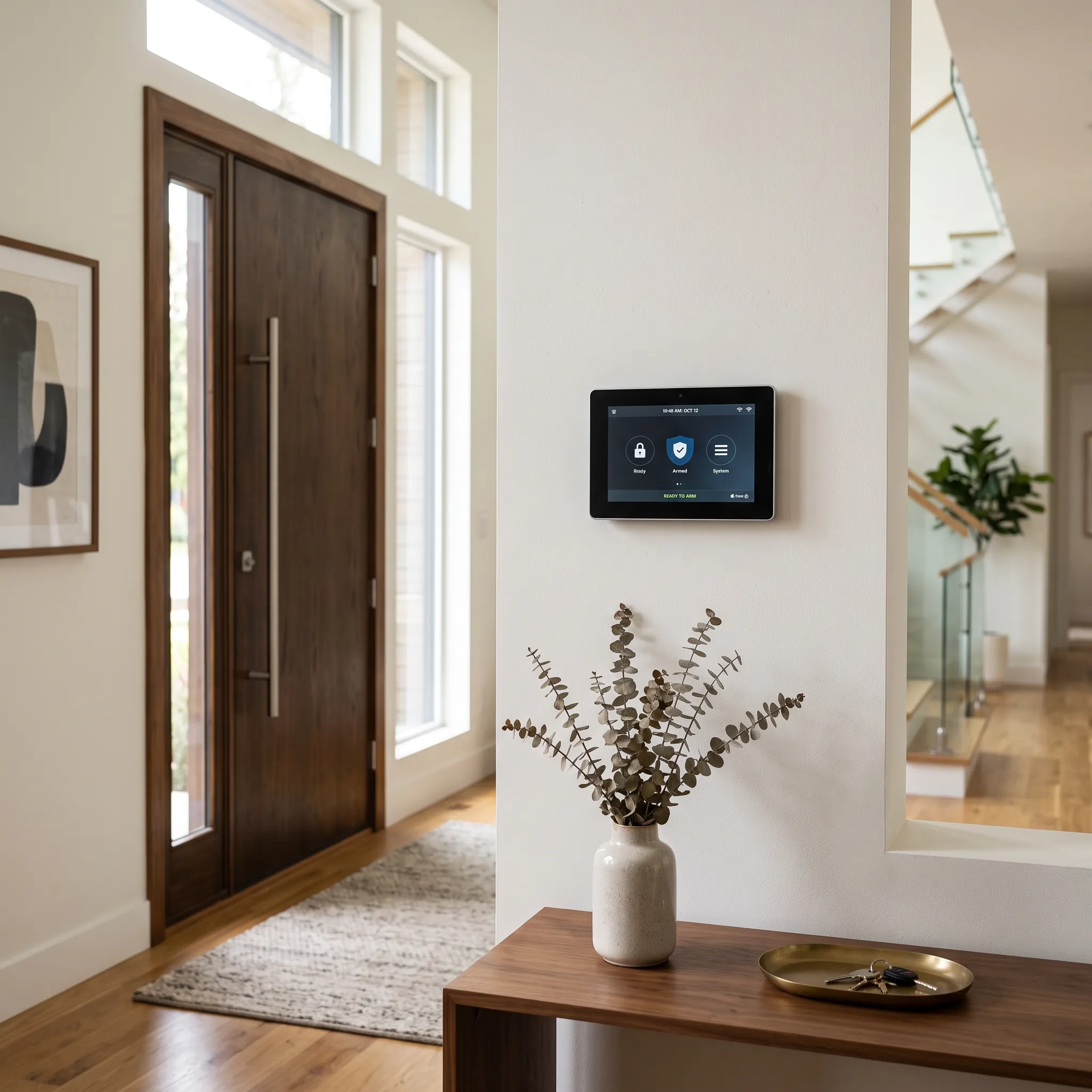
- Alarm panel and keypads. A DSC control panel with keypads at the main entry points, programmed with user codes for family members, cleaners, and anyone else who needs their own access without sharing a single household code.
- Door and window contacts. Magnetic contacts on exterior doors and accessible windows form the first detection layer, letting you arm the perimeter while the household is still moving around inside.
- Motion and glass break detection. Interior motion sensors with pet immunity, plus acoustic glass break detectors covering large windows and patio doors where a contact alone would not catch a forced entry.
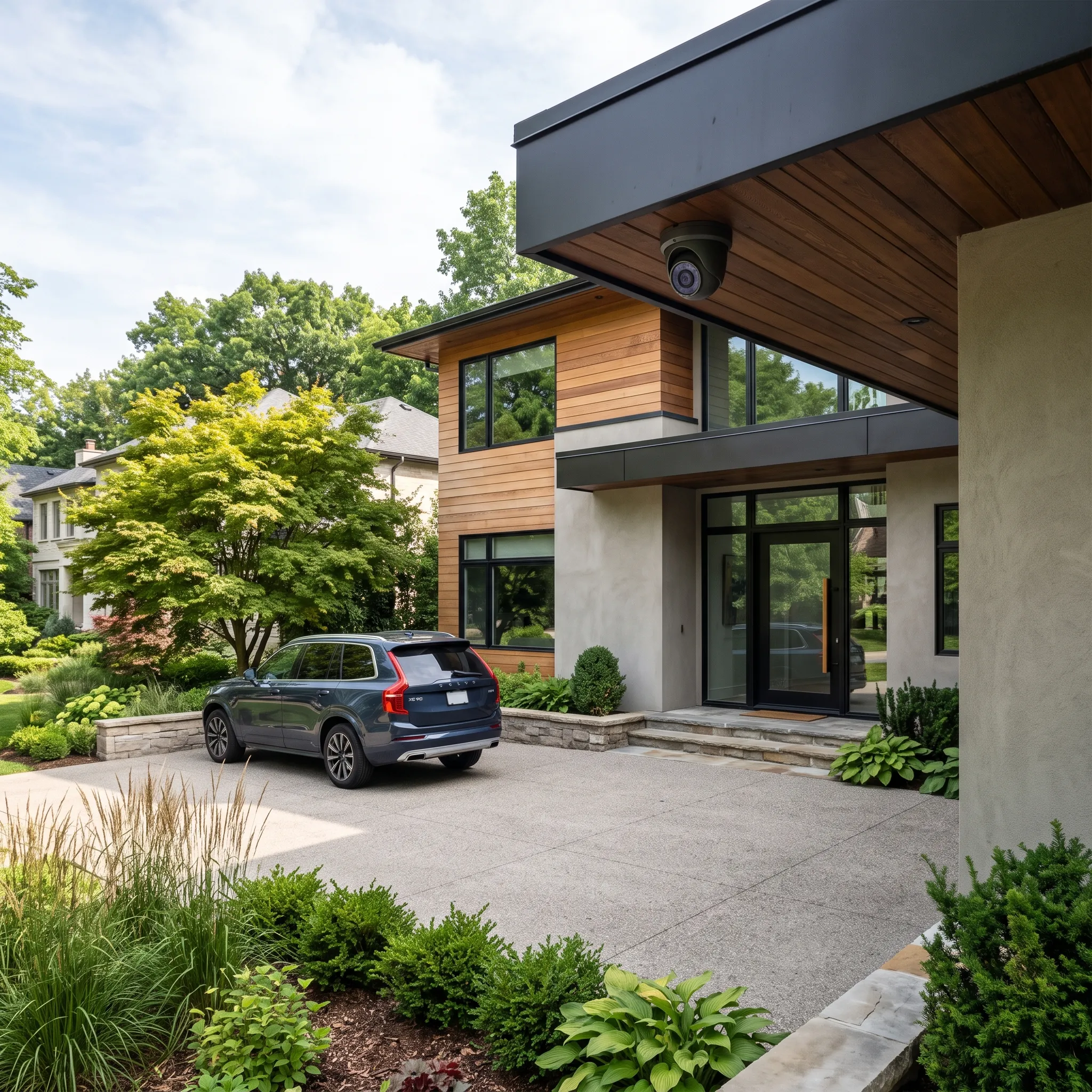
- Cameras with local recording. Uniview IP cameras covering entrances, driveways, and yards, recording locally so footage is retained without depending on a cloud subscription, and viewable remotely through the app.
- Smart locks and video doorbells. Keyless entry with individual codes and a record of who came and went, plus video verification at the front door for deliveries and unexpected visitors.
- Environmental sensors. Smoke, carbon monoxide, water leak, and low-temperature sensors that catch the problems that do the most damage to an unoccupied home, particularly through a Canadian winter.
- Professional wiring. Wherever the construction allows, devices are hardwired using the same security wiring practices we apply commercially, so the system does not depend on Wi-Fi coverage or battery life to stay online.
Why Professional Installation Outperforms a DIY Kit
WHAT ACTUALLY CHANGES
The hardware in a consumer kit is not the main limitation. How and where it gets installed is:
- Sensor placement is designed, not guessed. A technician who has secured hundreds of buildings knows where forced entry actually happens and where motion sensors will and will not false alarm. Most DIY systems end up with sensors on the front door and little else covering the ways someone would realistically get in.
- Hardwired devices do not drop off the network. Wireless sensors depend on signal strength and battery health. In a larger or older home with thick walls, wireless coverage degrades in exactly the places you most want covered. Hardwiring removes that variable entirely.
- The system gets commissioned and tested. Every zone is walk-tested, every sensor confirmed as reporting, and the communication path verified before we leave. A DIY system is usually assumed to work until the day it needs to.
- Equipment carries manufacturer warranties. We install manufacturer-authorized equipment with factory-backed warranty coverage, and we handle warranty claims directly rather than leaving you to deal with a support queue.
- Insurance requirements are met. Many insurers offer premium reductions for professionally installed and monitored systems, and some policies on higher-value homes require them. Self-installed systems frequently do not qualify.
- There is someone to call. When something stops working, you reach the team that installed it and has your system on file, rather than starting over with a support chat.
Smart Security for Homes and Small Businesses
SMART HOME SECURITY TECHNOLOGY
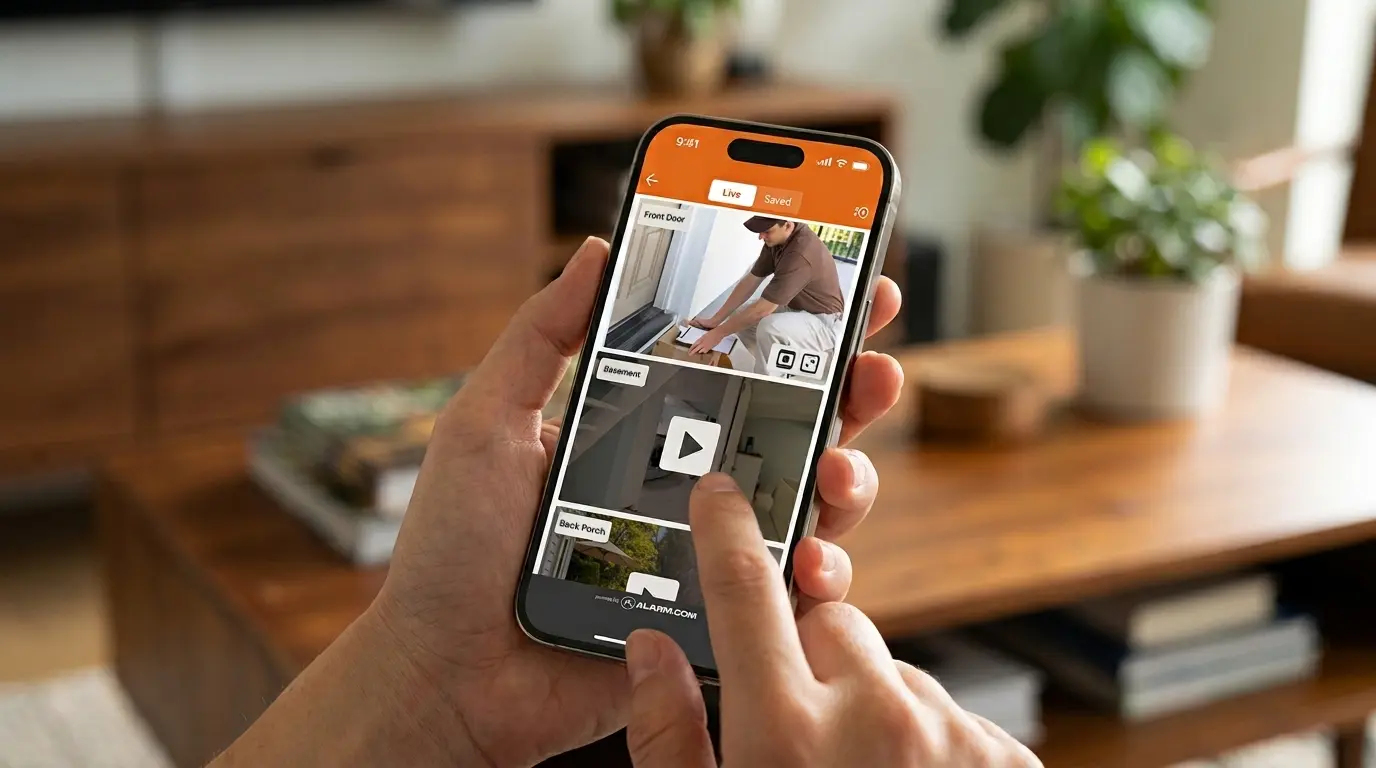
Our residential and small business systems are built on Alarm.com, a platform that delivers a complete end-to-end security, automation, and video experience. The Alarm.com smartphone app gives you direct access to your system from anywhere, so you can arm, disarm, check camera feeds, and receive alerts whether you’re at work, on vacation, or just upstairs.
- Integrated video solutions with live and recorded feeds
- Fast, reliable cellular communication that works even if your internet goes down
- Smart home control for locks, lights, thermostats, and more
- Built on a top-tier network for consistent, dependable connectivity
Alarm.com is our recommended platform for most residential and small business installations, though we work with several platforms and will recommend the right fit based on your property, existing equipment, and how you want to manage the system.
How Long Does a Home Security Installation Take?
PROJECT TIMELINES & SCHEDULING
Standard home alarm
Panel, keypads, door and window contacts, and motion sensors are typically completed in a single day including programming and household training.
Alarm with cameras
Adding four to eight cameras with local recording and remote access typically extends the installation to two days depending on cable routing.
Large or rural properties
Multi-storey homes, detached garages, and outbuildings requiring exterior cable runs typically take three to five days depending on site conditions.
System takeovers
Replacing an existing panel while reusing serviceable sensors and wiring is often completed in half a day, with a full assessment first.
Every project starts with a walkthrough of the property so the design reflects how the home is actually laid out and used. Installations are scheduled around your availability, and we walk the household through arming, disarming, user codes, and the app before we leave.
Client Testimonials
What Our Customers Have to Say




















Get a Quote for Your Home Security System
READY TO START?
Every project starts with a walkthrough of your property. We’ll look at entry points, existing equipment, and how your household uses the space, then provide a straightforward quote covering equipment, installation, and monitoring options. No obligation, no pressure.
Request a QuoteFrequently Asked Questions
Professional IP camera systems use commercial-grade hardware with higher resolution sensors, better low-light performance, local NVR recording with configurable retention (not cloud subscription dependent), and structured cabling that provides reliable connectivity without Wi-Fi dead spots. Professional systems also avoid the privacy concerns of cloud-stored consumer footage and provide faster playback and search through local recording.
Yes. Our technicians specialize in retrofit installations that minimize disruption. We route cables through attic spaces, crawl spaces, wall cavities, and existing conduit pathways. For homes without adequate cable pathways, surface-mounted raceway systems provide a clean alternative. The site assessment identifies the most efficient installation approach based on your home’s construction.
Residential security system costs vary based on the number of cameras, alarm sensors, access control points, and whether monitoring services are included. We provide a site assessment and detailed quote specific to your property and security requirements. There is no obligation and no pressure. Contact us to schedule an assessment.
Ainger Cabling + Security primarily serves commercial clients and has done so for over 30 years. We offer residential security services for homeowners who want the same manufacturer-authorized equipment, professional installation standards, and factory-backed warranties that our commercial clients receive. Residential clients benefit from the same level of expertise without the limitations of consumer-grade security products.
We install residential alarm systems (DSC panels with door contacts, motion sensors, and glass break detectors), IP camera systems (Uniview cameras with NVR recording and remote mobile access), smart locks and video doorbells, and intercom systems. All equipment is commercial-grade hardware from the same authorized manufacturers we use for business installations, providing higher reliability than consumer alternatives.
Yes. 24/7 monitoring with emergency response protocols is available as a paid add-on for residential intrusion alarm and fire alarm systems. When an alarm triggers, the monitoring centre verifies the event and dispatches emergency services according to your response protocol. Not all residential clients require monitoring. We design the alarm system independently and add monitoring based on your security needs.
Homeowners with larger properties, home offices containing business assets, high-value residences, or vacation properties requiring remote monitoring often need reliability that consumer-grade systems cannot deliver. A commercial integrator installs manufacturer-authorized equipment with factory-backed warranties, professional-grade installation standards, and access to manufacturer engineering support that consumer brands and DIY systems do not provide.
1996–2026

Contact Us
Get in Touch with Ainger Cabling + Security
Find Us Online