

Commercial Security
Commercial Alarm Monitoring: Understanding Professional Response Services

Picture this: it’s 2:47 AM on a Tuesday, and your phone buzzes with an alert. Someone just triggered the motion sensor in your building’s loading dock. Within seconds, you’re wondering what’s actually happening right now—and more importantly, who’s doing what about it. That window between an alarm triggering and your phone ringing involves a surprisingly complex chain of technology, trained professionals, and carefully designed protocols. Understanding what happens in that gap is essential for any facility manager, property director, or business owner responsible for building security.
We work with commercial clients across Canada and the United States who often tell us they’ve been paying for monitoring services for years without truly understanding what they’re getting. That’s a problem, because not all monitoring is created equal—and the differences matter when your building, inventory, or tenants are on the line. This article breaks down how professional alarm monitoring actually works, what separates quality services from basic offerings, and how to evaluate whether your current monitoring meets commercial-grade standards.

Who This Article Is For (And Who It Isn’t)
This article is written for commercial decision-makers—facility managers, property directors, building owners, and business operators—who need to understand what they’re actually paying for with 24/7 alarm monitoring. If you’re responsible for multi-unit residential buildings, office complexes, retail locations, or industrial facilities, the information here will help you evaluate monitoring services and ask better questions of providers.
This is not a guide for residential homeowners looking at DIY security options or consumer-grade monitoring apps. Commercial monitoring operates at a different level of accountability, with regulatory requirements, liability considerations, and response expectations that simply don’t apply to home security contexts.
What Professional Alarm Monitoring Actually Provides
The phrase “24/7 monitoring” gets thrown around so casually that it’s lost most of its meaning. Let’s clarify what professional commercial alarm monitoring actually includes when done properly:
- Continuous station staffing — Trained operators watching incoming signals around the clock, including weekends and holidays
- Alert reception and prioritization — Systems that receive, log, and categorize alarm signals based on type, location, and severity
- Verification procedures — Defined protocols for confirming whether an alarm represents a genuine threat or a false trigger
- Emergency dispatch coordination — Direct communication with police, fire services, or security response teams when warranted
- Follow-up documentation — Complete records of every alarm event, response action, and outcome for compliance and insurance purposes
Compare this to basic self-monitoring, where your alarm panel sends push notifications to your phone and you’re responsible for deciding what to do at 3 AM while half asleep. The difference isn’t just convenience—it’s accountability and response capability.
For commercial facilities where liability exposure is real and building access happens around the clock, professional monitoring transforms your Intrusion Alarm Systems from passive detection devices into an active security layer with human judgment and documented response protocols.
The Journey from Alarm Signal to Human Response
Let’s walk through exactly what happens when someone forces open that loading dock door at 2:47 AM. Understanding this workflow helps you evaluate whether your monitoring provider has the infrastructure and procedures to respond effectively.
Signal Transmission
The moment a sensor is triggered, your alarm panel processes the event and transmits a digital signal to the monitoring station. This transmission happens through one or more communication paths—typically IP (internet), cellular, or traditional phone lines. The signal includes specific information: which zone triggered, what type of sensor, the time, and your facility’s unique identifier.
In well-designed systems, this transmission takes seconds. Delays at this stage usually indicate communication path problems or outdated equipment that should be addressed.
Station Reception and Prioritization
At the monitoring station, automation software receives the signal, logs it instantly, and categorizes it based on predefined rules. A perimeter breach at a pharmaceutical warehouse gets prioritized differently than a motion sensor trigger in a retail stockroom during business hours. The system queues the alert for operator attention based on urgency and event type.
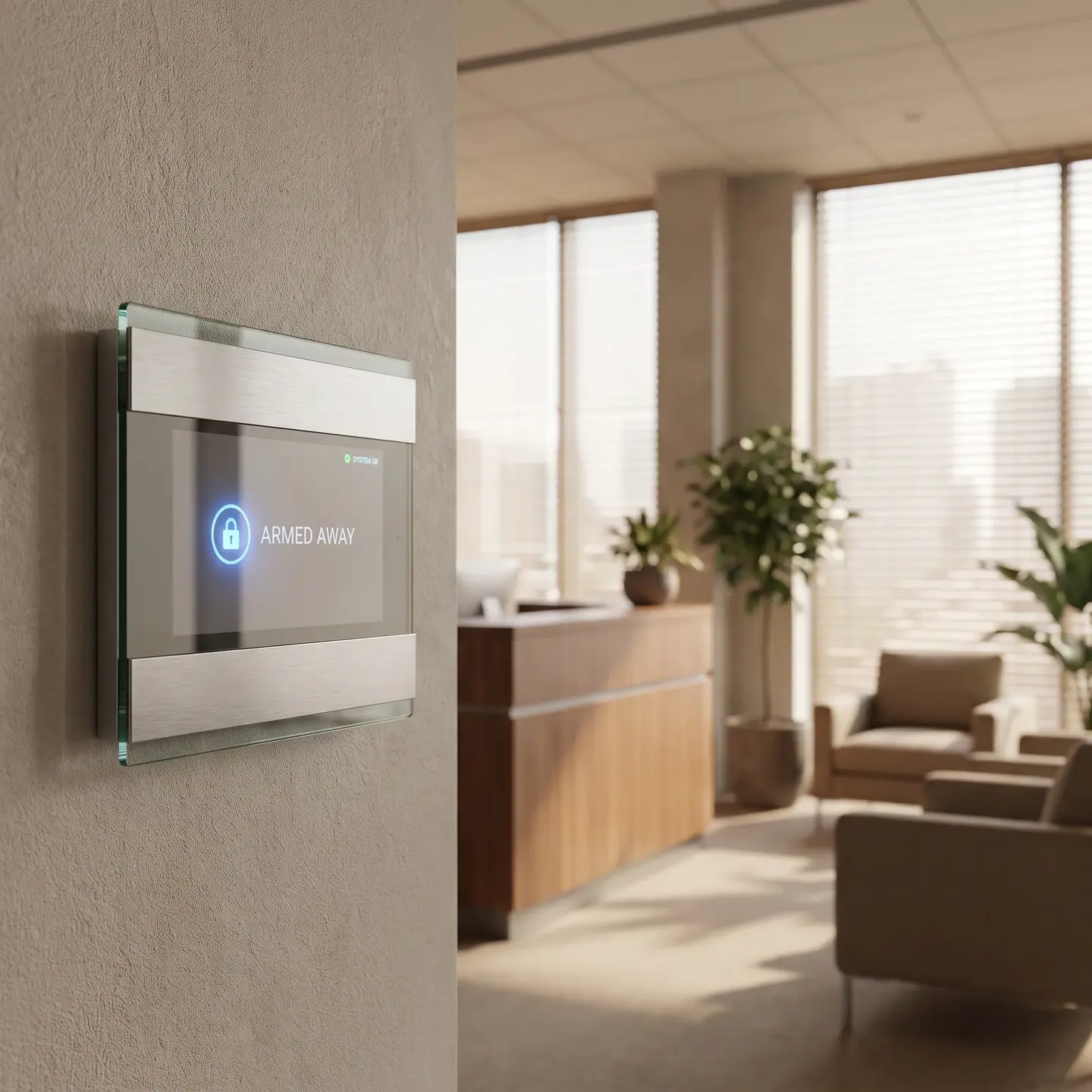
Operator Assessment
A trained operator receives the alert and begins the verification process. They’re working from your facility’s specific profile, which includes contact information, response instructions, access codes, and any special circumstances you’ve documented. The operator’s job is to determine what’s actually happening and take appropriate action—not just forward every alarm to police dispatch.
Response Execution
Based on verification results, the operator either escalates to emergency services, contacts your designated personnel, or documents the event as resolved. Every action is logged with timestamps, creating an audit trail that matters for insurance claims, incident investigations, and compliance requirements.
The entire process from sensor trigger to operator engagement typically occurs within 30 to 60 seconds at well-run stations. Some monitoring facilities report average assignment times around 15 seconds. These benchmarks matter because in genuine intrusion scenarios, minutes can mean the difference between catching perpetrators and arriving after they’ve left.
Verification Protocols: Balancing Speed with Accuracy
Here’s a reality that surprises many facility managers: the vast majority of alarm signals don’t indicate actual break-ins. Environmental factors, user error, equipment malfunctions, and wildlife can all trigger sensors. The FBI documented 1,954 property crimes per 100,000 people in 2022—but your monitoring station receives far more alarm signals than actual crimes because false triggers are common.
This creates a critical tension. Dispatch police for every alarm, and you’ll quickly rack up false alarm fees while losing credibility with local responders. But verify too slowly, and genuine intruders have time to complete their work and disappear.
Professional monitoring services use several verification methods to navigate this balance:
- Sequential calling — Attempting to reach designated contacts in priority order to confirm whether authorized personnel triggered the alarm
- Cross-zone confirmation — Waiting briefly to see if multiple sensors trigger in sequence, which suggests actual movement through a facility rather than an isolated false trigger
- Audio verification — Where systems support it, listening to sounds from the facility to distinguish between normal activity and break-in noise
- Code verification — Requiring a verbal password from anyone claiming to have accidentally triggered the alarm
Some jurisdictions now require verification before police dispatch, making these protocols not just operationally smart but legally necessary. Many police departments assign higher priority to verified alarm calls, meaning verified alarms often get faster response than unverified ones—another reason thorough verification actually improves outcomes rather than delaying them.
Communication Redundancy: Ensuring Alerts Get Through
Your intrusion alarm systems are only as reliable as their communication path to the monitoring station. If that path fails, your sensors can trigger all night without anyone knowing.
Commercial-grade monitoring requires redundant communication paths. Here’s what that looks like in practice:
- Primary path — Usually IP (internet) transmission, which is fast and cost-effective
- Secondary path — Typically cellular, which operates independently of your facility’s internet connection
- Supervision signals — Regular test signals (often every few minutes) that confirm the communication path is working; if signals stop arriving, the monitoring station investigates
Why does this matter? Consider a scenario where intruders cut external communication lines before entering. Without cellular backup, your alarm panel has no way to reach the monitoring station. Or imagine a power outage that takes down your internet—cellular backup ensures continuous monitoring coverage.
When evaluating monitoring services, ask specifically about communication path redundancy. How many paths does the system support? What happens when the primary path fails? How quickly does the station detect communication failures? These questions reveal whether a provider is prepared for real-world scenarios where communication infrastructure can’t be taken for granted.
ULC Certification: What It Means for Canadian Commercial Security
In Canada, ULC certification requirements establish the benchmark for monitoring station quality. Underwriters Laboratories of Canada (ULC) sets standards that monitoring stations must meet for equipment, staffing, procedures, and facility security.
ULC certification isn’t just a marketing badge—it has practical implications:
- Insurance requirements — Many commercial insurance policies require ULC-certified monitoring for full coverage, particularly for fire alarm systems
- Operational standards — Certified stations must meet specific requirements for backup power, communication redundancy, staffing levels, and response procedures
- Regular audits — ULC conducts ongoing inspections to verify continued compliance, creating accountability that non-certified stations don’t face
The CANASA industry standards complement ULC requirements, establishing best practices for the Canadian security industry. When a monitoring provider references ULC certification and CANASA membership, they’re signaling commitment to standards that matter for commercial applications.
For ULC fire alarm monitoring, certification isn’t optional—it’s typically required by building codes and insurance policies. This is why we ensure our monitoring capabilities meet ULC standards for clients who need that level of compliance documentation.
Evaluating Monitoring Service Quality
How do you know whether your current monitoring—or a provider you’re considering—actually delivers commercial-grade service? Here’s a practical framework for assessment.
Questions About Station Operations
- Where is the monitoring station physically located? Is there a backup station if the primary becomes unavailable?
- What are average response times from signal receipt to operator engagement? Can they provide documentation?
- How many operators are staffed during overnight and weekend shifts?
- What training do operators receive? What’s the typical tenure of their monitoring staff?
Questions About Technical Capabilities
- What communication paths does the system support? Is there automatic failover to backup paths?
- How frequently are supervision signals sent to confirm communication integrity?
- What verification methods are available (audio, sequential calling, cross-zone)?
- How does the monitoring platform integrate with your existing security infrastructure?
Questions About Certification and Compliance
- Is the monitoring station ULC-certified? Can they provide current certification documentation?
- What industry associations do they belong to (CANASA, ASIS)?
- How do they meet monitoring station certification standards for your jurisdiction?
Questions About Service Terms
- What service level agreements (SLAs) are included in the contract?
- How are false alarms handled? What are the fees and procedures?
- What documentation is provided after alarm events?
- How are changes to contact lists, response instructions, or facility profiles handled?
These questions aren’t meant to trip up providers—they’re designed to surface the operational details that separate professional monitoring from basic service. Legitimate commercial monitoring providers should answer them readily with specific information, not vague assurances.
Common Monitoring Scenarios and How Quality Services Handle Them
Understanding how monitoring operates in specific scenarios helps illustrate why these details matter.
Scenario: After-Hours Perimeter Breach
A motion sensor triggers in your warehouse at 11 PM. A quality monitoring station receives the signal within seconds, notes it’s after hours with no authorized activity scheduled, and initiates verification. The operator calls the first contact on your list—no answer. They try the second contact, who confirms no one should be on-site. The operator dispatches police and continues attempting contact while documenting every step. When police arrive and find an actual break-in in progress, there’s a complete audit trail of response timing and actions taken.
Scenario: Communication Path Failure
Your facility’s internet connection goes down during a storm. Within minutes (based on supervision signal timing), the monitoring station detects the loss of primary communication. With cellular backup configured, monitoring continues uninterrupted. The station logs the communication path failure and may notify you depending on your preferences. Meanwhile, any alarm events still transmit successfully via the backup path.
Scenario: False Alarm Verification
A cleaning crew accidentally triggers a motion sensor while working late. The monitoring station receives the alarm, calls your designated contact, and verifies with a password that authorized personnel are on-site. The event is logged as a false alarm with verification details, no dispatch occurs, and no fees are incurred. Your documentation shows the alarm was handled correctly, which matters if questions arise later about security coverage.
These scenarios demonstrate why monitoring quality affects real outcomes—response speed, accuracy, documentation, and liability protection all depend on the procedures and infrastructure your monitoring provider maintains.
How Monitoring Fits Into Comprehensive Commercial Security
Professional alarm monitoring is one component of a broader commercial security solutions strategy. It works best when integrated with properly designed detection systems, reliable cabling infrastructure, and access control that prevents intrusion in the first place.
For property management security contexts, monitoring often covers multiple buildings or units, requiring systems that can distinguish between locations and route alerts appropriately. Multi-site monitoring coordination adds complexity but also efficiency when managed through a unified platform.
The key insight is that monitoring doesn’t operate in isolation. The best monitoring station in the world can’t compensate for poorly placed sensors, unreliable cabling, or communication paths that weren’t designed for redundancy. That’s why we approach monitoring as part of integrated system design rather than an afterthought bolted onto existing hardware.

Next Steps: Evaluating Your Current Monitoring
If you’ve been paying for monitoring services without understanding exactly what you’re getting, now is the time to find out. Start by requesting documentation from your current provider:
- Ask for response time reports — Quality monitoring stations track their performance metrics and should be able to show you average times from signal receipt to operator engagement
- Verify certification status — Request current ULC certification documentation if you’re in Canada, and confirm when the last audit occurred
- Review your facility profile — Ensure your contact lists, response instructions, and site information are current and accurate
- Test your communication paths — Ask your provider to confirm which communication methods are configured and whether backup paths are active
- Understand your contract terms — Know what SLAs you’re covered by and what happens if they’re not met
If your current monitoring can’t answer these questions clearly, or if the answers reveal gaps in service quality, it may be time to evaluate alternatives.
We provide 24/7 ULC-certified monitoring services as part of our integrated security approach for commercial clients across Canada and the United States. Our monitoring connects directly with the intrusion, fire, and access control systems we install—eliminating the coordination problems that arise when detection and monitoring are handled by separate vendors who point fingers when issues occur.
Whether you’re evaluating new monitoring services or assessing your current coverage, the questions and frameworks in this article give you the tools to make informed decisions. Commercial alarm monitoring is too important to leave as a line item you pay without understanding—now you know what to look for and what to ask.
Frequently Asked Questions
Phone alerts leave you to decide what to do at 3 AM; professional monitoring adds trained operators, structured verification, documented responses, and coordinated dispatch to police, fire, or security when needed—turning your system into an accountable, commercial-grade security layer.
ULC-certified stations meet strict standards for staffing, redundancy, backup power, and procedures, are regularly audited, and often satisfy insurance and building code requirements—especially for fire alarms—giving you stronger compliance and documentation if an incident or claim occurs.
Redundancy ensures alarms still reach the monitoring station if your internet fails, power goes out, or lines are cut—by using a primary IP path plus cellular backup and frequent supervision signals that alert operators when any path goes down.
They use verification steps like calling your contact list in order, checking for multiple zones triggering, listening to on-site audio where available, and requiring verbal passwords—so police are dispatched for verified threats while routine mistakes and environmental triggers are filtered out quickly.
Within seconds, your panel sends a detailed signal to the monitoring station, software prioritizes it, a trained operator pulls up your facility profile, verifies the event using set protocols, and either escalates to emergency services, calls your contacts, or logs it as resolved—typically all within 30 to 60 seconds.