

Office and Warehouse Security Systems
for Commercial Facilities
Why Offices and Warehouses Need Different Security Designs
THREE DECADES SERVING FACILITY MANAGERS
Ainger Cabling + Security has delivered security and cabling infrastructure for commercial offices, warehouses, and distribution facilities across Canada and the United States for 30 years. These two environments are often grouped together, but they share almost nothing beyond the fact that both need access control.
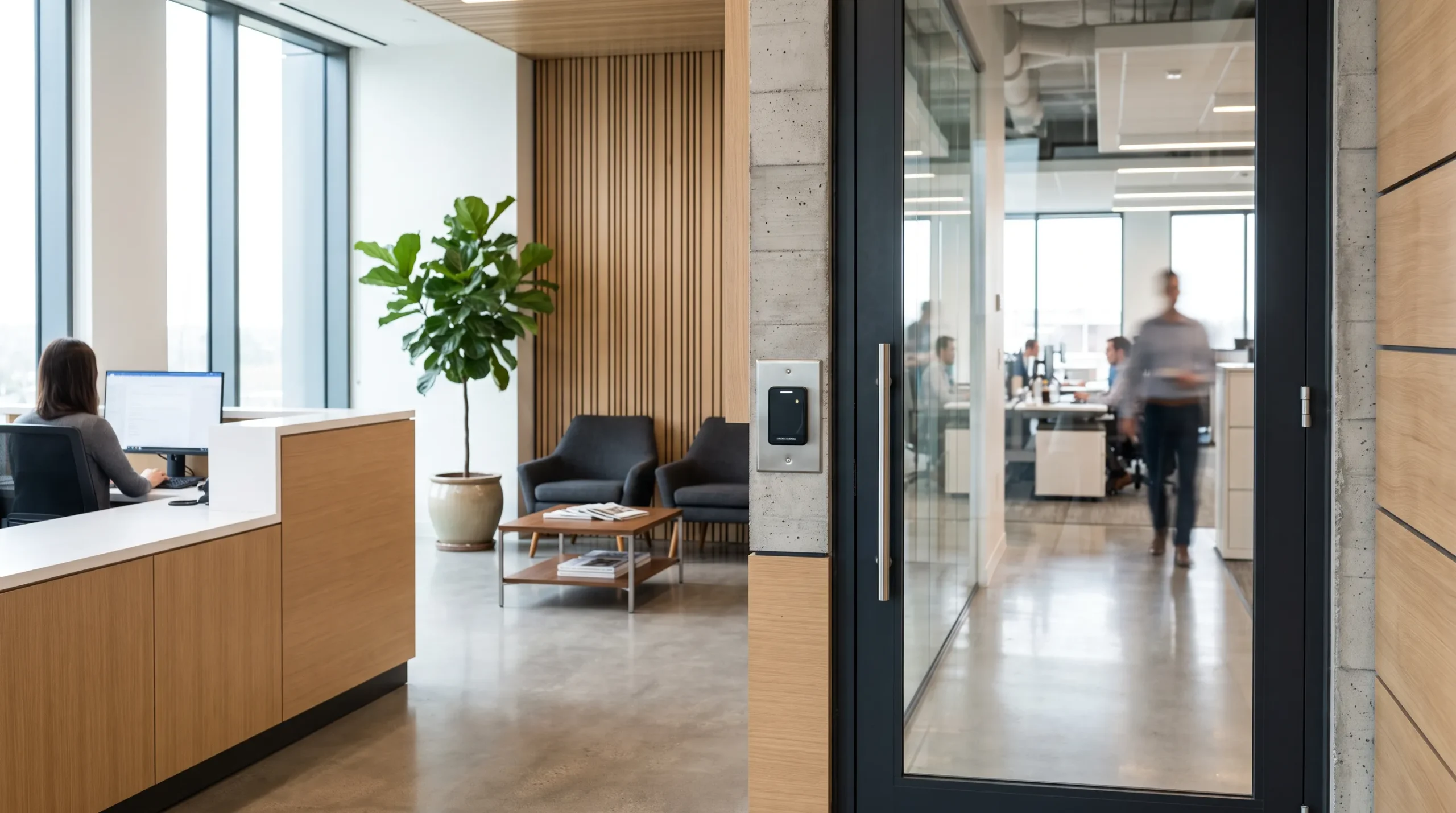
Office security is about people moving through a controlled environment. Reception-controlled entry during business hours, visitor management, tailgating at main doors, restricted access to server and communications rooms, and after-hours credentials for cleaners and contractors. The risk is largely about who gets in and where they can go once inside.
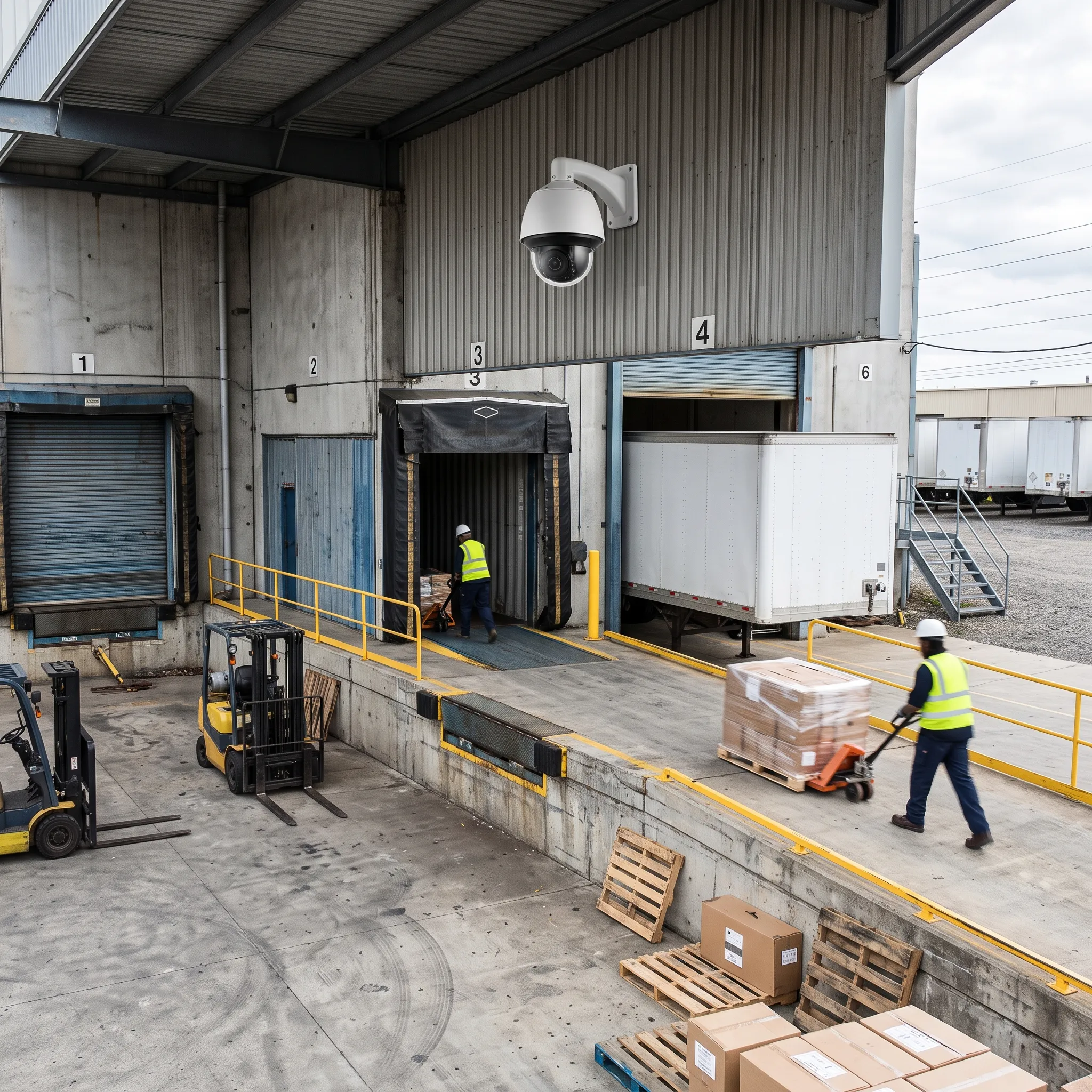
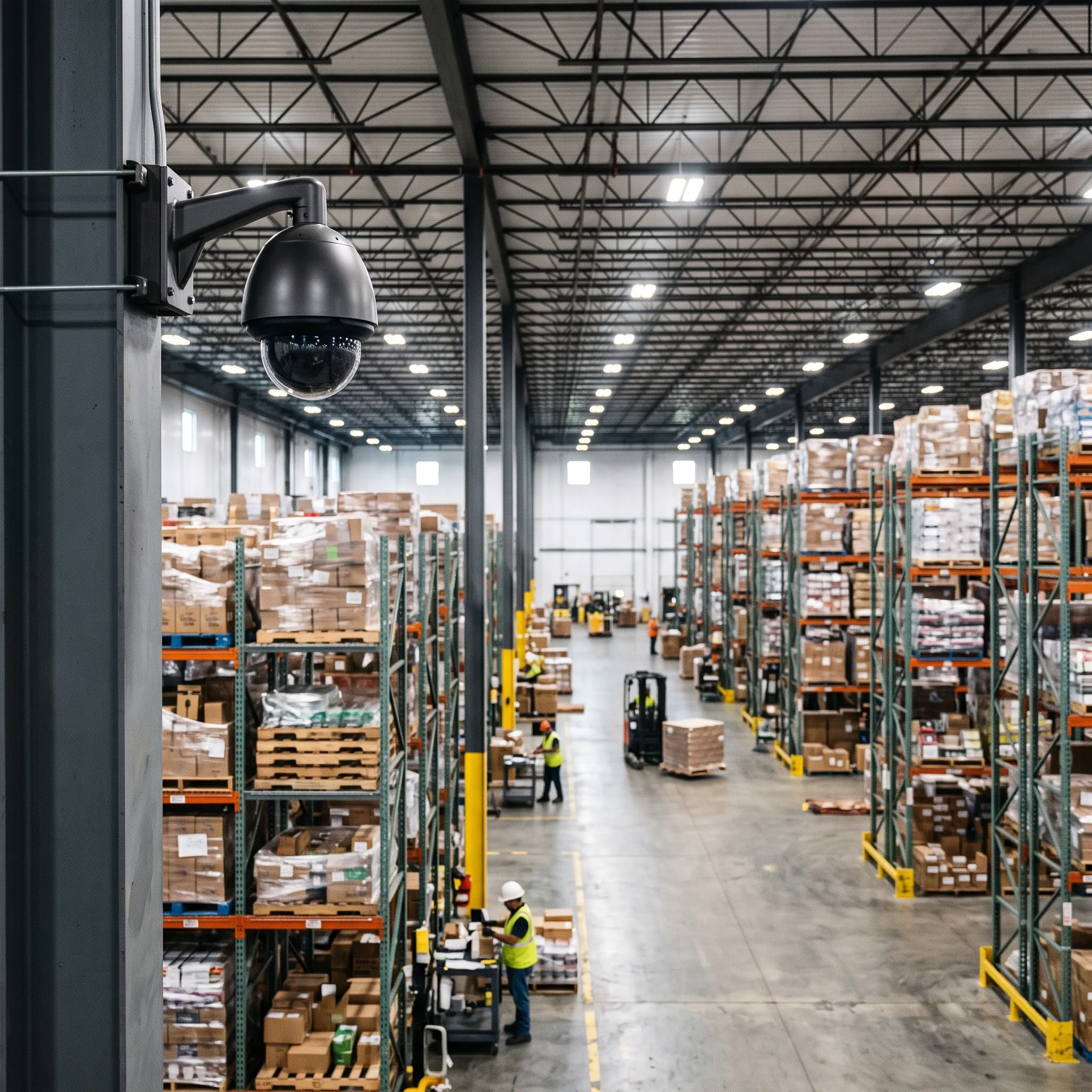
Warehouse and distribution security is about scale and environment. Long camera runs across open floor areas, loading docks and shipping doors where most loss occurs, yard and perimeter coverage, shift-based access across day, night, and weekend operations, and equipment that has to survive dust, temperature swings, and unheated space through a Canadian winter. A design that works well in an office will underperform badly on a warehouse floor.
Security Systems for Offices and Warehouses
Most commercial facilities deploy several integrated systems, each configured differently depending on whether it is protecting an office floor or a warehouse:
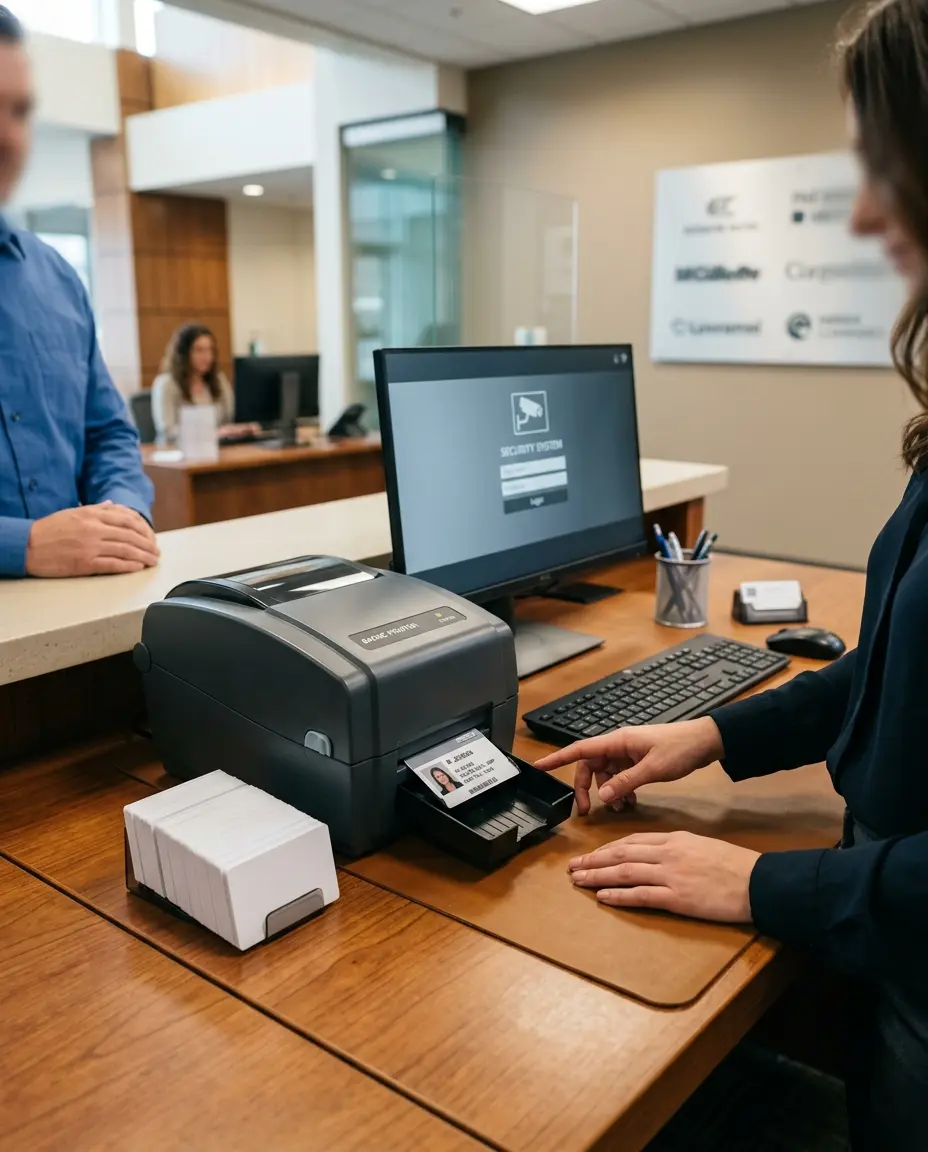
- Access control with ID badging handles employee, contractor, and visitor entry, with photo credential issuance and badge printing so the same card that opens doors also identifies the holder.
- CCTV surveillance covers reception, corridors, and common areas in offices, and loading docks, receiving, and open floor areas in warehouses using long-range and multi-sensor cameras. Warehouse sites can add live video monitoring as a paid add-on for after-hours coverage.
- Intrusion detection protects both environments after hours, with perimeter and yard coverage for warehouse sites, and optional 24/7 monitoring available as a paid add-on service.
- Intercom and visitor entry manages reception and after-hours access without requiring someone at the front desk at all times.
- Structured cabling and network infrastructure carries every one of these systems, along with workstations, wireless access points, and phones.
Managing Employee, Contractor and Visitor Access
Access management in a commercial facility is an ongoing operational task rather than a one-time setup. The people who need entry change constantly:
- Photo ID badging creates accountability. A credential that doubles as visual identification means staff can be identified at a glance, which matters in facilities with high headcount, regular contractor traffic, or areas where anyone unbadged should stand out.
- Contractor credentials expire automatically. Temporary access can be issued with a set end date, so maintenance crews, installers, and third-party providers lose entry when the job finishes without anyone chasing a returned card.
- Cleaners get access to their areas only. After-hours crews can be restricted by door, by zone, and by time window, so they enter the areas they service during their scheduled shift and nothing more.
- Warehouse shifts are handled by schedule. Day, night, and weekend operations each carry their own access rules, so a night shift credential works at the hours it should and not outside them.
- Departing staff are removed instantly. A credential is deactivated from the platform and stops working immediately, whether or not the card comes back. No rekeying, no lock replacement, no lingering risk.
Protecting High-Value Areas Inside the Building
LAYERED ACCESS FOR RESTRICTED ZONES
Not every area inside a facility warrants the same level of access. Layered credentials let general staff move freely through the spaces they need while restricting the areas where the consequences of unauthorized entry are highest:
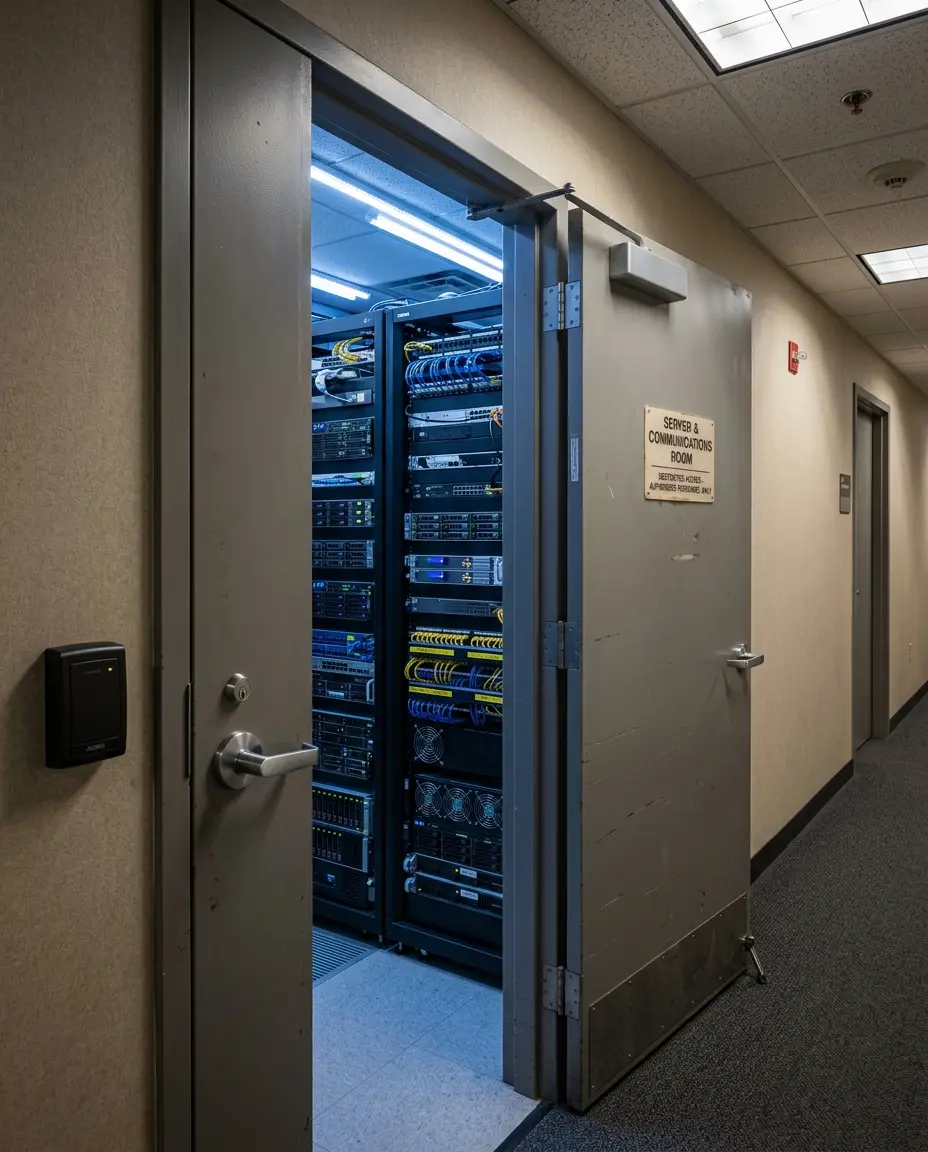
- Server and communications rooms typically carry their own credential requirement so entry is limited to IT staff and approved contractors rather than anyone holding general building access. Many facilities add a dedicated camera at that door and a second authentication factor.
- Records storage and confidential document areas in office environments need protection beyond standard employee access, with entry logs providing the audit trail that compliance and insurance requirements often call for.
- Inventory cages and high-value stock areas in warehouses restrict access to supervisors and authorized staff, with camera coverage at the entrance so any discrepancy can be reconciled against who entered and when.
- Loading docks and receiving are where most warehouse loss occurs, which makes them the single most valuable position for both camera coverage and access logging.
- Credentials scale to the role. A floor supervisor opens the inventory cage and shipping office, a forklift operator opens the main floor and break room, and an office manager opens the server room and records storage. Everyone gets what their job requires and nothing beyond it.
Why Facility Managers Use a Single Accountable Partner
SECURITY SYSTEMS AND STRUCTURED CABLING
Access control readers, cameras, intercoms, and alarm panels all depend on the cabling underneath them. When security and cabling are handled by separate contractors, the security installer waits on network drops, the cabling contractor has no visibility into what the security system actually needs, and troubleshooting turns into a conversation between two vendors who each believe the fault sits with the other.
Ainger installs both the security systems and the security wiring they run on. Cable specification, PoE capacity, and network segmentation are all designed for the exact system being deployed, not estimated by someone working from a different scope. When something stops working, there is one number to call.
That matters more in these environments than most, because offices and warehouses lean heavily on their network infrastructure for far more than security. The same cabling backbone carries workstations, wireless access points, phones, and warehouse scanning equipment.
Our manufacturer-authorized dealer status for Kantech, Uniview, Avigilon, DSC, Akuvox, Mircom, Active Watch, and Panduit means factory-backed warranties across the installation, whether it is a new system or an ongoing maintenance agreement on existing infrastructure.
How Long Does Office and Warehouse Security Installation Take?
PROJECT TIMELINES & SCHEDULING
Single office fit-out
Access control at entry points, cameras in common areas, and structured cabling typically complete within 2–3 weeks including commissioning and staff training.
Multi-floor office building
Access control across multiple entry points, elevator integration, server room security, and full CCTV coverage generally require 4–6 weeks from design through commissioning.
Warehouse or distribution centre
Perimeter detection, loading dock cameras, access control at multiple entry points, and long-range coverage across open floor areas typically require 6–8 weeks.
Multi-site rollout
Standardized system design deployed across multiple offices or facilities, with centralized management, consistent credential formats, and phased scheduling across sites.
Site assessment and system design typically require 5–7 days before installation begins. Where a fit-out or renovation is underway, running security cabling while walls and ceilings are open is considerably more efficient than retrofitting later. Installations are scheduled around operations, with after-hours and weekend work available for occupied facilities.
Client Testimonials
What Our Customers Have to Say




















Get a Quote for Your Office or Warehouse Security System
READY TO START?
Every project starts with a site assessment. We’ll walk the facility, identify entry points and restricted areas, review your existing infrastructure, and provide a detailed scope covering systems, cabling, timelines, and costs. No obligation, no pressure.
Request a QuoteFrequently Asked Questions
Yes. Access control credentials can be restricted by door, by zone and by time, so a cleaning crew can enter only the areas they service and only during their scheduled window. Contractor credentials can be issued with an automatic expiry date so they stop working when the job ends, with no need to chase anyone for a returned card. Every entry is logged against the individual credential.
Warehouses need long-range cameras covering large open floor areas, weather-rated equipment for unheated or dusty environments, coverage at loading docks and shipping doors where most loss occurs, and perimeter or yard protection. Offices focus more on entry control, reception and visitor management, meeting rooms, and restricted areas like server rooms. Facilities with both need a design that treats each zone according to its actual risk rather than applying one standard throughout.
The credential is deactivated from the management platform and stops working immediately, whether or not the card is returned. There is no rekeying and no lock replacement. For facilities with regular turnover, particularly warehouse operations running multiple shifts, this is usually the single biggest operational advantage of access control over physical keys.
Yes, and it is considerably more efficient than retrofitting afterwards. Running security cabling while walls and ceilings are open avoids surface-mounted conduit and difficult cable routing later. We coordinate with the general contractor and other trades so security infrastructure goes in at the right stage of the build.
Server rooms are typically treated as a restricted zone with their own credential requirement, so access is limited to IT staff and approved contractors rather than anyone with general building access. Many facilities add a second authentication factor at that door and a dedicated camera covering the entrance. Access logs provide an audit trail showing exactly who entered and when, which matters for both security and compliance.
Camera count depends on what the footage needs to capture. Long-range and multi-sensor cameras mounted high can cover substantial floor area, while PTZ cameras allow operators to follow activity across a wide space. Where the requirement is general oversight rather than identification, fewer cameras with wider coverage work well. Where you need to identify individuals or read labels, more cameras at closer range are necessary. That trade-off is worked out during the site assessment.
Yes. We install the structured cabling that supports workstations, wireless access points, phones and network equipment alongside the security infrastructure. Both run on the same cabling backbone, so having one contractor design and install it means the network is specified for the full load and there is a single point of accountability when something needs attention.
ID badging combines a photo identification card with an access credential, so the same badge that opens doors also visually identifies the holder. It is worth having in facilities with a large headcount, regular contractor traffic, or areas where staff need to be identifiable at a glance. We handle credential issuance and badge printing as part of the access control setup, including visitor badges for temporary access.

Contact Us
Get in Touch with Ainger Cabling + Security
Find Us Online