

Security Systems for Hotels, Gyms
and Fitness Clubs
What Makes Hospitality Security Different?
GUEST AND MEMBER ACCESS CHALLENGES
Hotels, gyms and fitness clubs face security requirements that differ fundamentally from typical commercial facilities. Guests and members are not employees, yet they require building access. Properties operate 24/7 with no closing time when the building empties. Staff turnover runs high, particularly in housekeeping and front desk roles. Operators carry duty of care and liability for guest and member safety that extends beyond typical workplace obligations.
The balance between creating a welcoming environment and maintaining controlled access to restricted areas defines hospitality security. A single security incident—whether guest property theft, unauthorized pool access, or a member entering areas beyond their membership tier—creates reputational damage that spreads through online reviews and social media faster than any other commercial sector.
Ainger Cabling + Security has served hospitality operators across Canada and the USA for three decades, delivering access control, CCTV surveillance, intrusion detection, and the security wiring infrastructure that connects them. As your single accountable partner for both security systems and the cabling they run on, we eliminate the coordination overhead of managing separate vendors for infrastructure that must work as one integrated platform.
Security Systems Hotels and Gyms Deploy
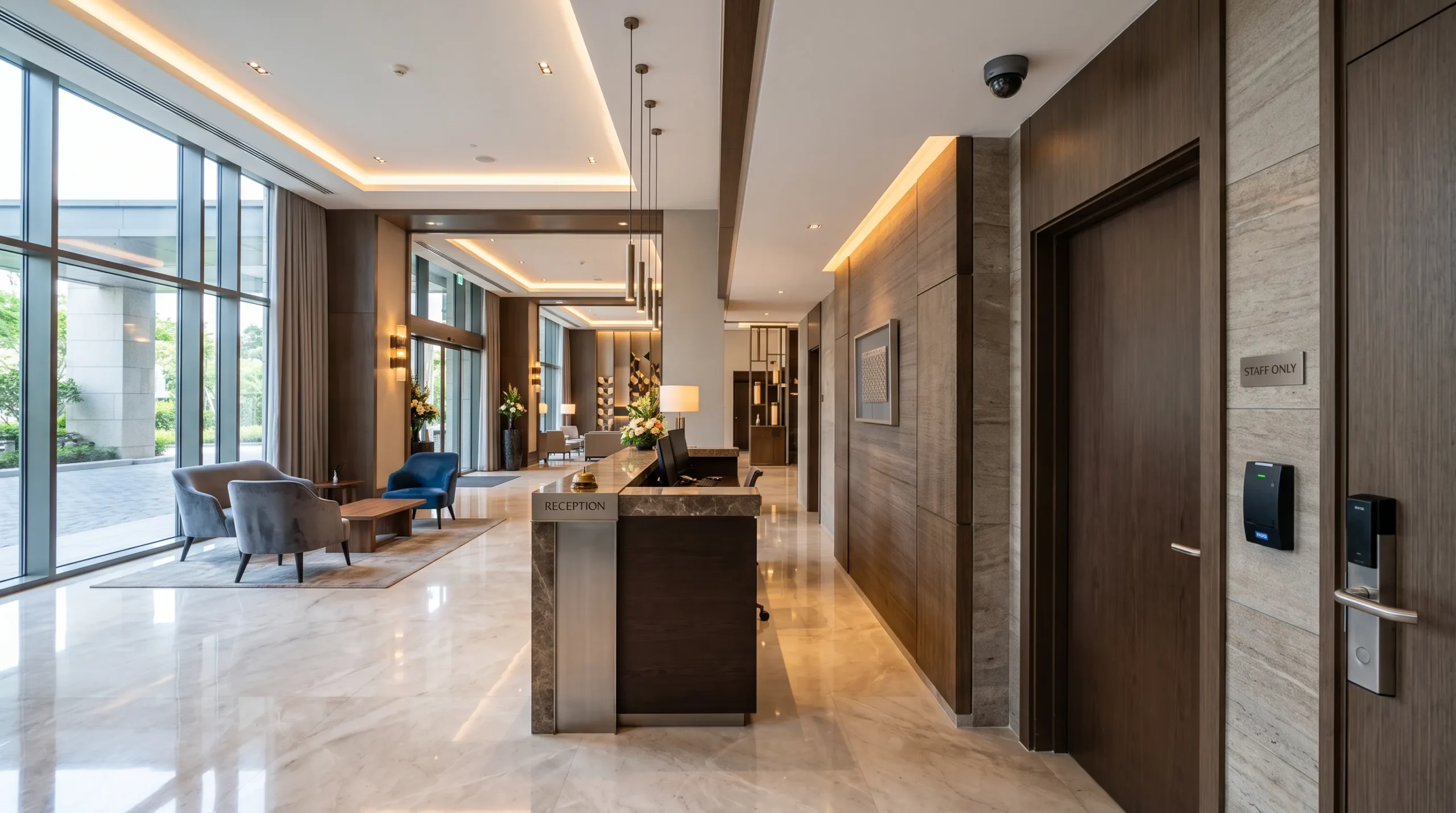
Hospitality security infrastructure combines multiple systems working together to manage guest and member access, protect property and assets, and maintain audit trails when incidents occur:
- Access control systems managing guest room keys, member credentials, staff access to back-of-house areas, and amenity restrictions based on membership tier or booking type.
- CCTV surveillance covering lobbies, corridors, parking areas, fitness floors, pool decks, and staff-only zones with video verification when access events or alarms trigger.
- Intrusion alarm systems protecting perimeter doors, emergency exits, equipment storage, and cash handling areas during and after operating hours.
- Intercom systems connecting front desk to guest rooms, staff areas, and emergency call points throughout the property. Gyms and smaller properties without a staffed front desk around the clock can add a virtual concierge system to handle visitor entry remotely.
- Telephone entry systems managing visitor access to secure areas and after-hours entry for authorized personnel.
- 24/7 monitoring services available as a paid add-on for intrusion detection, fire alarm monitoring connections, and CCTV event verification.
Managing Guest and Member Access
Hotels and fitness clubs issue temporary credentials to people who are not employees, creating access management requirements that differ from typical commercial facilities:
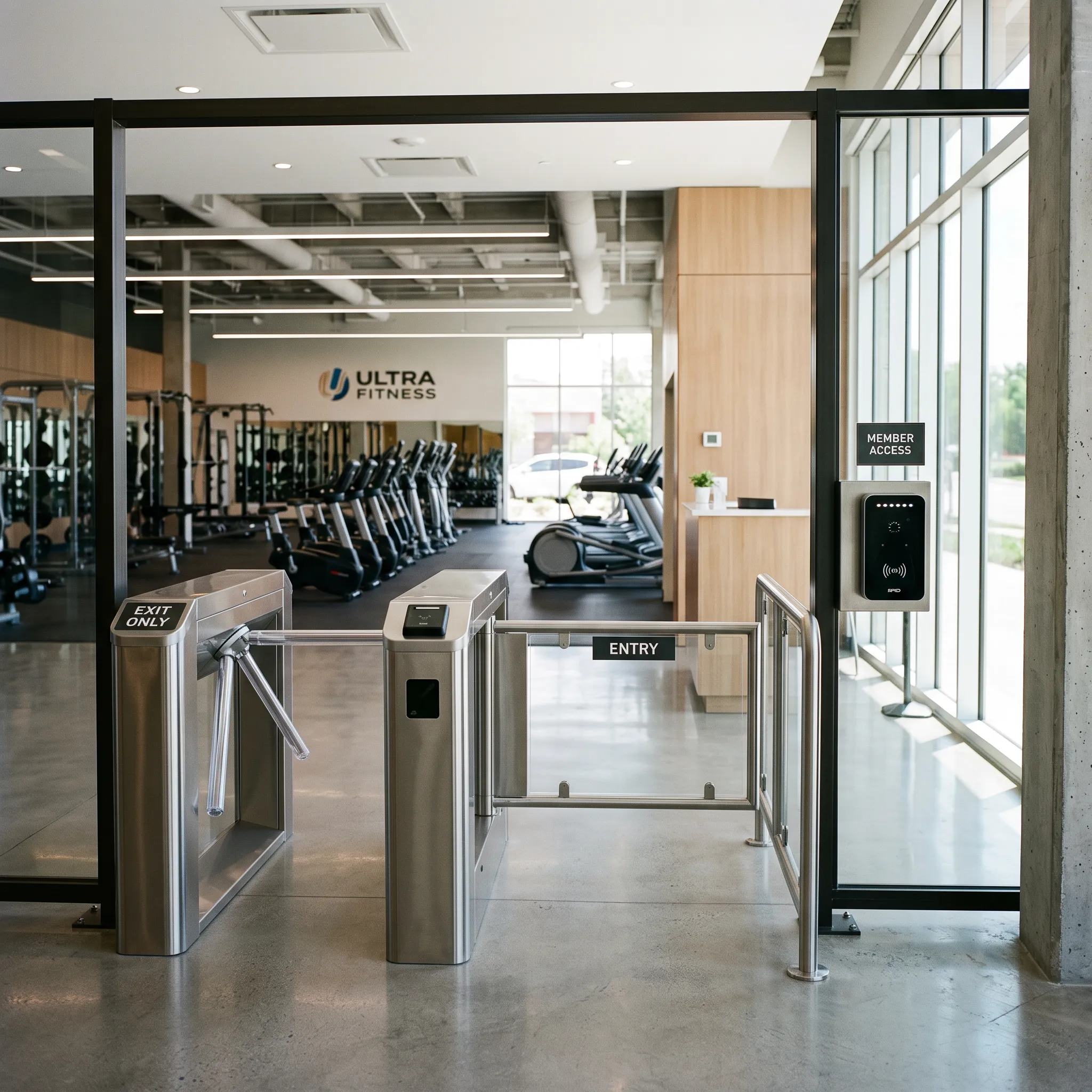
- Credential issuance and revocation at checkout or membership cancellation. Hotel room keys must deactivate automatically at checkout time. Gym membership cards must revoke immediately when a member cancels or their payment fails, preventing continued access to the facility.
- Unstaffed 24/7 gym access where members enter outside staffed hours. Fitness clubs operate with front desk staff during peak hours but rely entirely on automated access control during early morning, late evening, and overnight periods when no staff are present.
- Restricting members and guests to areas their membership or booking covers. Basic gym memberships grant access to the fitness floor but not group exercise studios or spa facilities. Hotel guests access their assigned floor but not executive lounges, conference areas, or other guest floors.
- Amenity areas requiring separate access rules. Pool decks, spa facilities, and rooftop terraces often require additional credential verification beyond basic building entry, particularly when these areas have separate operating hours or age restrictions.
- Audit trails when an incident occurs. When property goes missing from a guest room, when equipment disappears from a gym, or when an unauthorized person accesses a restricted area, operators need timestamped records showing who entered, when they entered, and which credential was used.
Protecting Staff-Only and Back-of-House Areas
EMPLOYEE ACCESS MANAGEMENT
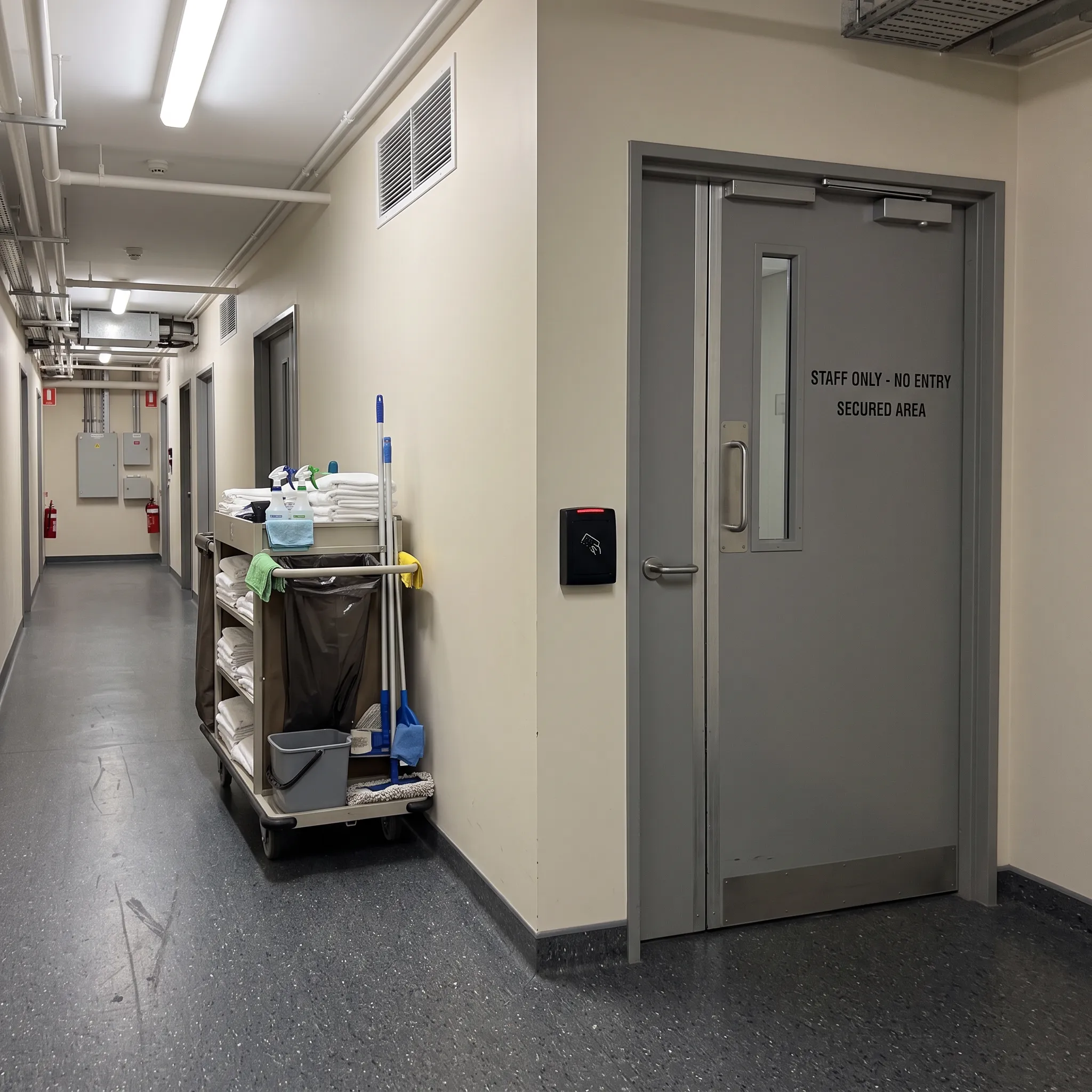
While guests and members access public areas, staff require controlled entry to back-of-house zones where operational assets, cash, and sensitive systems reside:
- Housekeeping and laundry areas storing cleaning supplies, linens, and equipment that must remain separate from guest and member spaces while allowing staff access throughout their shifts.
- Kitchens and stores in hotels with food service operations, where inventory control and health code compliance require restricting access to authorized kitchen staff only.
- Cash handling and reception back office where daily revenue, credit card terminals, and financial records require the highest level of access restriction with full audit trails.
- Plant and mechanical rooms housing mechanical equipment, electrical panels and water treatment systems that guests and members must never access.
- Staff entrances and lockers providing employee-only entry points separate from guest and member entrances, with locker room access restricted to current staff only.
- Managing access across shift patterns with high turnover. Hospitality staff work varied schedules across multiple shifts, and turnover rates run higher than most commercial sectors, requiring frequent credential updates and access level changes.
Why Hospitality Operators Choose a Single Accountable Partner
SECURITY AND CABLING UNDER ONE CONTRACT
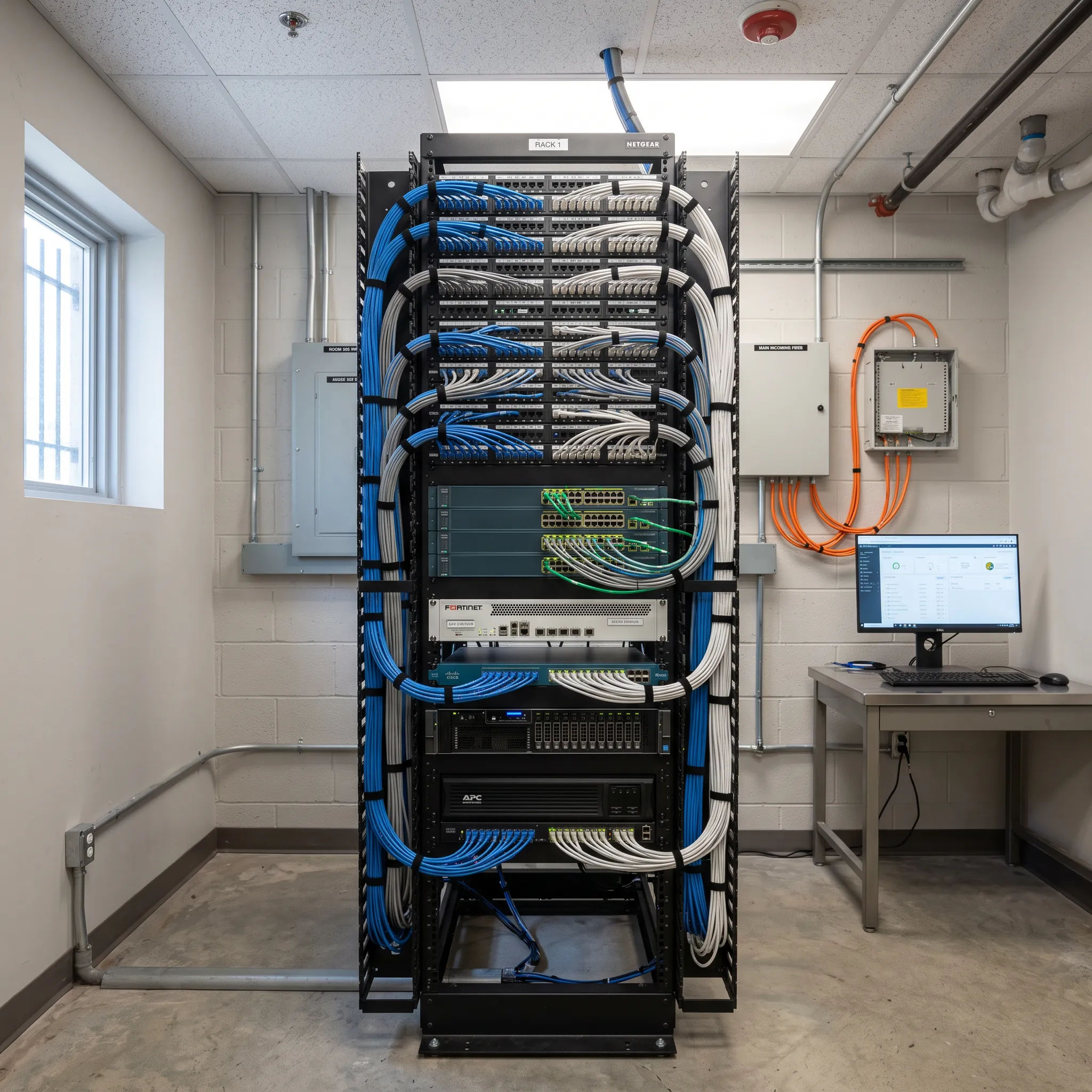
Most security contractors install cameras, access readers, and alarm panels but subcontract the cabling to a separate vendor. That creates two points of accountability when something goes wrong. Our model eliminates that entirely.
As both your security system installer and structured cabling contractor, we design camera locations, access reader placements, and cable routes together from the outset. The wiring is specified for the exact devices it will carry, with proper cable category, shielding, and routing to support both security systems and the network infrastructure behind guest wifi, property management systems, and booking terminals that hotels and gyms depend on.
Our manufacturer-authorized dealer status for Kantech, Uniview, Avigilon, DSC, and other commercial-grade brands means factory-backed warranties on every installation. Technicians receive manufacturer training on system programming, integration protocols, and ongoing maintenance for hospitality environments where system uptime directly affects guest experience and member satisfaction.
One infrastructure partner. One accountability chain. One warranty behind everything we install. That matters when your property operates 24/7 and downtime creates immediate operational impact.
How Long Does Hospitality Security Installation Take?
PROJECT TIMELINES & SCHEDULING
Single gym or fitness club
Access control for member entry, CCTV covering fitness floor and amenity areas, and intrusion detection for after-hours perimeter protection typically completes within 1–2 weeks including system commissioning and staff training.
Boutique hotel
Guest room access control, lobby and corridor surveillance, staff-only area protection, and integration with property management systems typically requires 2–3 weeks with phased deployment to minimize guest disruption.
Full-service hotel
Comprehensive security infrastructure covering multiple floors, amenity areas, parking facilities, back-of-house zones, and integrated monitoring typically requires 4–8 weeks with floor-by-floor deployment coordinated around occupancy levels.
Multi-property rollout
Standardized security configurations deployed across multiple hotel properties or gym locations with centralized management platforms and coordinated deployment schedules to maintain operational consistency.
Site assessment and system design typically require 3–5 days before installation begins. Camera placement, access reader locations, and cable routing are coordinated with your operational schedule to minimize disruption to guests and members. After-hours and weekend installation is standard for occupied properties, and every system installation includes commissioning, staff training and full documentation.
Client Testimonials
What Our Customers Have to Say




















Get a Quote for Your Hospitality Security System
READY TO START?
Every project starts with a site assessment. We’ll evaluate your property, identify guest and member access requirements, review back-of-house security needs, and provide a detailed scope covering systems, wiring, integration, and timeline. No obligation, no pressure.
Request a QuoteFrequently Asked Questions
Members enter using a credential, either a card, fob or mobile app, which is checked against their active membership before the door releases. Access can be restricted by membership tier and by time, so an off-peak member’s credential works during their hours and not outside them. Every entry is logged, so if an incident occurs you know exactly who was in the building. Cameras covering the entrance and floor give you the visual record alongside it.
Yes, and most hospitality work is done in operating properties. Cable routing uses existing pathways and service corridors, and installation is scheduled around occupancy, typically floor by floor or wing by wing during lower occupancy periods. Work in guest-facing areas can be scheduled overnight or during quieter times so guests are not disrupted.
Yes. The same structured cabling backbone carries guest wifi access points, property management and booking systems, point of sale terminals and the security infrastructure. Having one contractor design and install it means the network is specified for the full load the property carries, and there is a single point of contact when something needs attention.
Housekeeping stores, kitchens, laundry, cash offices, plant rooms and staff entrances are typically treated as separate zones with their own credential requirements, so an employee reaches the areas their role needs and nothing beyond. With high staff turnover in hospitality, credentials can be issued and revoked quickly without touching door hardware, and every entry stays logged against the individual.
The credential is deactivated from the management platform and stops working immediately. There is no need to recover a card or change a lock. For gyms with regular joiners and leavers this is usually where access control earns its cost, because the alternative is either chasing cards or accepting that former members can still get in.
Yes. Access rules are set per door and per credential group, so a standard member can reach the main floor and changing rooms while a premium member also reaches the pool or spa. In hotels, the same approach separates guest areas from staff-only areas, and can restrict amenity spaces to guests who have booked them.
Yes. Multi-property operators can standardise on one platform across every location, with centralised credential and video management and consistent access rules from site to site. Each property keeps its own door configuration while head office gets a unified view. Rollout is phased across the portfolio rather than done everywhere at once.
Camera placement in hospitality requires care. Public and circulation areas such as lobbies, corridors, entrances, parking and gym floors are normally appropriate. Changing rooms, washrooms, treatment rooms and guest room interiors are not. We map camera positions during the site assessment with those boundaries in mind and document the coverage so you have a clear record of what is and is not monitored.
1996–2026

Contact Us
Get in Touch with Ainger Cabling + Security
Find Us Online