
Security Audit Services for
Commercial Facilities
What is a Commercial Security Audit?
MANUFACTURER-AUTHORIZED SECURITY ASSESSMENTS
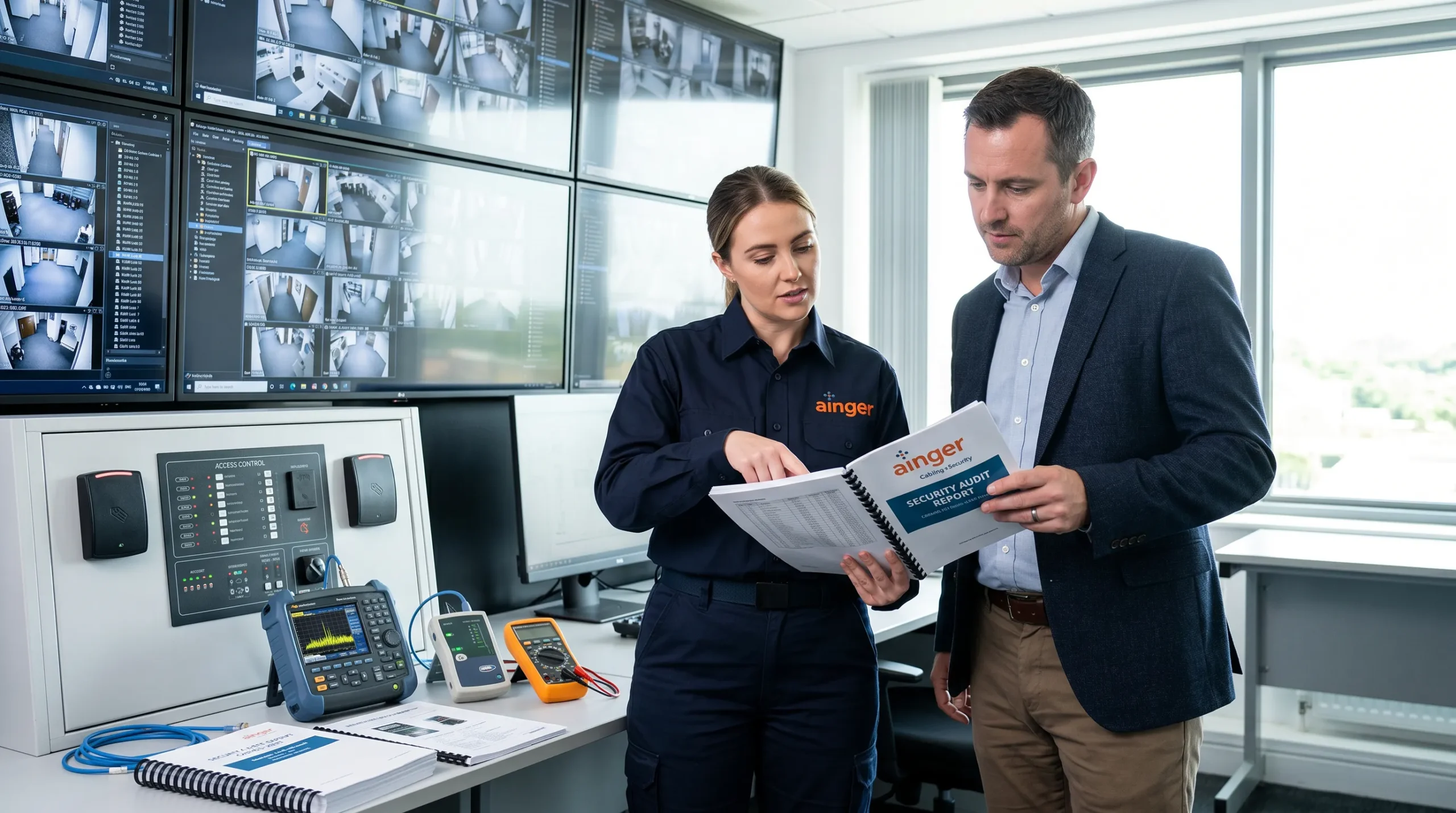
A security audit is a systematic evaluation of your facility’s physical security infrastructure, including access control, CCTV surveillance, intrusion detection, fire alarm systems, and structured cabling, to identify vulnerabilities, verify compliance with industry standards, and ensure systems work reliably from day one. Ainger Cabling + Security provides manufacturer-authorized security audits for commercial clients across Canada and the United States, serving facility managers, property directors, and business owners who need accountable assessments of their security infrastructure.
With 30+ years serving commercial clients and authorized dealer status for Kantech, Uniview, DSC, Avigilon, Salto, Mircom, and six other commercial security brands, our audits deliver factory-backed recommendations grounded in operational reliability standards. Unlike residential security assessments or IT-only audits, commercial security audits evaluate both physical security devices and the structured cabling infrastructure that connects them, ensuring compliance with commercial building codes, NFPA standards, and industry-specific regulations.
Every audit verifies that installed systems meet manufacturer specifications and warranty requirements, giving you documentation that protects your investment and reduces liability exposure. Whether you need compliance verification for insurance requirements, pre-acquisition due diligence, or post-incident investigation, our manufacturer-authorized approach ensures you receive accurate assessments backed by factory engineering support.
Why Commercial Facilities Need Security Audits
Commercial security audits serve multiple business-critical functions beyond basic system verification. They provide documented evidence of compliance, reduce liability exposure, and identify operational risks before they cause downtime or security incidents:
- Compliance verification confirms systems meet NFPA fire alarm codes, building codes, accessibility standards, and industry-specific regulations required for your facility type.
- Insurance requirements are satisfied with documented security audits that many commercial property insurers require for liability coverage.
- Liability reduction comes from identifying gaps in access control, surveillance coverage, or emergency response systems before incidents occur.
- System reliability validation verifies that installed systems work reliably from day one and meet manufacturer specifications.
- Vendor accountability through third-party audits reveals installation defects, warranty violations, or non-compliant work by previous contractors.
- Operational uptime improves when audits catch failing components, outdated firmware, or misconfigured systems before they cause downtime.
- Multi-tenant property management benefits from standardized security infrastructure across portfolio properties with verified tenant compliance.
- Pre-acquisition due diligence assesses security infrastructure condition before purchasing commercial property, protecting your investment.
Types of Security Audits We Perform
Our security audit services cover every component of commercial security infrastructure, from individual subsystems to fully integrated platforms:
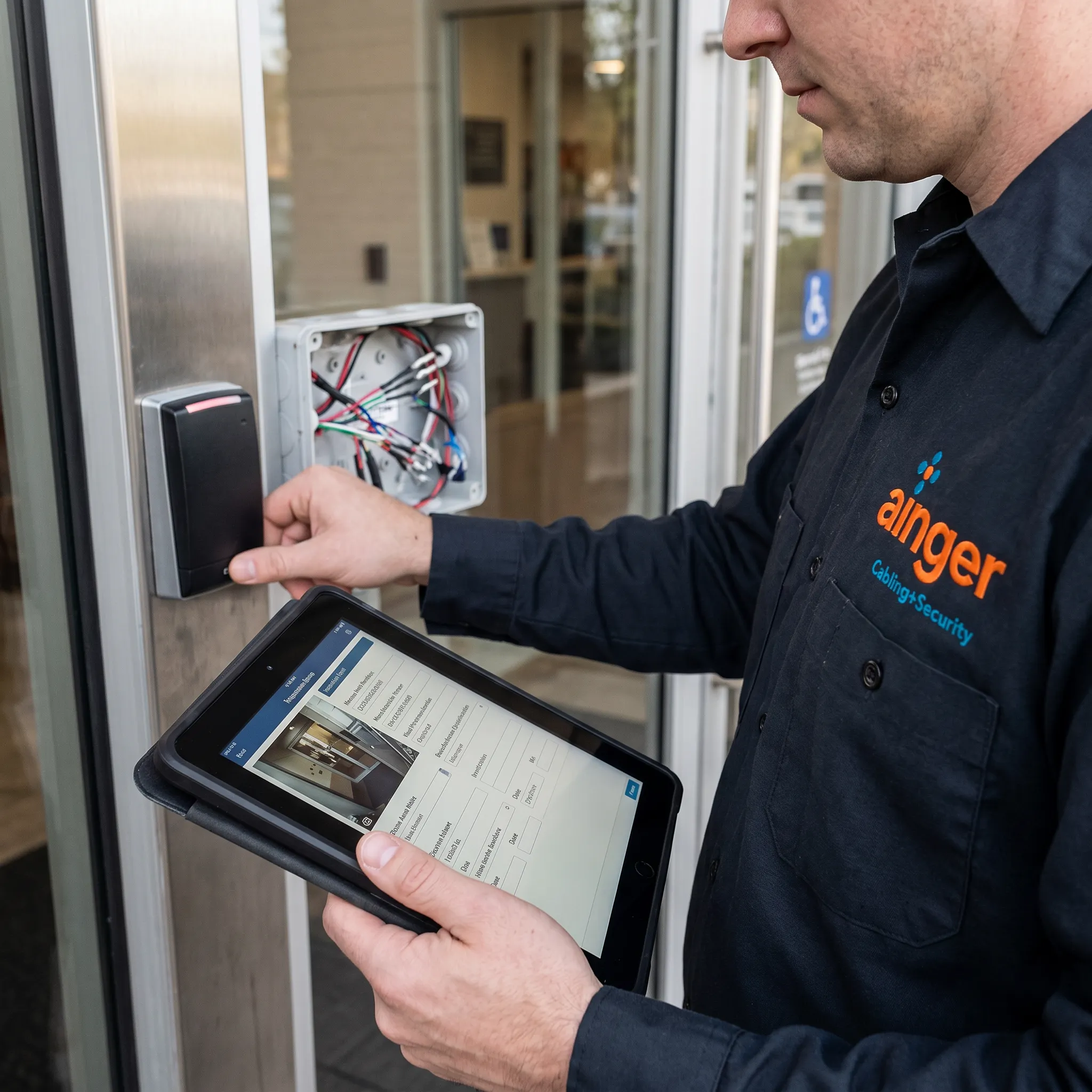
- Access control system audit evaluates card readers, biometric devices, electronic locks, access panels, credential management, and integration with building management systems.
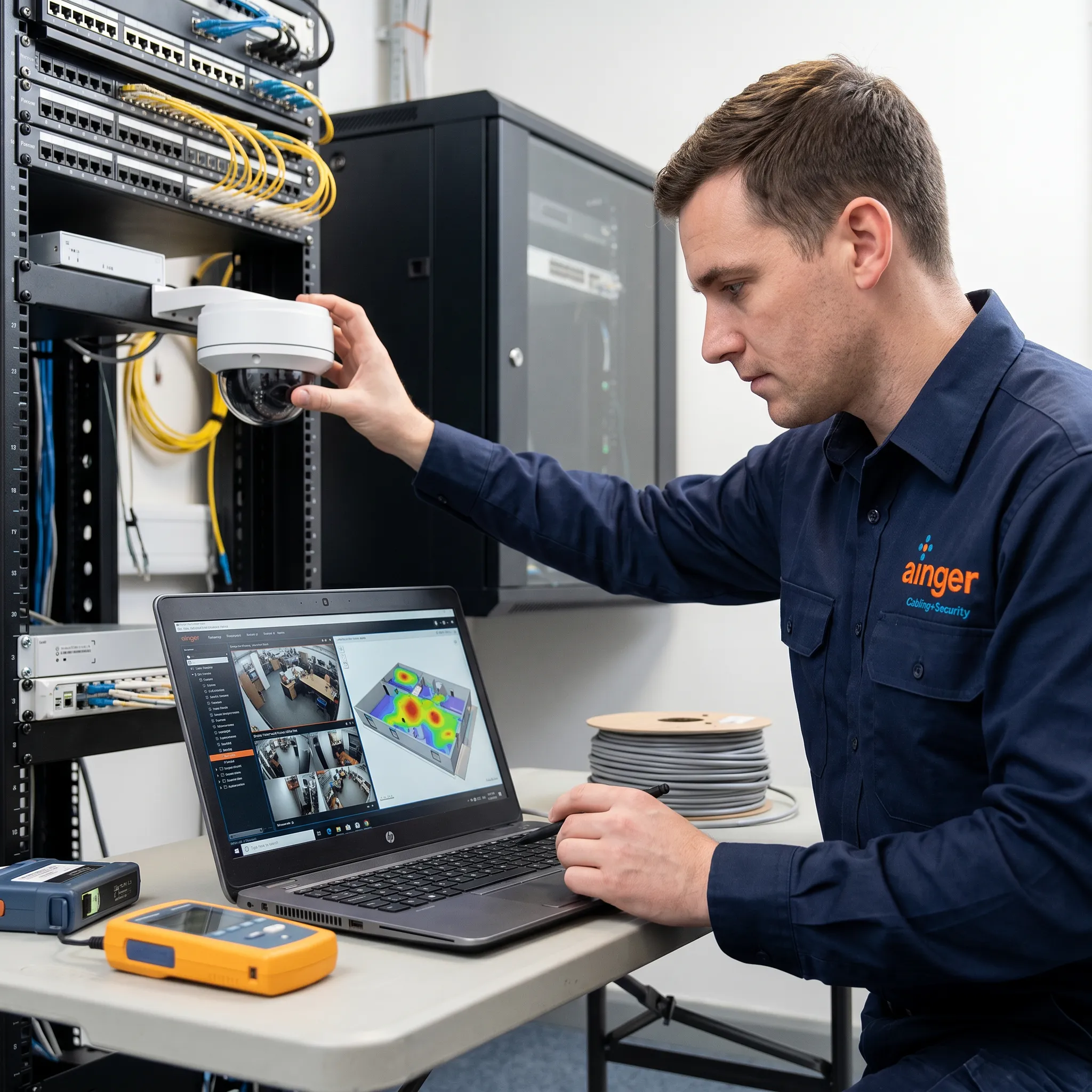
- CCTV surveillance audit assesses camera coverage, recording quality, storage capacity, network bandwidth, remote viewing capability, and compliance with privacy regulations.
- Intrusion detection audit tests sensors, control panels, monitoring connections, response protocols, and integration with access control.
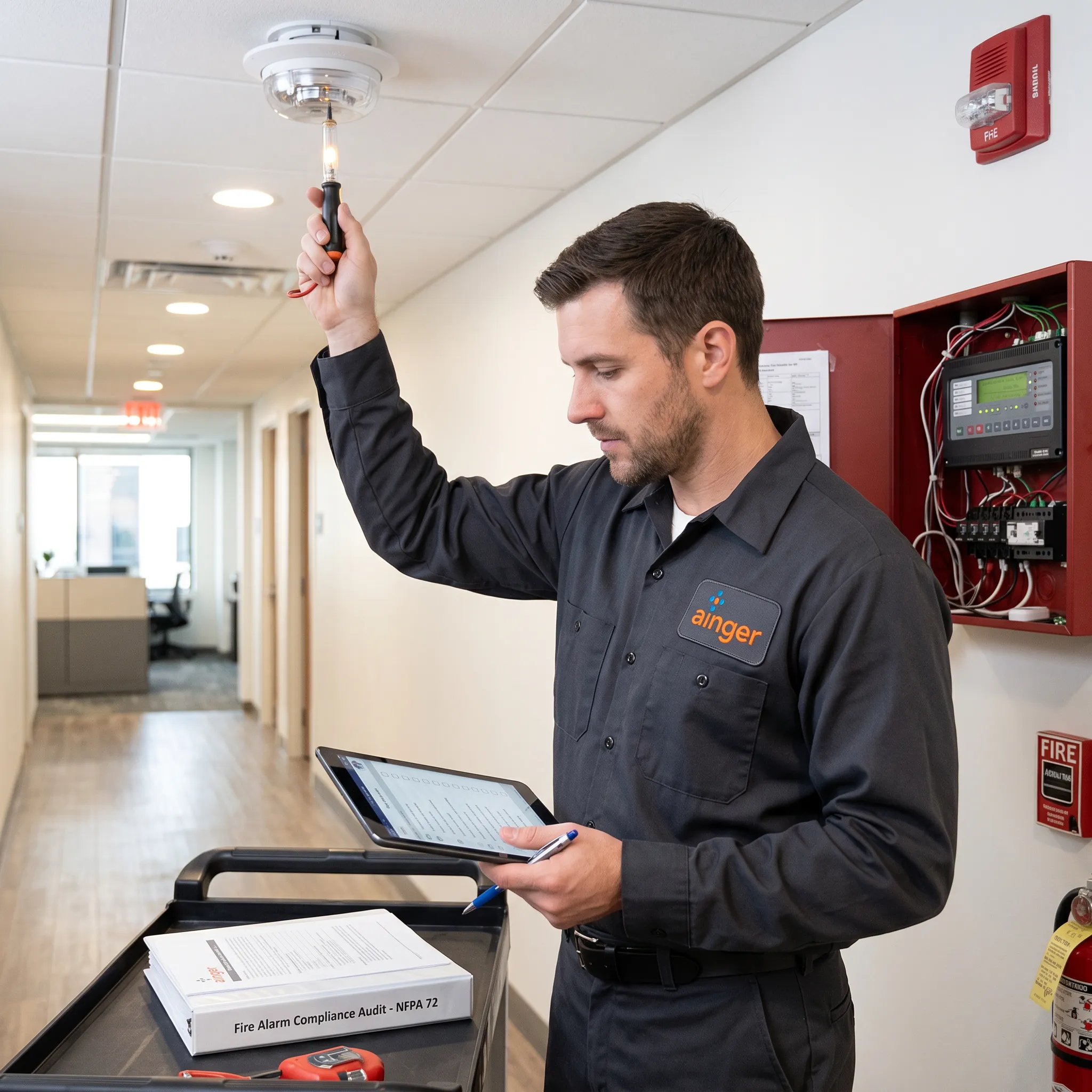
- Fire alarm system audit verifies NFPA compliance, tests devices, inspects notification appliances, reviews monitoring connections, and validates emergency response protocols.
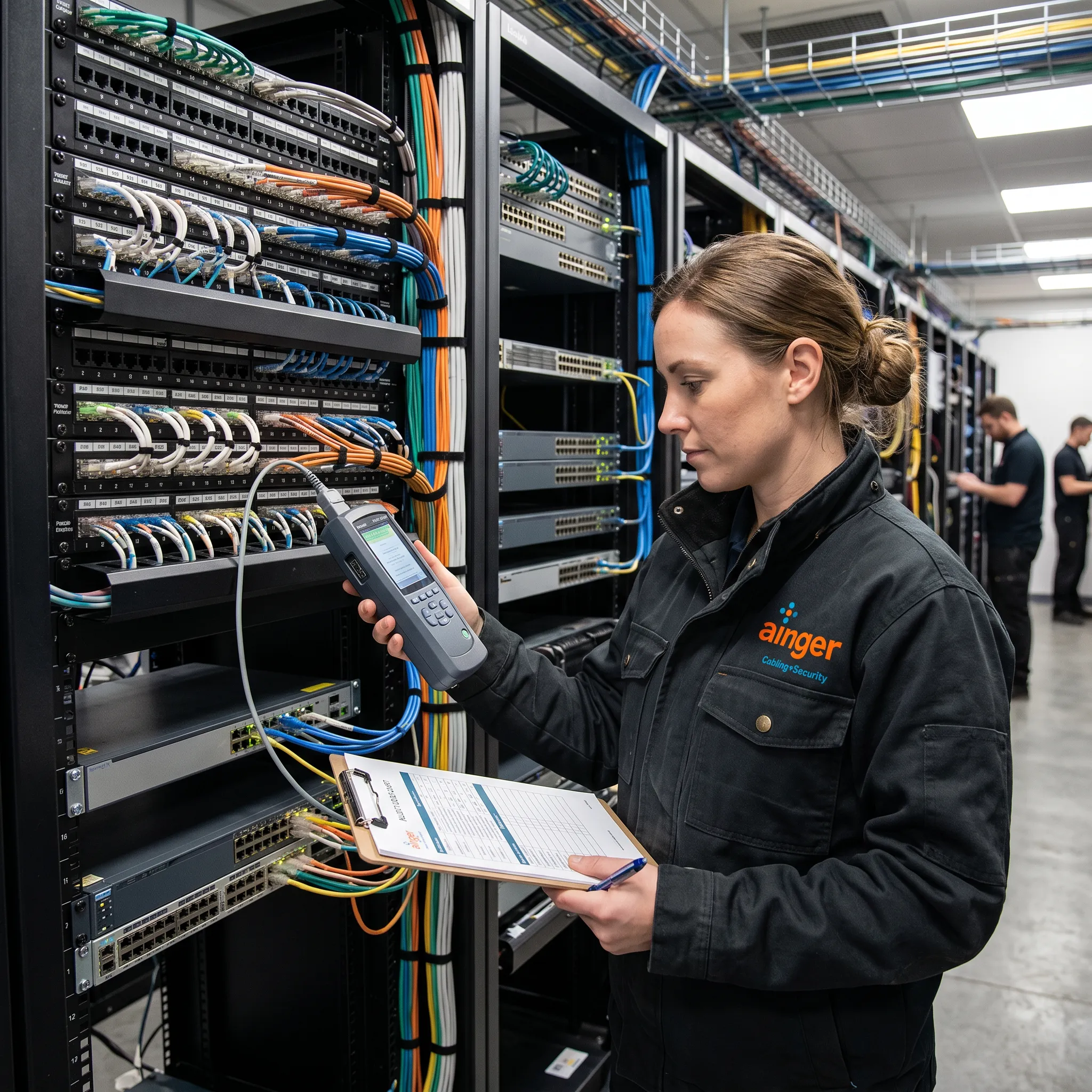
- Structured cabling audit evaluates data, voice, and fiber optic infrastructure supporting security systems; identifies cable faults, labeling gaps, and capacity constraints.
- Intercom and video door entry audit tests communication devices, assesses coverage, verifies integration with access control.
- Perimeter security audit evaluates outdoor cameras, motion sensors, lighting integration, and fence line monitoring.
- Integrated system audit assesses how access control, CCTV, intrusion detection, and fire alarms work together as a unified security infrastructure.
- Compliance audit verifies systems meet industry-specific standards including healthcare privacy compliance (PHIPA, HIPAA), retail PCI DSS, and accessibility standards (AODA, ADA).
Our Security Audit Process
MANUFACTURER-AUTHORIZED METHODOLOGY
Every security audit follows a systematic methodology designed to identify vulnerabilities, verify compliance, and deliver actionable recommendations:
- Pre-audit consultation reviews facility type, security concerns, compliance requirements, and existing system documentation.
- On-site system inventory documents all security devices, control panels, structured cabling, and network infrastructure with manufacturer models and installation dates.
- Physical inspection tests access control readers, cameras, sensors, alarms, and emergency call boxes; inspects cable terminations, power supplies, and network connections.
- Functional testing simulates access events, alarm triggers, and emergency scenarios; verifies monitoring connections and response protocols.
- Compliance verification compares installed systems against NFPA codes, building codes, manufacturer specifications, and industry-specific regulations.
- Vulnerability identification pinpoints coverage gaps, single points of failure, outdated firmware, misconfigured devices, and warranty violations.
- Documentation review assesses system manuals, as-built drawings, maintenance records, and training documentation.
- Audit report delivery provides written findings with prioritized recommendations, compliance status, and remediation timelines.
- Remediation planning outlines corrective actions, equipment upgrades, and maintenance requirements to address identified gaps.
- Follow-up verification re-tests systems after remediation to confirm issues are resolved and systems work reliably.
What Our Security Audits Include
COMPREHENSIVE AUDIT DELIVERABLES
Every security audit delivers documented findings that give you a complete understanding of your security infrastructure condition and compliance status. Our audit reports include comprehensive system inventory with all security devices, control panels, and structured cabling infrastructure documented by manufacturer model and serial number.
Functional test results provide pass/fail status for each device with photos and notes on deficiencies. Compliance assessment verifies systems against NFPA fire alarm codes, building codes, accessibility standards, and industry-specific regulations. Vulnerability reports prioritize security gaps, coverage blind spots, and system weaknesses with specific remediation recommendations.
Manufacturer specification verification confirms that installed equipment meets factory standards and warranty requirements for authorized brands. Integration evaluation assesses how access control, CCTV, intrusion detection, and fire alarms work together. Maintenance plan recommendations suggest inspection schedules, firmware update protocols, and preventive maintenance tasks to keep systems operating reliably.
How Often Should Commercial Facilities Conduct Security Audits?
AUDIT FREQUENCY RECOMMENDATIONS
Annual audits
Recommended for healthcare facilities, schools, daycare centers, and multi-tenant properties with high liability exposure requiring documented compliance verification.
Biennial audits
Standard for commercial offices, warehouses, retail stores, and hospitality properties with stable operations and lower regulatory requirements.
Post-incident audits
Required after security breaches, fire alarm failures, or access control compromises to identify root causes and prevent recurrence.
Pre-acquisition audits
Essential before purchasing commercial property to assess security infrastructure condition, compliance status, and remediation costs.
Post-renovation audits are necessary after tenant improvements, building expansions, or system upgrades to verify compliance and integration. Insurance-mandated audits may be required every 2-3 years for liability coverage depending on your commercial property insurer. Continuous monitoring with 24/7 live surveillance and quarterly system health reports can supplement periodic audits for high-security facilities.
Client Testimonials
What Our Customers Have to Say



















Schedule Your Commercial Security Audit
MANUFACTURER-AUTHORIZED ASSESSMENTS
Every security audit begins with a consultation to understand your facility requirements, compliance concerns, and audit objectives. We’ll schedule on-site inspection at your convenience and deliver a comprehensive audit report within 5-7 business days. Contact us to discuss your security audit needs.
Request an Audit ProposalFrequently Asked Questions
Audit duration depends on facility size and system complexity, typically ranging from half a day for small offices to several days for large multi-building campuses. Our team schedules audits to minimize disruption to your operations, often conducting inspections during off-hours or in phases. You’ll receive a detailed timeline during the pre-audit consultation based on your specific facility requirements.
Our audit report prioritizes identified vulnerabilities with specific remediation recommendations and suggested timelines for corrective action. You can choose to address issues with your existing contractor, handle them internally, or engage our team for remediation services. We also offer follow-up verification testing to confirm that corrective actions successfully resolve the identified gaps.
Yes, our manufacturer-authorized audits provide documented compliance verification that satisfies most commercial property insurance requirements and regulatory standards. We verify systems against NFPA codes, building codes, and industry-specific regulations relevant to your facility type. Our detailed reports include the technical documentation and compliance certifications that insurers and regulatory agencies typically require.
Yes, we perform third-party audits on systems installed by any contractor, regardless of the original installer. Our manufacturer-authorized status with major commercial brands allows us to verify whether installations meet factory specifications and warranty requirements. Third-party audits often reveal installation defects, non-compliant work, or warranty violations that the original contractor may have overlooked.
We request existing system documentation including as-built drawings, equipment manuals, maintenance records, and previous inspection reports if available. If documentation is incomplete or missing, our audit process includes creating a comprehensive system inventory from scratch. Having original installation records helps us verify warranty compliance and manufacturer specifications more efficiently.
Our audits focus on physical security infrastructure including access control, CCTV, intrusion detection, fire alarms, and the structured cabling that connects them. While we assess network connectivity and basic device security settings for IP-based systems, comprehensive cybersecurity assessments require specialized IT security expertise. We evaluate how physical security systems integrate with your network infrastructure and identify basic vulnerabilities in device configurations.

Contact Us
Get in Touch with Ainger Cabling + Security
Find Us Online
1996–2026
Types of Security Audits We Perform
Our security audit services cover every component of commercial security infrastructure, from individual subsystems to fully integrated platforms:
- Access control system audit evaluates card readers, biometric devices, electronic locks, access panels, credential management, and integration with building management systems.
- CCTV surveillance audit assesses camera coverage, recording quality, storage capacity, network bandwidth, remote viewing capability, and compliance with privacy regulations.
- Intrusion detection audit tests sensors, control panels, monitoring connections, response protocols, and integration with access control.
- Fire alarm system audit verifies NFPA compliance, tests devices, inspects notification appliances, reviews monitoring connections, and validates emergency response protocols.
- Structured cabling audit evaluates data, voice, and fiber optic infrastructure supporting security systems; identifies cable faults, labeling gaps, and capacity constraints.
- Intercom and video door entry audit tests communication devices, assesses coverage, verifies integration with access control.
- Perimeter security audit evaluates outdoor cameras, motion sensors, lighting integration, and fence line monitoring.
- Integrated system audit assesses how access control, CCTV, intrusion detection, and fire alarms work together as a unified security infrastructure.
- Compliance audit verifies systems meet industry-specific standards including healthcare privacy compliance (PHIPA, HIPAA), retail PCI DSS, and accessibility standards (AODA, ADA).
Our Security Audit Process
MANUFACTURER-AUTHORIZED METHODOLOGY
Every security audit follows a systematic methodology designed to identify vulnerabilities, verify compliance, and deliver actionable recommendations:
- Pre-audit consultation reviews facility type, security concerns, compliance requirements, and existing system documentation.
- On-site system inventory documents all security devices, control panels, structured cabling, and network infrastructure with manufacturer models and installation dates.
- Physical inspection tests access control readers, cameras, sensors, alarms, and emergency call boxes; inspects cable terminations, power supplies, and network connections.
- Functional testing simulates access events, alarm triggers, and emergency scenarios; verifies monitoring connections and response protocols.
- Compliance verification compares installed systems against NFPA codes, building codes, manufacturer specifications, and industry-specific regulations.
- Vulnerability identification pinpoints coverage gaps, single points of failure, outdated firmware, misconfigured devices, and warranty violations.
- Documentation review assesses system manuals, as-built drawings, maintenance records, and training documentation.
- Audit report delivery provides written findings with prioritized recommendations, compliance status, and remediation timelines.
- Remediation planning outlines corrective actions, equipment upgrades, and maintenance requirements to address identified gaps.
- Follow-up verification re-tests systems after remediation to confirm issues are resolved and systems work reliably.
What Our Security Audits Include
COMPREHENSIVE AUDIT DELIVERABLES
Every security audit delivers documented findings that give you a complete understanding of your security infrastructure condition and compliance status. Our audit reports include comprehensive system inventory with all security devices, control panels, and structured cabling infrastructure documented by manufacturer model and serial number.
Functional test results provide pass/fail status for each device with photos and notes on deficiencies. Compliance assessment verifies systems against NFPA fire alarm codes, building codes, accessibility standards, and industry-specific regulations. Vulnerability reports prioritize security gaps, coverage blind spots, and system weaknesses with specific remediation recommendations.
Manufacturer specification verification confirms that installed equipment meets factory standards and warranty requirements for authorized brands. Integration evaluation assesses how access control, CCTV, intrusion detection, and fire alarms work together. Maintenance plan recommendations suggest inspection schedules, firmware update protocols, and preventive maintenance tasks to keep systems operating reliably.
How Often Should Commercial Facilities Conduct Security Audits?
AUDIT FREQUENCY RECOMMENDATIONS
Annual audits
Recommended for healthcare facilities, schools, daycare centers, and multi-tenant properties with high liability exposure requiring documented compliance verification.
Biennial audits
Standard for commercial offices, warehouses, retail stores, and hospitality properties with stable operations and lower regulatory requirements.
Post-incident audits
Required after security breaches, fire alarm failures, or access control compromises to identify root causes and prevent recurrence.
Pre-acquisition audits
Essential before purchasing commercial property to assess security infrastructure condition, compliance status, and remediation costs.
Post-renovation audits are necessary after tenant improvements, building expansions, or system upgrades to verify compliance and integration. Insurance-mandated audits may be required every 2-3 years for liability coverage depending on your commercial property insurer. Continuous monitoring with 24/7 live surveillance and quarterly system health reports can supplement periodic audits for high-security facilities.
Client Testimonials
What Our Customers Have to Say
Schedule Your Commercial Security Audit
MANUFACTURER-AUTHORIZED ASSESSMENTS
Every security audit begins with a consultation to understand your facility requirements, compliance concerns, and audit objectives. We’ll schedule on-site inspection at your convenience and deliver a comprehensive audit report within 5-7 business days. Contact us to discuss your security audit needs.
Request an Audit ProposalFrequently Asked Questions
Audit duration depends on facility size and system complexity, typically ranging from half a day for small offices to several days for large multi-building campuses. Our team schedules audits to minimize disruption to your operations, often conducting inspections during off-hours or in phases. You’ll receive a detailed timeline during the pre-audit consultation based on your specific facility requirements.
Our audit report prioritizes identified vulnerabilities with specific remediation recommendations and suggested timelines for corrective action. You can choose to address issues with your existing contractor, handle them internally, or engage our team for remediation services. We also offer follow-up verification testing to confirm that corrective actions successfully resolve the identified gaps.
Yes, our manufacturer-authorized audits provide documented compliance verification that satisfies most commercial property insurance requirements and regulatory standards. We verify systems against NFPA codes, building codes, and industry-specific regulations relevant to your facility type. Our detailed reports include the technical documentation and compliance certifications that insurers and regulatory agencies typically require.
Yes, we perform third-party audits on systems installed by any contractor, regardless of the original installer. Our manufacturer-authorized status with major commercial brands allows us to verify whether installations meet factory specifications and warranty requirements. Third-party audits often reveal installation defects, non-compliant work, or warranty violations that the original contractor may have overlooked.
We request existing system documentation including as-built drawings, equipment manuals, maintenance records, and previous inspection reports if available. If documentation is incomplete or missing, our audit process includes creating a comprehensive system inventory from scratch. Having original installation records helps us verify warranty compliance and manufacturer specifications more efficiently.
Our audits focus on physical security infrastructure including access control, CCTV, intrusion detection, fire alarms, and the structured cabling that connects them. While we assess network connectivity and basic device security settings for IP-based systems, comprehensive cybersecurity assessments require specialized IT security expertise. We evaluate how physical security systems integrate with your network infrastructure and identify basic vulnerabilities in device configurations.
Contact Us
Get in Touch with Ainger Cabling + Security
Find Us Online