

Structured Cabling
Structured Cabling Systems: Standards, Testing, and Certification Requirements Explained

When we install structured cabling in a commercial building, the cables themselves are only part of what we’re delivering. The other half—the part that separates professional infrastructure work from guesswork—is documentation that proves every cable run actually performs to published industry standards. We’re talking about certification: a systematic testing and documentation process that validates your investment will support the applications you need today and the upgrades you’ll want tomorrow. For facility managers and property directors managing commercial buildings across Canada and the United States, understanding what certification means, what it includes, and how to verify you’ve received it isn’t optional technical knowledge. It’s the difference between owning infrastructure documentation that protects your building for decades and owning a box of cables with no proof they work correctly.
Who This Article Is For (And Who It Isn’t)
This article is written for commercial decision-makers—facility managers, property directors, building owners, and IT directors—who are planning or evaluating structured cabling infrastructure projects. If you’re responsible for new construction cabling, tenant fit-outs, network infrastructure upgrades, or any project where cabling will support business operations, the certification process we’re describing here applies directly to your work.
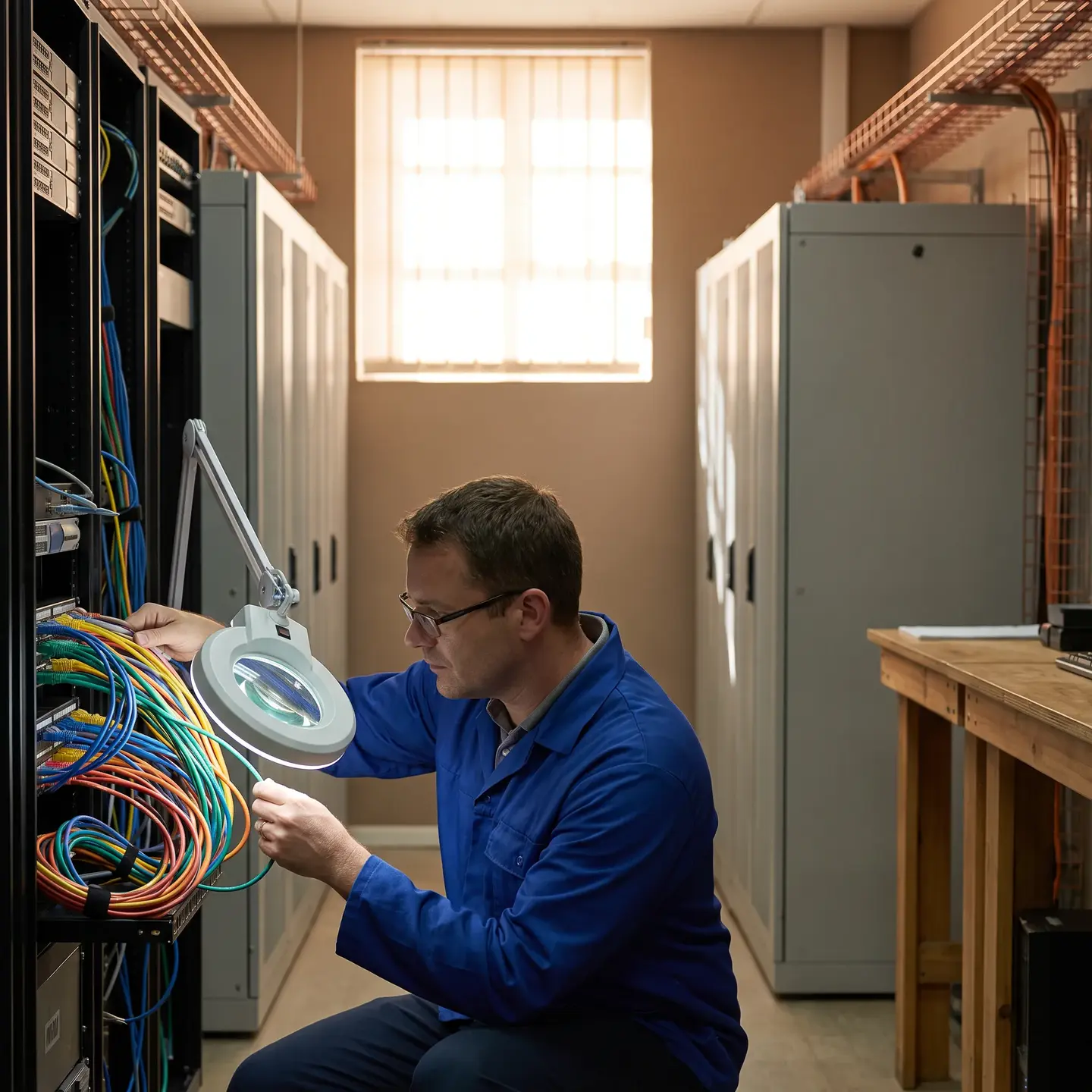
This isn’t written for residential projects or DIY installations. We’re also not covering security-specific wiring like alarm circuits or camera cabling here—that’s a separate topic with its own requirements. Our focus is commercial structured cabling: the horizontal and backbone cabling that connects network equipment throughout your facility.
TIA and ISO Cabling Standards: What They Actually Require
Two families of standards govern commercial structured cabling installations in North America and internationally. Understanding what they specify helps you recognize what “standards-compliant installation” actually means when a contractor uses that phrase.
ANSI/TIA-568: The North American Standard
The TIA telecommunications standards published by the Telecommunications Industry Association define requirements for commercial building cabling in North America. ANSI/TIA-568 specifies:
- Cable categories — Performance grades (Category 5e, 6, 6A, etc.) with defined frequency ranges and transmission characteristics
- Installation practices — Maximum cable lengths, bend radius requirements, termination methods, and testing procedures
- Performance parameters — Measurable specifications like insertion loss, return loss, and crosstalk that every installed cable must meet
When we say a cable run is “TIA-compliant,” we mean it’s been installed according to these documented requirements and tested to verify it meets the specified performance thresholds.
ISO/IEC 11801: The International Framework
The ISO/IEC 11801 cabling standards provide an international framework that parallels and largely aligns with TIA standards. For projects in Canada serving multinational organizations or requiring international compliance, ISO/IEC 11801 may be the specified standard. The performance parameters are similar, though terminology and some testing requirements differ slightly.
Why These Parameters Matter for Network Reliability
The specific parameters these standards measure aren’t arbitrary technical specifications. Each one correlates directly with network performance issues you’d experience in daily operations:
- Insertion loss — Measures signal strength reduction as data travels through the cable. Excessive insertion loss causes packet errors and retransmissions, slowing your network.
- Return loss — Measures signal reflection caused by impedance mismatches. Poor return loss creates interference that degrades transmission quality.
- Near-End Crosstalk (NEXT) — Measures interference between wire pairs within the same cable. High crosstalk corrupts data and forces retransmissions.
- Alien Crosstalk (ANEXT) — Measures interference between adjacent cables. Critical in high-density installations where cable bundles are tightly packed.
A cable that “looks installed correctly” might still fail these parameters due to issues invisible to visual inspection. That’s why testing matters.
Testing vs. Certification: Understanding the Critical Difference
We frequently encounter confusion between cable testing and cable certification. They’re related but not the same thing, and the distinction matters for what you should expect from your contractor.
Basic Testing: Necessary but Insufficient
Basic cable testing typically involves:
- Continuity testing — Verifying electrical connection exists between endpoints
- Wire map testing — Confirming correct pin-to-pin connections
- Length measurement — Checking that cables don’t exceed maximum distance specifications
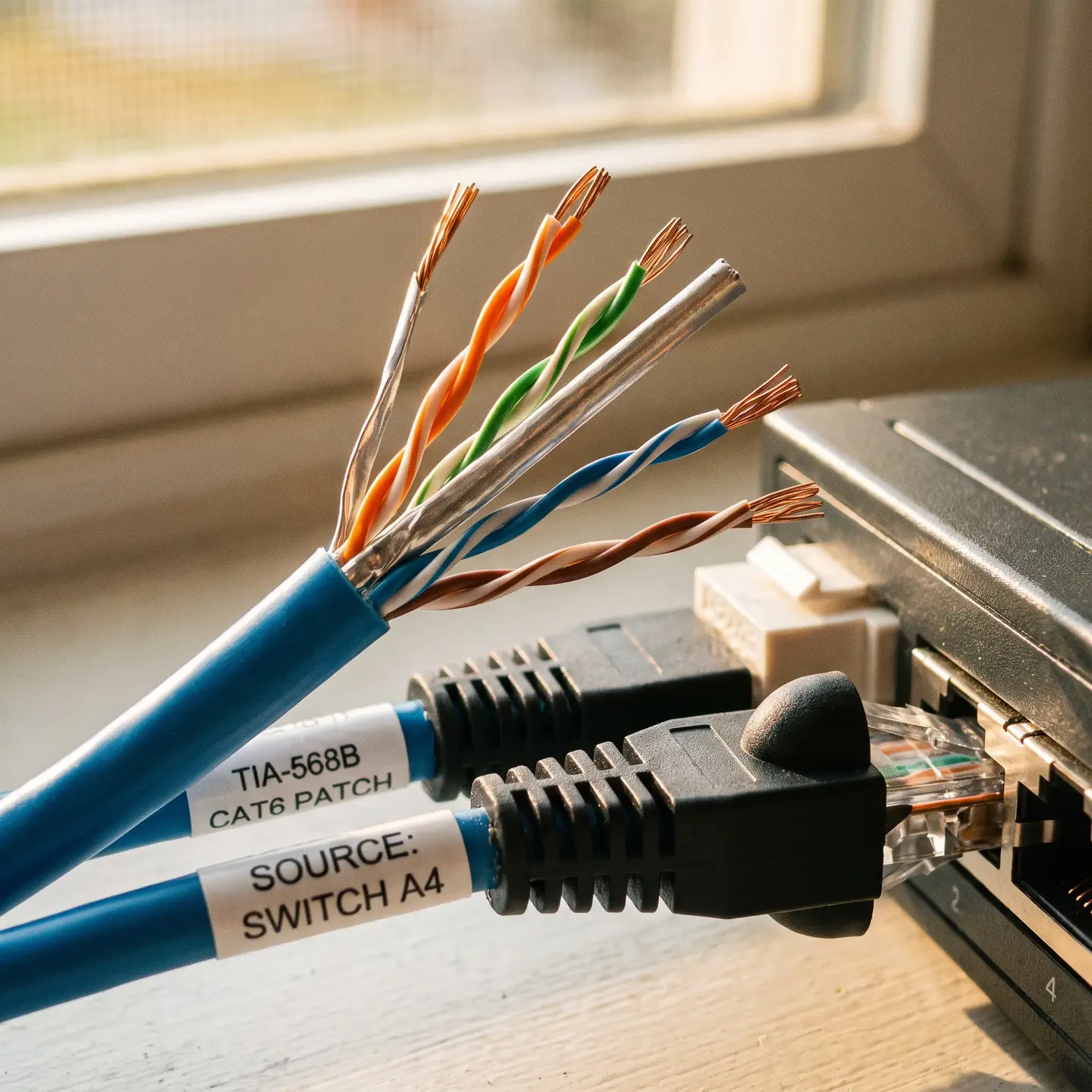
These tests confirm that cables are physically connected correctly. What they don’t tell you is whether those cables will actually support your network applications at full performance. A cable can pass continuity testing while failing insertion loss requirements—meaning it’s connected but won’t reliably carry data at rated speeds.
Certification: The Complete Performance Picture
True certification uses professional-grade cable certification testing equipment that measures all the performance parameters specified in TIA or ISO standards. Certification testing:
- Measures actual performance values for every specified parameter
- Compares results against published standards thresholds
- Documents pass/fail status with specific margin information
- Creates permanent records for every cable run in the installation
The equipment required for certification testing represents a significant investment—professional certification testers cost thousands of dollars and require regular calibration. This is one reason why contractors who actually perform proper certification charge appropriately for that service.
What a Cable Certification Report Must Include
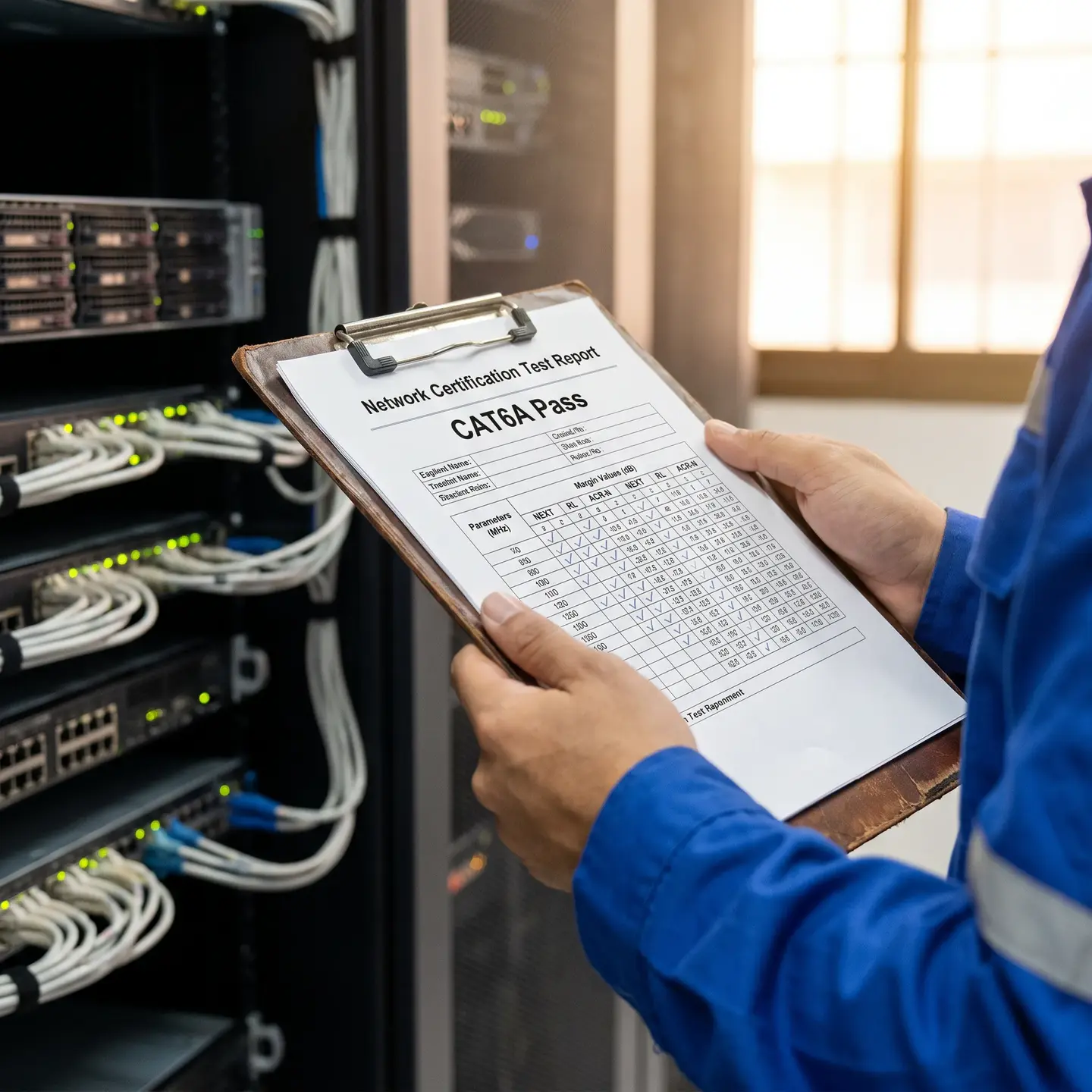
When you receive certification documentation from your cabling contractor, you should be reviewing a comprehensive report, not a summary statement. Here’s what complete certification documentation includes:
Essential Report Components
- Cable identification — Every tested cable run identified by a unique label matching your building’s cable schedule
- Pass/fail status — Clear indication that each cable passed all required tests for the specified standard (TIA-568, ISO 11801, etc.)
- Individual parameter results — Measured values for insertion loss, return loss, NEXT, and other applicable parameters
- Performance margin — How much headroom exists between measured performance and the minimum passing threshold
- Test equipment information — Make, model, and serial number of the certification tester used
- Calibration date — Confirmation that test equipment was properly calibrated before testing
- Test standard reference — Which standard and category the cables were certified against
- Technician identification — Who performed the testing
- Test date — When certification testing was completed
Understanding Performance Margin
Performance margin is particularly important for facility managers planning for the future. If a certification report shows a cable run passes with 2dB of margin on insertion loss, that cable just barely meets requirements. A run with 8dB of margin has significant headroom, which matters when:
- Network equipment upgrades may push cables harder
- Environmental changes (temperature variations, additional cables in pathways) affect performance over time
- Future troubleshooting needs baseline data to identify degradation
Cables with minimal margin are technically compliant but represent higher risk for future issues.
Common Installation Defects That Testing Catches
Professional certification testing catches installation problems that visual inspection cannot detect. Understanding these defects helps explain why certification isn’t just paperwork—it’s quality verification that prevents expensive problems.
Termination Issues
- Excessive untwisting — Cable pairs must remain twisted close to termination points. Untwisting more than the specified maximum (typically 0.5 inches for Category 6A) dramatically increases crosstalk. This is invisible once the connector or jack is installed, but certification testing reveals it immediately through elevated NEXT values.
- Poor connector crimps — Inconsistent or incomplete crimps create impedance mismatches that certification testing detects as return loss failures.
Cable Handling Problems
- Kinked cables — Sharp bends during installation can damage internal conductors without visible external damage. Insertion loss testing reveals the degraded performance.
- Exceeded bend radius — Cables pulled too tightly around corners may test fine initially but show marginal performance that indicates future reliability issues.
- Stretched cables — Excessive pulling tension during installation elongates conductors and changes their electrical characteristics.
Component Mismatches
- Wrong cable category — Category 5e cable installed where Category 6 was specified won’t support required applications. Testing reveals this through failed higher-frequency parameters.
- Mixed components — Using Category 6 cable with Category 5e jacks degrades the entire channel to the lowest-performing component. Certification testing catches this mismatch.
The key point: every one of these defects results in cabling that “looks installed” but won’t reliably support your network. Only certification testing reveals these problems before they become operational headaches.
Why Certification Matters for Warranty Claims and Troubleshooting
Certification documentation isn’t just about proving quality at installation—it serves critical ongoing functions for facility management.
Manufacturer Warranty Requirements
Many cabling manufacturers offer extended warranties—some up to 25 years on performance and application support. These warranties typically require:
- Installation by authorized or certified contractors
- Proper certification testing using approved equipment
- Documentation demonstrating standards compliance
Without proper certification documentation, warranty claims may be denied even when the manufacturer’s products were used. The certification report is your proof that installation followed manufacturer requirements.
Troubleshooting Network Issues
When network problems occur months or years after installation, certification reports provide invaluable baseline data. If a cable run originally tested with 10dB margin on insertion loss now shows network errors, re-testing that run and comparing against original certification data tells you whether the cable has degraded or the problem lies elsewhere. Without baseline documentation, troubleshooting becomes guesswork.
Supporting Future Upgrades
Before upgrading network equipment to higher speeds, you need to know whether existing cabling can support new requirements. Certification documentation tells you:
- What standard and category your cabling was certified to
- How much performance margin exists for increased demands
- Which runs might need attention before upgrades proceed
This information prevents expensive surprises when new equipment doesn’t perform as expected over existing infrastructure.
Questions to Ask About Testing Before Hiring a Contractor
Armed with understanding of what certification involves, you can evaluate contractor claims during the procurement process. Here are specific questions to ask:
“What testing equipment do you use for certification?”
What You’re Looking For: Professional-grade certification testers (Fluke DSX series or equivalent). Basic cable testers aren’t sufficient for true certification.
“Will we receive certification reports for every cable run?”
What You’re Looking For: Yes, with individual results for each tested parameter. Summary statements aren’t acceptable.
“What standards will our installation be certified to?”
What You’re Looking For: Specific answer matching your requirements (TIA-568-C.2 for Category 6, etc.). Vague answers like “industry standards” indicate potential problems.
“How current is your test equipment calibration?”
What You’re Looking For: Calibration within manufacturer specifications (typically annual). Out-of-calibration equipment produces unreliable results.
“How long after installation will we receive documentation?”
What You’re Looking For: Reasonable timeframe (typically within two weeks of project completion). Documentation delivery shouldn’t require repeated follow-up.
“What happens if a cable fails certification?”
What You’re Looking For: Clear answer about rework process at contractor expense. Failures should be corrected and retested, not ignored.
Red Flags to Watch For
- Contractors who can’t name their specific testing equipment
- Promises of “certification” without clear explanation of what that includes
- Resistance to providing sample certification reports from previous projects
- Pricing that seems unusually low (proper certification requires time and expensive equipment)
- Vague timelines for documentation delivery
The Certification Process in Practice
When we complete a professional system installation that includes Cabling, certification testing is integrated into our workflow, not added as an afterthought. Here’s what that looks like:
- Installation completion — All cable runs terminated and labeled according to the cable schedule
- Visual inspection — Verification of proper installation practices before testing begins
- Equipment setup — Calibrated certification tester configured for the appropriate standard
- Systematic testing — Every cable run tested with results recorded
- Failure remediation — Any failed runs investigated, corrected, and retested
- Documentation compilation — Complete certification reports organized and delivered
This process takes time—you can’t properly certify a large installation in an afternoon. But it’s the only way to deliver infrastructure documentation that protects your investment.
Connecting Certification to Accountability
Certification documentation is ultimately about accountability. When a contractor provides complete certification reports for your security system wiring and network infrastructure, they’re creating a permanent record of what they delivered. That documentation:
- Proves the installation meets published industry standards
- Validates manufacturer warranty eligibility
- Provides baseline data for future troubleshooting
- Documents the contractor’s work quality for the building’s lifetime
Contractors who invest in proper certification equipment, maintain calibration, and take time to test and document every cable run are demonstrating commitment to quality that extends beyond project completion. They’re creating infrastructure documentation that serves your building’s needs for years—potentially decades—after they’ve left the job site.
For facility managers and property directors across Canada and the United States, certification isn’t optional paperwork or a technical detail to delegate entirely to IT. It’s the documentation that transforms a cabling project from “we installed cables” to “we can prove your infrastructure meets documented performance standards.” That proof is what protects your investment, supports your warranty claims, and enables confident infrastructure management for the life of your building.
Frequently Asked Questions
Complete reports prove the installation meets required standards and provide baseline data for warranty claims, troubleshooting, and future network upgrades.
Ask which professional certification tester they use, which standard applies, whether every run will be documented, and when the equipment was last calibrated.
The contractor should investigate and correct the installation problem, then retest the cable until it passes the specified standard.
Basic testing checks connectivity, wire mapping, and length. Certification measures full performance against TIA or ISO requirements, including insertion loss, return loss, and crosstalk.
It should identify every cable run and include pass/fail results, individual performance measurements, margins, testing standards, equipment details, calibration date, technician, and test date.