

School & Daycare Security Systems
for Educational Facilities
What Makes School and Daycare Security Different?
SPECIALIZED EDUCATIONAL FACILITY REQUIREMENTS
Educational facilities present security challenges that differ fundamentally from commercial offices or industrial sites. Schools and daycares operate with a building full of children who cannot be issued credentials, parents and carers arriving at predictable peak times during drop-off and pickup, and visitors who must be identified before entry. Staff need to move freely between classrooms and common areas while the perimeter stays controlled, and many facilities are used by community groups outside school hours, requiring flexible access scheduling.
Ainger Cabling + Security has served educational institutions across Canada and the USA for three decades, delivering access control, CCTV surveillance, intercom systems, and the security wiring infrastructure that connects them. As a single accountable partner for both security hardware and the structured cabling it runs on, we eliminate the coordination overhead of managing separate vendors for your facility’s protection infrastructure.
The reality of school and daycare security is that procedures matter as much as equipment. The systems we install support the protocols your staff already follow: verifying visitors before unlocking doors, maintaining sign-in records, responding to incidents with documented evidence, and securing the building outside operating hours. Every installation is built on commercial-grade infrastructure designed for reliability and long-term serviceability in environments where downtime is not an option.
Controlling Who Enters the Building
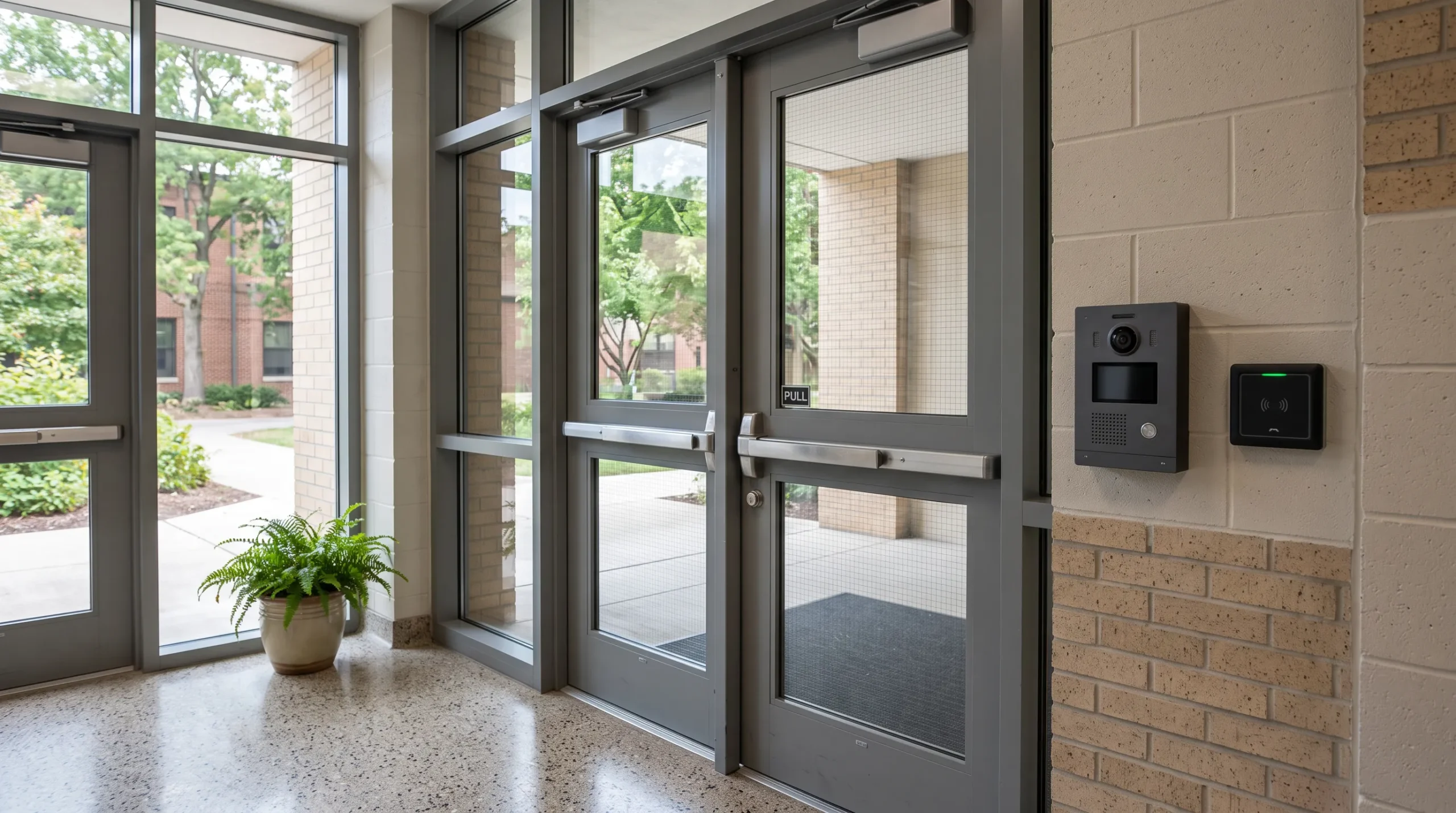
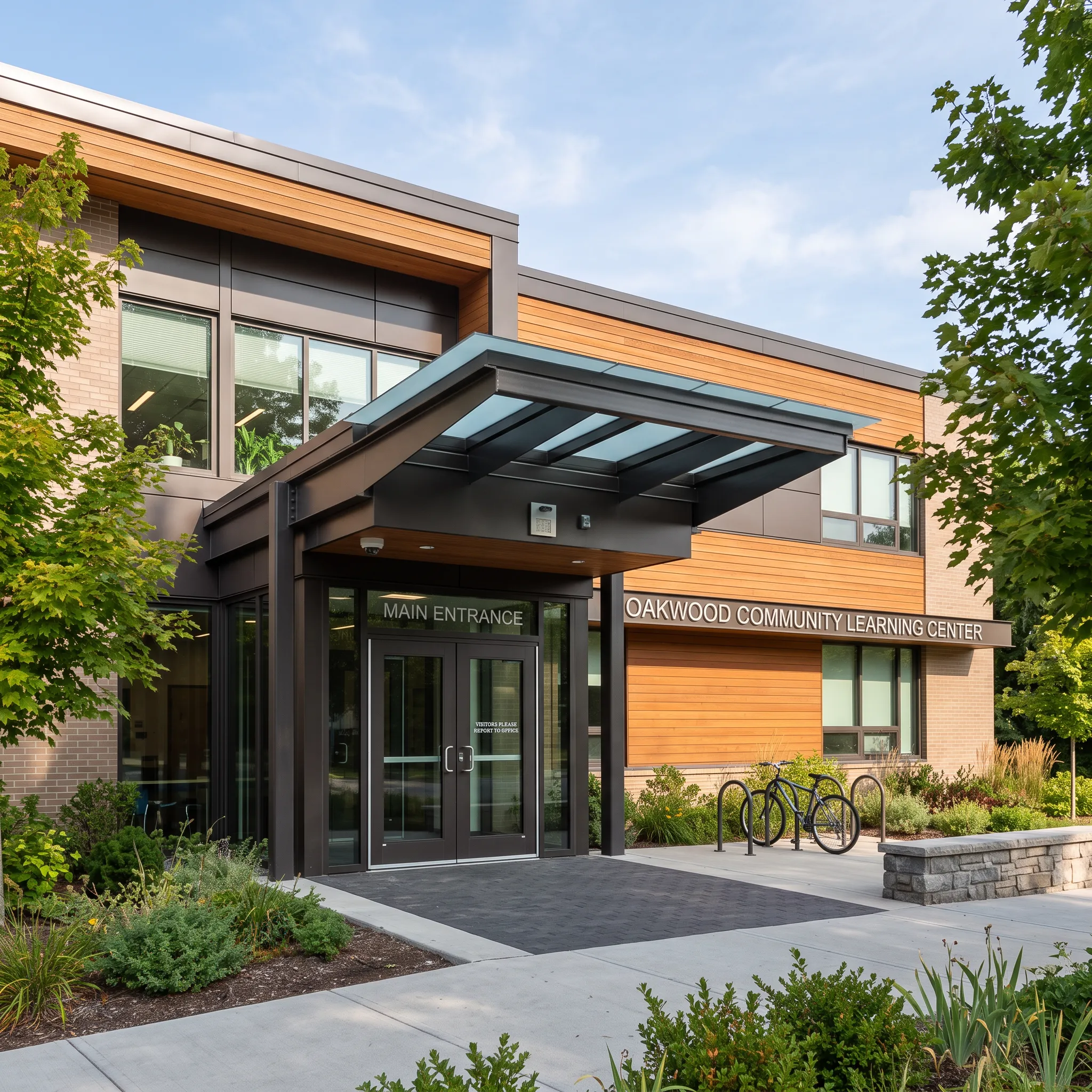
The foundation of school and daycare security is knowing who is in the building at any given time. Entry control systems support the procedures your staff already follow while providing the documentation needed after an incident:
- A single controlled main entrance with all other doors secured from the outside during operating hours, directing all visitors through a verification point where office staff can see and speak to them before releasing the door.
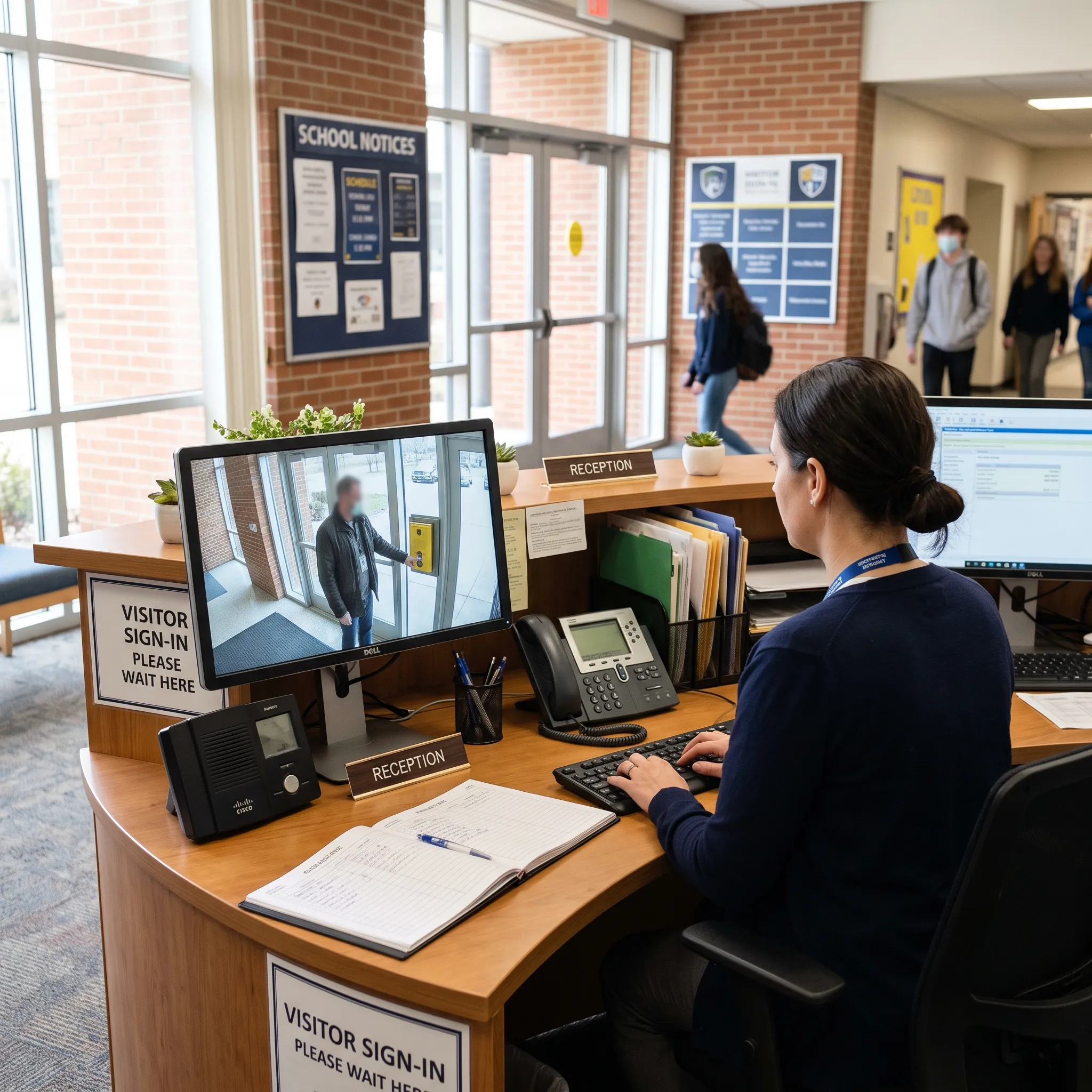
- Video intercom systems at the main entrance allow reception staff to verify visitor identity and purpose before granting access, with recorded video of every entry request for later review if needed.
- Visitor identification and sign-in procedures supported by access logs that document who entered, when they arrived, and when they departed, creating an auditable record of building occupancy.
- Scheduled unlocking for arrival and dismissal windows that automatically release perimeter doors during peak parent traffic, then re-secure them once the window closes without requiring manual intervention.
- Contractor and supply staff credentials with expiry dates that grant temporary access for maintenance personnel, delivery drivers, and other regular visitors without compromising long-term security.
- Separation of community-use areas from the rest of the building after hours, allowing evening programs and weekend rentals to operate in designated zones while keeping classrooms and administrative areas secured.
Supporting Staff Procedures and Emergency Response
Security systems in educational facilities must support the staff who operate them, providing tools that integrate with existing procedures rather than creating additional administrative burden:
- Staff duress and panic buttons at reception desks and in isolated areas of the building allow personnel to summon help discreetly during confrontations or medical emergencies without leaving their position.
- The ability to secure doors quickly from the office during a lockdown drill or real event, allowing administrative staff to control building access remotely without requiring personnel to move through corridors.
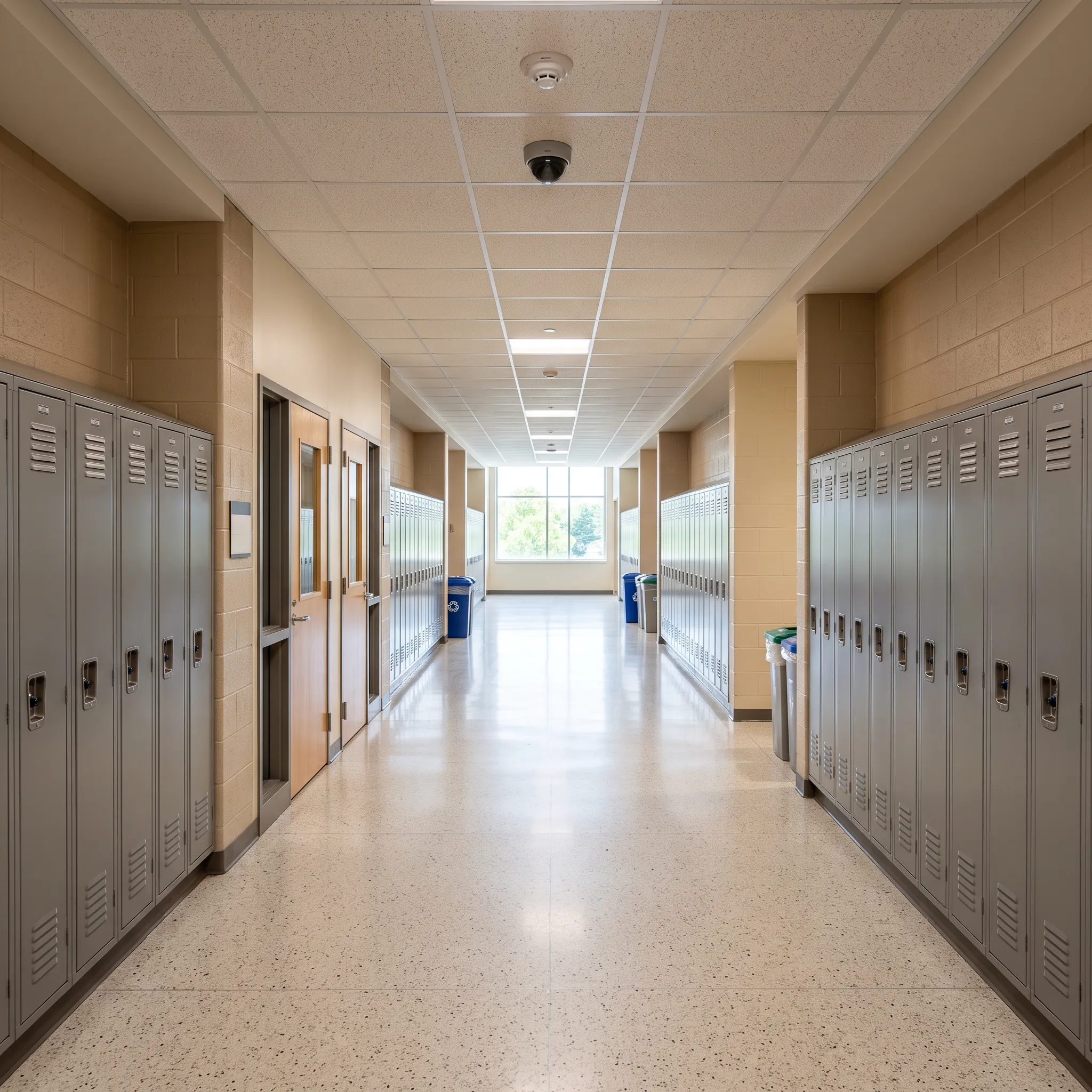
- Camera coverage of entrances, corridors, playgrounds and bus loading zones that documents incidents as they occur, providing evidence for investigations and supporting staff accounts of what happened. Camera placement requires care. Entrances, corridors, playgrounds and perimeters are appropriate coverage areas, while classrooms, washrooms and changing areas are not. Coverage is documented so the school has a clear record of what is monitored.
- Perimeter and after-hours protection of the site with intrusion detection that alerts designated personnel to unauthorized entry outside operating hours, with optional 24/7 monitoring available as a paid add-on service.
- Access and video logs that support incident review afterwards, providing timestamped records of who entered which areas and when, with corresponding video footage available for investigation.
What Security Systems Do Schools and Daycares Deploy?
INTEGRATED EDUCATIONAL SECURITY INFRASTRUCTURE
Educational facilities deploy layered security systems that work together to control access, document incidents, and support emergency response procedures:
- Access control systems that manage staff credentials, schedule automatic door unlocking for arrival and dismissal periods, and provide audit logs of who entered which areas and when.
- Video intercom and telephone entry systems at main entrances that allow office staff to verify visitor identity before releasing doors, with recorded video of every entry request.
- CCTV surveillance systems covering entrances, corridors, playgrounds, parking lots and perimeters with recorded footage available for incident investigation and staff support.
- Intrusion alarm systems protecting the facility outside operating hours with motion sensors, door contacts, and glass break detectors, with optional 24/7 monitoring available as a paid add-on.
- Emergency call boxes and panic buttons at reception desks and in isolated areas that allow staff to summon help discreetly during confrontations or medical emergencies.
- Fire alarm monitoring connections that link existing fire alarm panels to ULC-listed monitoring stations for emergency response coordination. Ainger provides the monitoring connection only, we do not install or service fire alarm panels, pull stations, notification appliances or duct detectors.
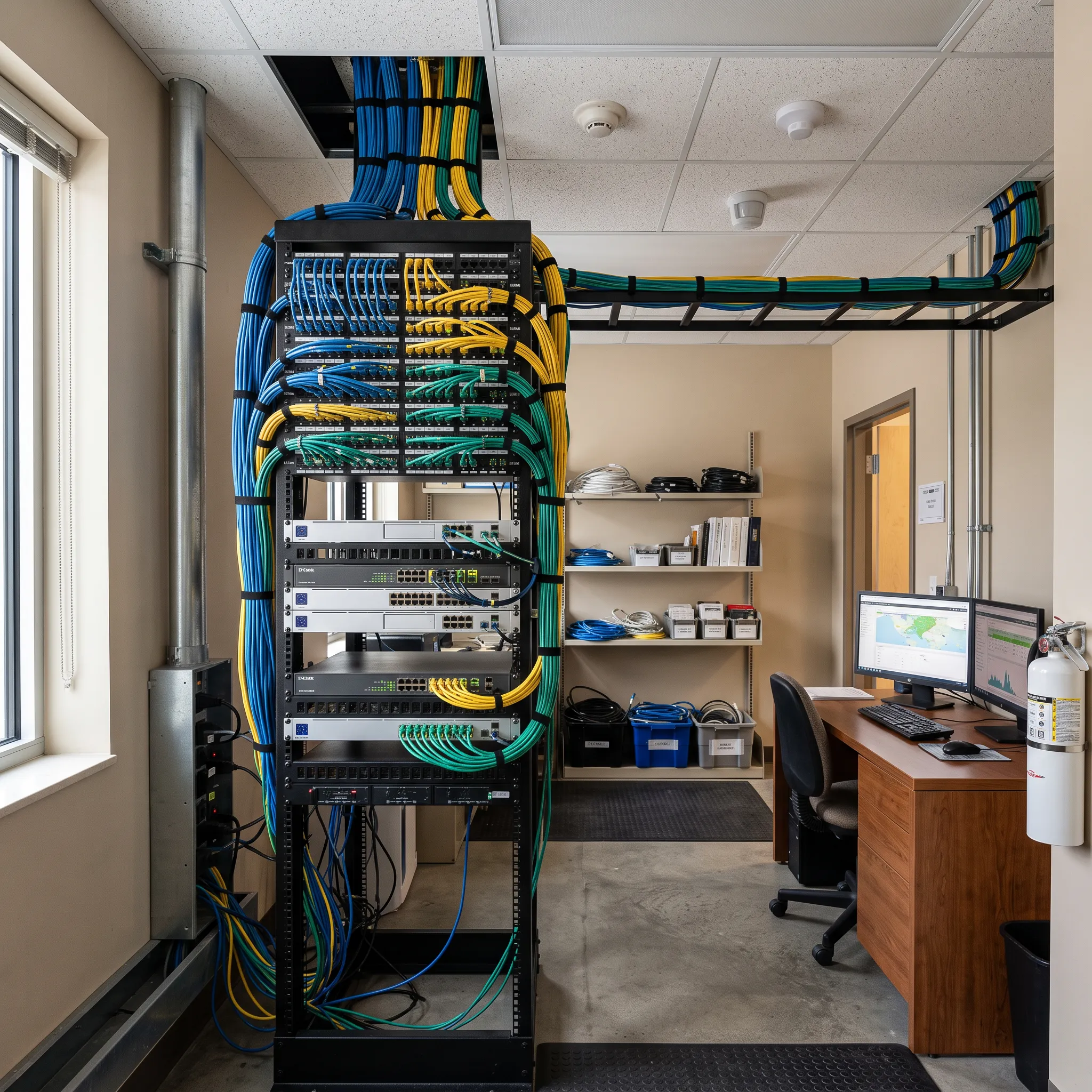
- Network infrastructure and structured cabling that carries both classroom technology and security systems on the same commercial-grade cable plant, eliminating the need for separate wiring contractors.
Why Schools and Daycares Use a Single Accountable Partner
SECURITY AND CABLING FROM ONE CONTRACTOR
Most security contractors install cameras and access control hardware but subcontract the cabling to a separate low-voltage contractor. That creates two points of accountability when something goes wrong, with the security company blaming the cabling contractor, the cabling contractor blaming the security company, and your facility left without a working system while they argue about whose responsibility it is to fix it.
Ainger eliminates that problem entirely. As both your security system installer and security wiring contractor, we design the camera locations, access control readers, and intercom stations together with the cable routes that connect them. The same structured cabling infrastructure carries classroom technology, wireless access points, and security systems, so you’re not paying for duplicate cable runs or managing coordination between separate vendors.
Our manufacturer-authorized dealer status for Kantech, Uniview, Avigilon, DSC, Akuvox and Mircom means factory-backed warranties on every installation. Technicians receive manufacturer training on system programming, integration protocols, and troubleshooting procedures specific to educational environments.
One infrastructure partner. One accountability chain. One warranty behind everything we install. After three decades serving schools and daycares across Canada and the USA, that’s the model that works.
How Long Does School Security Installation Take?
PROJECT TIMELINES & SCHEDULING
Daycare or single-building childcare centre
Basic access control with video intercom, perimeter cameras, and panic buttons typically completes within 1–2 weeks, including staff training and system commissioning.
Elementary school
Multi-zone access control, interior and exterior cameras, intercom system, and intrusion detection typically require 3–4 weeks with installation scheduled during summer break or other closure periods.
Secondary school or larger campus
Enterprise access control with staff credentials, comprehensive camera coverage, emergency call boxes, and perimeter protection typically require 6–8 weeks with phased deployment to minimize disruption.
School board multi-site rollout
Standardized security configurations deployed across multiple schools with centralized management platforms and coordinated deployment schedules aligned with academic calendar breaks.
Site assessment and system design typically require 1–2 weeks before installation begins. Camera placement, access control reader locations, and cable routing are coordinated with your operational schedule to minimize disruption. Summer break and other closure periods are the natural window for larger work, allowing installation to proceed without impacting daily operations. Every system installation includes commissioning, staff training and full documentation.
Client Testimonials
What Our Customers Have to Say




















Get a Quote for Your School or Daycare Security System
READY TO START?
Every project starts with a site assessment. We’ll evaluate your facility, identify entry control requirements and camera coverage needs, and provide a detailed scope covering equipment, wiring, installation timeline, and staff training. No obligation, no pressure.
Request a QuoteFrequently Asked Questions
Yes. Boards operating several sites can standardise on one platform so credentials, access rules and camera management work the same way at every school. Board staff moving between buildings use one credential, and central administration gets a single view across the portfolio while each school retains control of its own doors. Rollout is phased across sites rather than done everywhere at once.
A duress or panic button lets a staff member signal for help discreetly. They are commonly placed at the front office reception desk, where staff deal with unexpected visitors, and in areas where someone may be working alone. Pressing it triggers an alert according to the response protocol the school defines, which may be an internal notification or an outside dispatch depending on your setup.
Yes. Daycares have the same core requirement of knowing exactly who enters the building, usually with a higher volume of parent arrivals and departures concentrated into short windows at each end of the day. Systems are typically smaller in scale than a school but the entry control, visitor verification and access logging requirements are much the same.
All exterior doors stay secured during the day and visitors are directed to one main entrance. When someone arrives, they use the intercom at the door, and office staff can see and speak to them before deciding whether to release the door. Staff carry credentials so they move through their own entrances without needing to be let in. It gives the office control over entry without anyone having to physically go to the door.
Some work can be done during the school year, typically after hours or on weekends, but larger projects are best scheduled during summer break or another closure period. Running cabling through ceilings and walls is far more straightforward in an empty building, and it avoids any disruption to classes. We plan larger installations around the school calendar and work back from your target completion date.
Entrances, corridors, stairwells, playgrounds, parking areas, bus loading zones and the building perimeter are generally appropriate. Classrooms, washrooms and changing areas are not. We map the coverage during the site assessment with those boundaries agreed in advance, and provide documentation of exactly what is and is not covered so the school has a clear record for parents and the board.
Access control can separate the portion of the building a community group uses, typically the gym and its washrooms, from the rest of the school. Their credentials work on those doors during their booked hours only, and the classroom wings stay secured. Every entry is logged, so if something is damaged or goes missing you know who had access and when.
Yes. Access control systems can be configured so that a single action from the office secures the doors covered by the system, supporting the lockdown procedure the school already has in place. The specific configuration is designed around your existing protocol rather than imposing a new one, and it is tested during commissioning so staff know exactly how it behaves.
1996–2026

Contact Us
Get in Touch with Ainger Cabling + Security
Find Us Online